
Last updated November 18, 2026
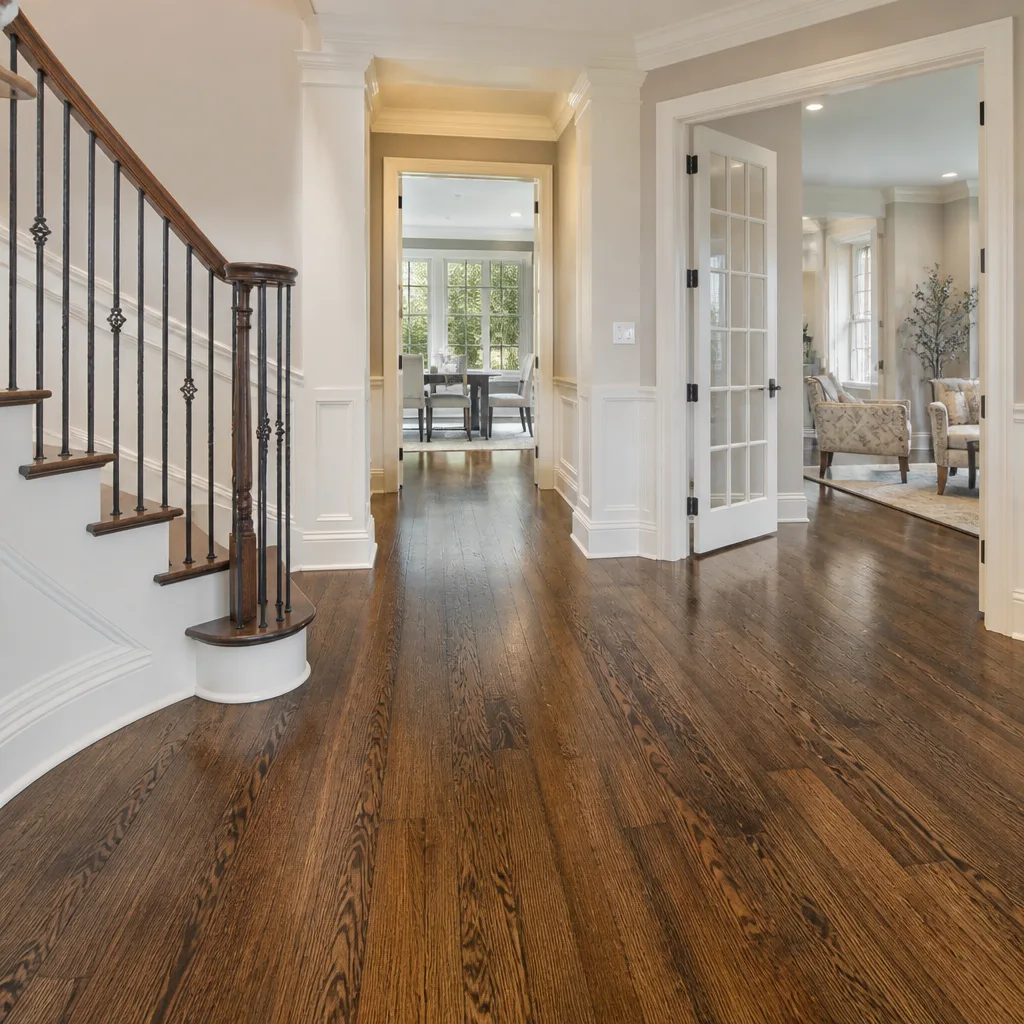 Hardwood
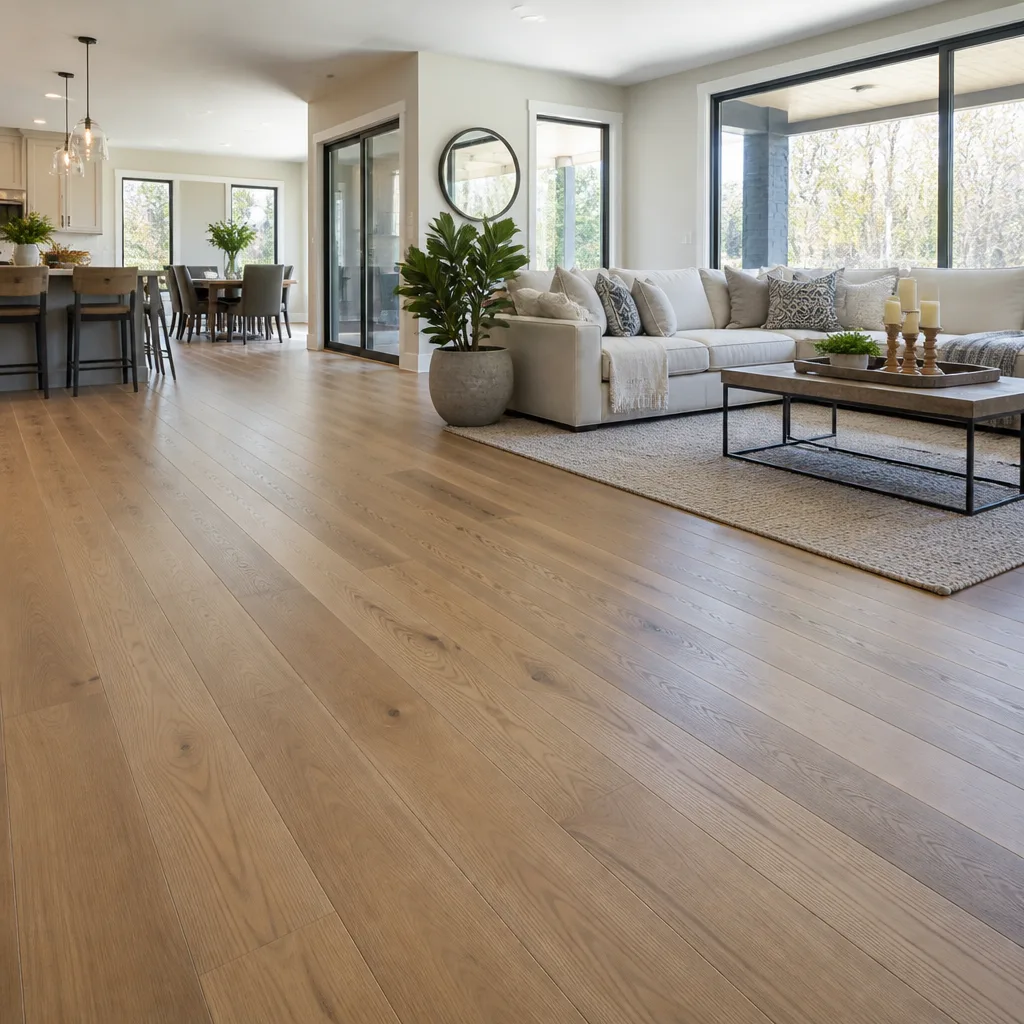 Engineered hardwood
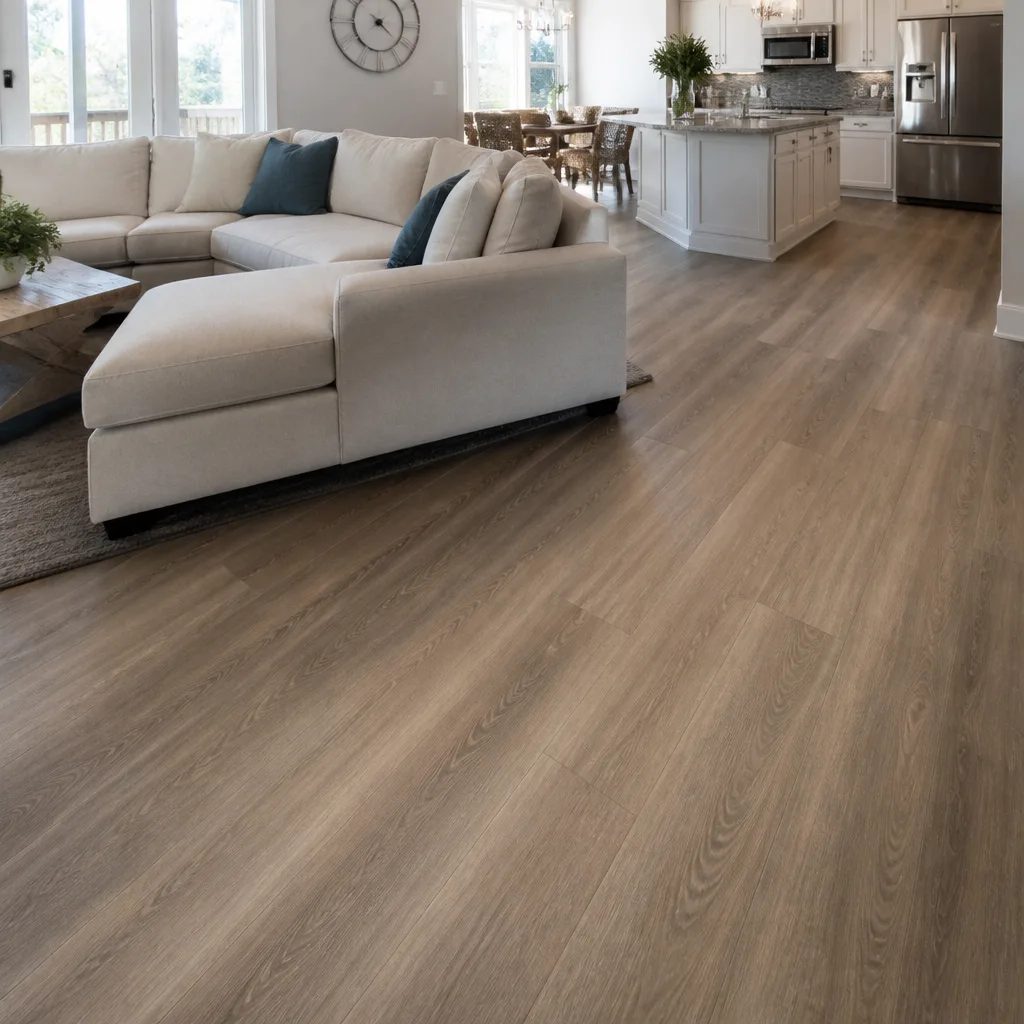 Luxury vinyl plank
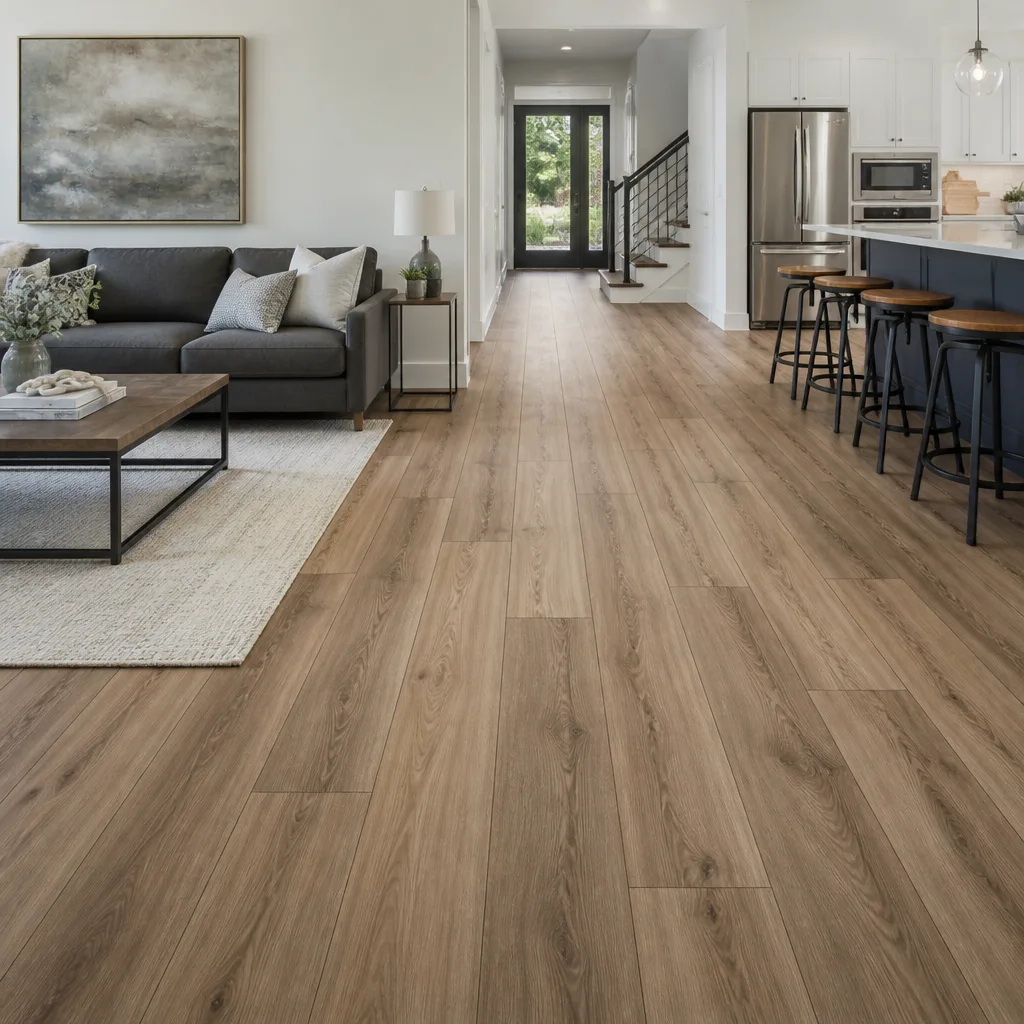 Laminate
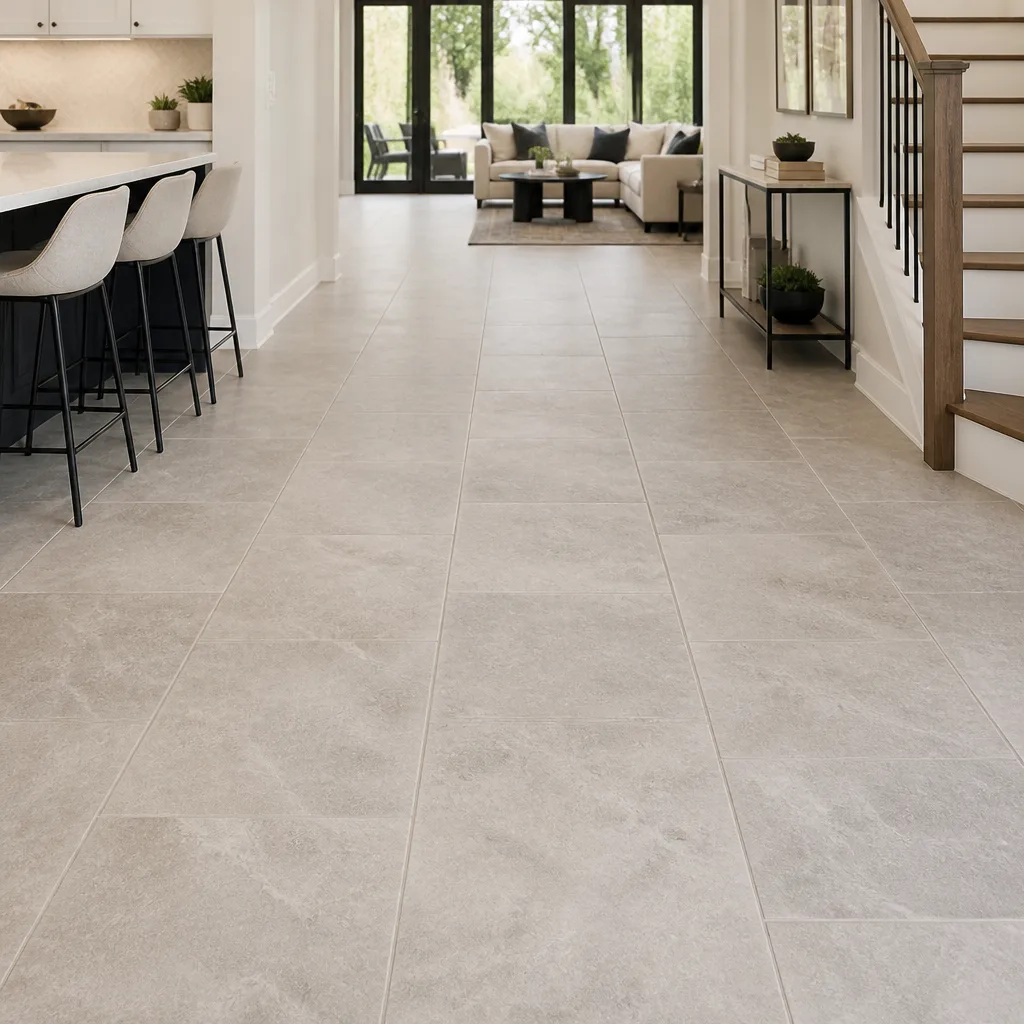 Porcelain tile
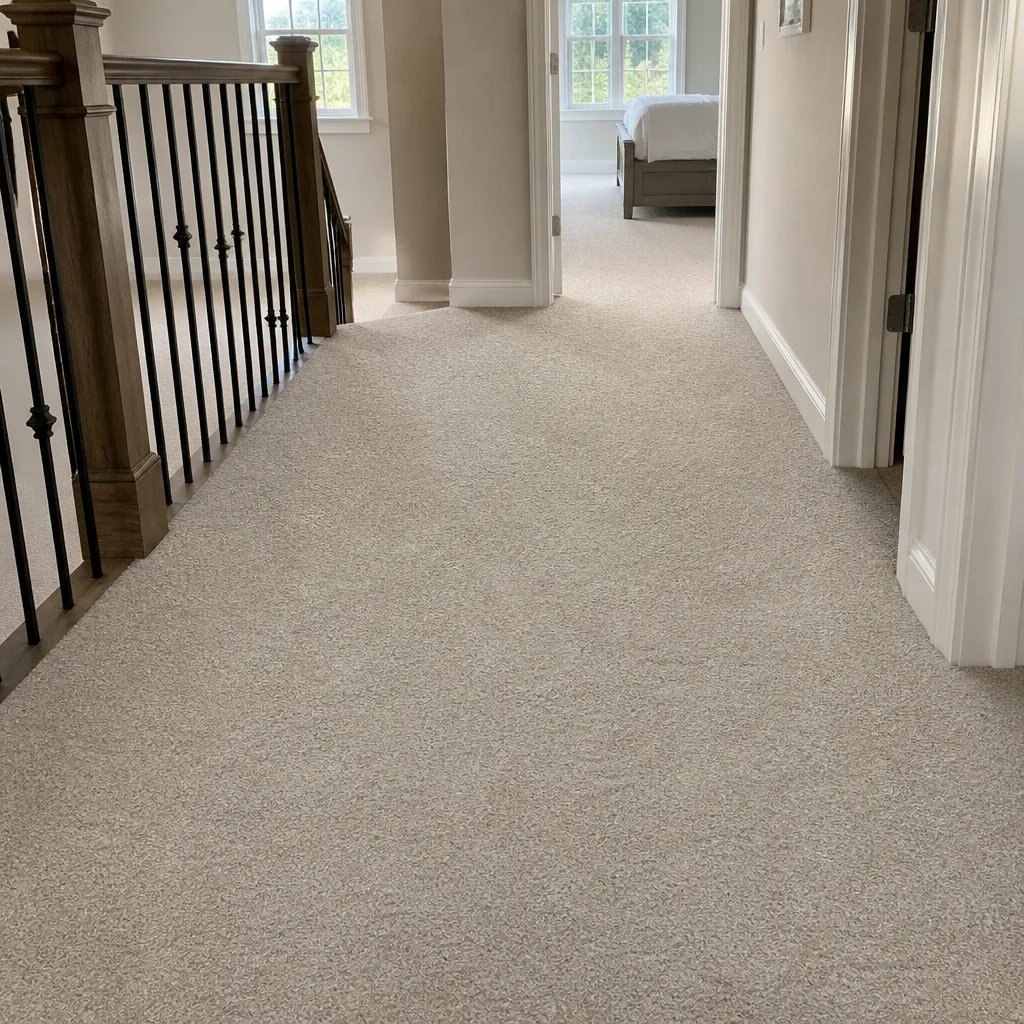 Carpet
 Shaw
 Mohawk
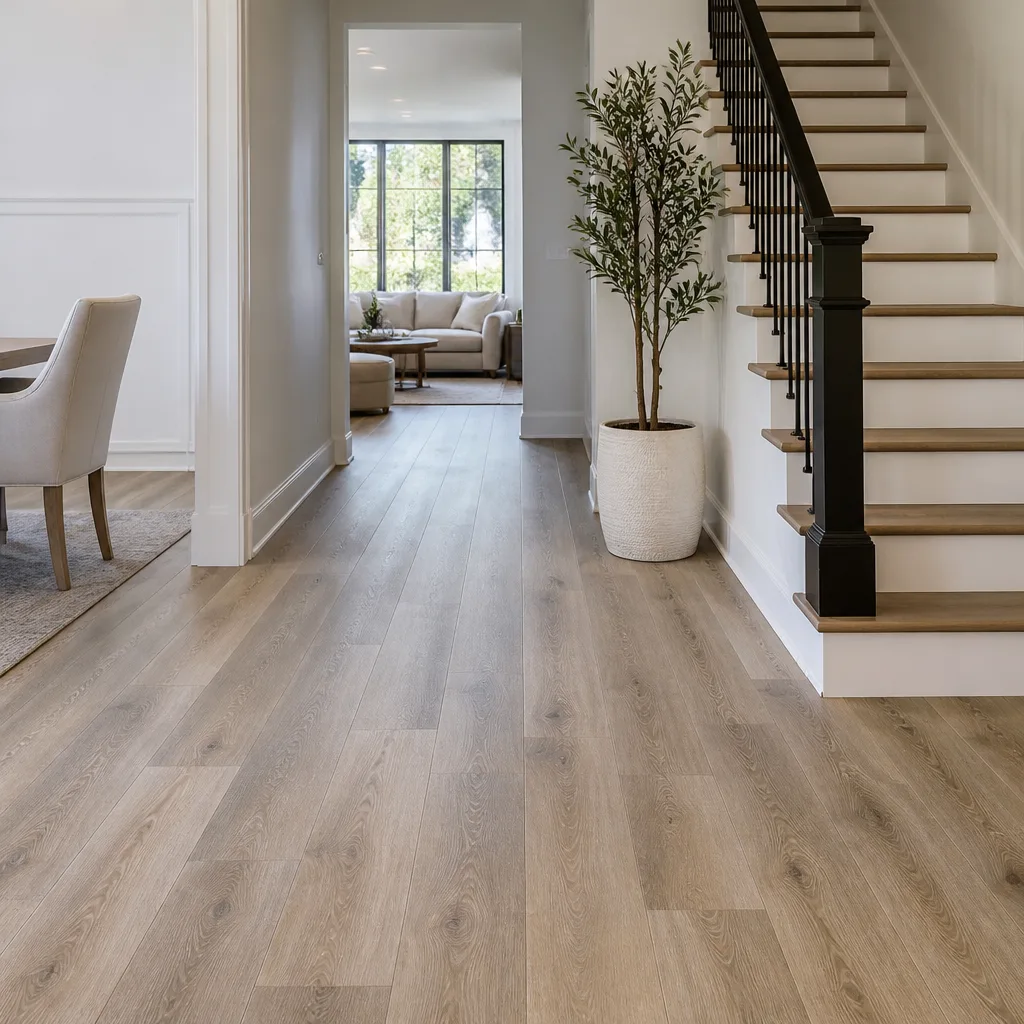 COREtec
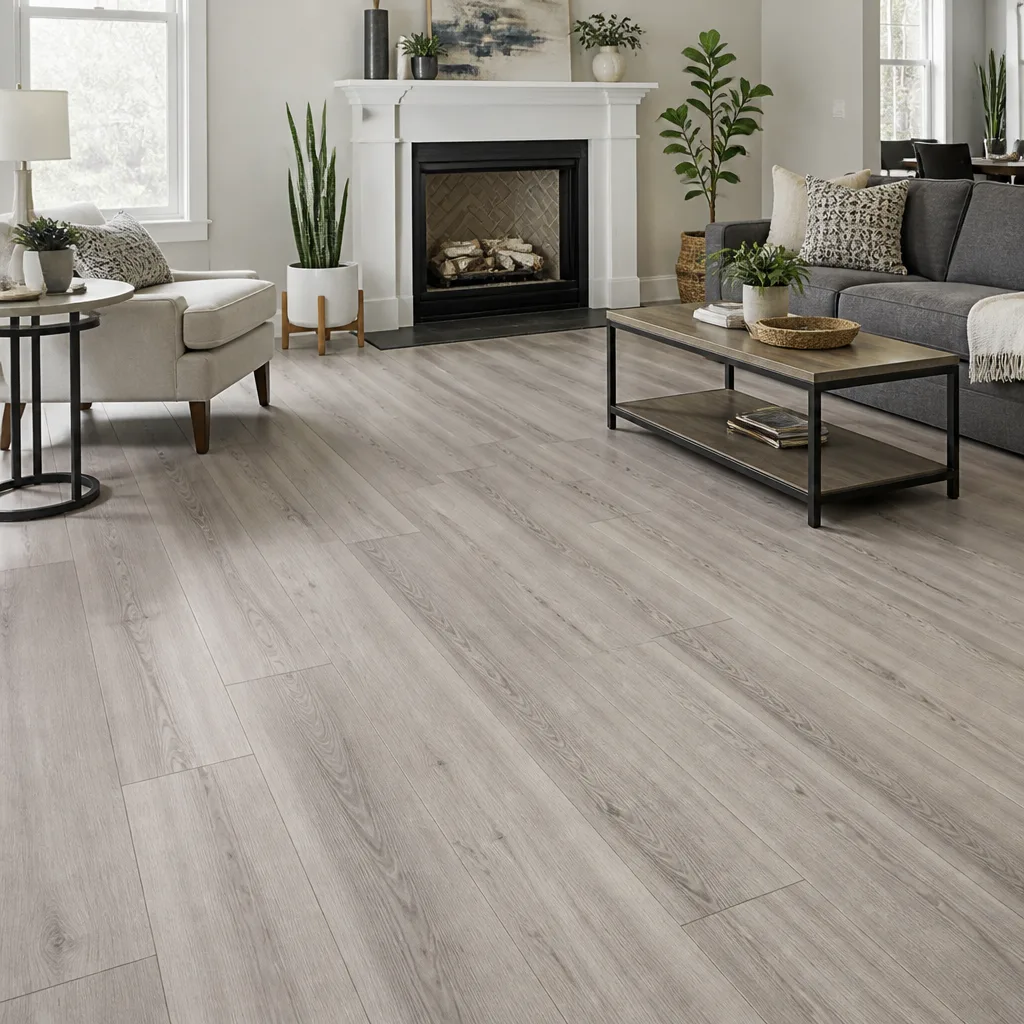 Pergo
Free in-home measure and written estimate: Shaw, Mohawk, COREtec and Pergo lines compared on your own rooms, with carpet, tile, vinyl plank, laminate and hardwood laid out side by side
Get your free estimateHow Las Vegas’s Climate Can Affect Your Flooring Choice
Las Vegas gets less rain in a year than most cities see in a single stormy month, yet floors here fail in ways that surprise people who moved from wetter places. The assumption is that dry means safe. It doesn’t. What breaks flooring in Las Vegas isn’t standing water or damp air. It’s the swing: winter indoor humidity that drops toward single digits, summer monsoon weeks that push it back up, and the daily bake of sun through west-facing glass. Wood, laminate, and vinyl all respond to those changes by moving, and a floor installed without that cycle in mind will gap, cup, or lift long before its time. This guide explains what’s actually happening under your feet and how to pick a floor that tolerates it.
Quick Answer
The best flooring for the Las Vegas climate is a dimensionally stable product that can handle wide humidity swings and warm slab temperatures: quality luxury vinyl plank, porcelain or ceramic tile, and engineered hardwood generally outperform solid hardwood and thin laminate in valley homes. The right choice also depends on the room, the subfloor, and how much direct sun the space gets, which is why the product matters as much as the look.
Styles & brands we work with
- Hardwood
- Engineered hardwood
- Luxury vinyl plank
- Laminate
- Porcelain tile
- Carpet
- Shaw
- Mohawk
- COREtec
- Pergo
Table of Contents
- Why the Las Vegas Humidity Swing Matters More Than the Heat
- Dimensional Stability, Product by Product
- The Slab Heat Problem Nobody Warns You About
- West- and South-Facing Rooms: Sun, Fade, and Surface Expansion
- A Room-by-Room Guide for Las Vegas Homes
- Matching Brands to Real Conditions
- How a Climate-Aware Installation Actually Goes
- Common Mistakes to Avoid
Why the Las Vegas Humidity Swing Matters More Than the Heat
Most people assume heat is the enemy of flooring in Las Vegas. Heat matters, but humidity is what actually moves the material. Indoor relative humidity in a Las Vegas home can drift down toward 10% during the dry winter months, then climb past 40% or 50% during the summer monsoon season when moist air pushes up from the Gulf of California. That’s a huge range for a material that expands when it absorbs moisture and contracts when it dries out.
Wood and laminate are hygroscopic, meaning they take on and release moisture from the air. When the air dries out in winter, boards shrink and gaps open at the seams. When monsoon humidity returns, the boards swell and those gaps close, sometimes pushing against walls or each other if the floor wasn’t given room to move at installation.
Here in the valley, we see three distinct seasonal phases that stress floors differently:
- Dry winter (roughly November through March): Indoor humidity drops, wood shrinks, gaps appear at seams and along baseboards, and laminate can develop visible separations.
- Monsoon season (roughly July through September): Humidity spikes quickly. Boards that gapped in winter can cup or crown if they absorb moisture unevenly, and floating floors can buckle if expansion space wasn’t left.
- Shoulder months (spring and fall): Repeated cycling as the air dries and re-wets. This is when small problems that were invisible become visible.
The mistake is treating Las Vegas as a “dry climate” and installing a floor that isn’t rated for a humid one. In practice, a Las Vegas home sees humidity swings that many coastal homes never experience, because coastal humidity is steady. Steady is easy. Swinging is hard. That’s the single biggest reason flooring fails early in the valley, and it’s why a product’s dimensional tolerance matters more than its finish or color.
Dimensional Stability, Product by Product
Dimensional stability is a material’s ability to hold its size and shape as temperature and humidity change. Higher stability means less movement, fewer gaps, and less risk of buckling. Here’s how the main flooring categories rank in real Las Vegas conditions, not in marketing language.
High stability: tile and luxury vinyl
Porcelain and ceramic tile barely move with humidity. They’re fired at high temperatures, so the material is essentially inert to moisture in the air. Quality luxury vinyl plank, including lines like COREtec, is engineered to be dimensionally stable across a wide humidity range and handles temperature swings better than wood-based products. That’s why tile flooring installation and luxury vinyl are our usual recommendation for the rooms that see the most seasonal change.
Moderate stability: engineered hardwood
Engineered hardwood is built with a plywood core under a real wood wear layer. The cross-ply construction resists the warping and cupping that solid wood can develop, so it tolerates the Las Vegas swing better than a solid plank. It still moves, just less. The key is that the product instructions for the specific board set the expansion gaps and acclimation requirements, and those must be followed.
Lower stability: solid hardwood and thin laminate
Solid hardwood is the most sensitive to humidity. It’s a beautiful floor, but in a Las Vegas home it will show winter gaps and can cup if the summer humidity swings hard. Thin, entry-level laminate has similar issues because the core is wood-based and swells with moisture. Neither is a bad choice, but both need careful acclimation, expansion space, and realistic expectations about seasonal movement.
One important qualifier: even a stable product can fail on an unstable subfloor. The floor can only be as flat and dry as what’s under it, and that gets checked at the estimate visit.
The Slab Heat Problem Nobody Warns You About
Most Las Vegas homes are slab-on-grade, meaning the concrete foundation sits directly on the ground with no crawlspace. In summer, that slab can get warm enough at the surface to affect adhesives and floating floors. A concrete slab that gets full sun through a window or is near the exterior wall of a west-facing room can reach temperatures that stress certain adhesive bonds and cause some floating floors to expand more than expected.
This matters for two reasons:
- Adhesive failures. Direct-glue installations rely on an adhesive that needs to hold its bond across temperature changes. Some adhesives are rated for the surface temperature range they’ll see; others aren’t. Product instructions and the written estimate set which adhesive is appropriate for your slab, and we follow the manufacturer’s guidance rather than general rules.
- Floating floor expansion. A floating floor sits on an underlayment and isn’t glued down. As the slab warms in summer, the floor expands against the walls. If the installer didn’t leave the expansion gap the product requires at every wall and doorway, that expansion has nowhere to go and the floor buckles.
This is why we ask about sun exposure and slab conditions before recommending an installation method. A room where the slab gets direct afternoon sun through glass is a different job than an interior room with no windows.
Concrete also releases moisture from below, and slab moisture is a separate check from humidity in the air. Products like LifeProof and COREtec are water-resistant and handle surface moisture well, but standing water and moisture from below still have to be dealt with before any floor goes down. The moisture reading and any required barrier are established at the estimate and stated in the written price.
West- and South-Facing Rooms: Sun, Fade, and Surface Expansion
Las Vegas gets a lot of sun, and the direction a room faces changes what your floor goes through. A west- or south-facing room gets direct sun for hours, especially in the afternoon. That does two things: it fades finishes and wood tones over time, and it heats the surface of the floor itself, which causes it to expand more than the shaded part of the same room.
Ultraviolet light breaks down the color in wood, laminate wear layers, and some vinyl finishes. A floor that gets years of direct afternoon sun can end up noticeably lighter or less uniform where the light hits it than where furniture or a rug shaded it. In a room with big west-facing glass, that’s a real design consideration, not a hypothetical.
Heat is the other half. South- and west-facing rooms have a thermal gradient across the floor: the sunlit strip stays warm and expands, while the shaded portion stays cooler. That uneven expansion puts stress across the seams and joints. Products with high dimensional stability handle that better than wood-based planks. Tile and quality luxury vinyl shrug off most of it.
What you can do:
- Use window coverings or solar screens on the worst west-facing glass to cut direct sun.
- Keep furniture from sitting in direct sun for long periods; rotate or pull shades when the afternoon sun is strongest.
- Choose a product with a stable core for the brightest room in the house, not just the room that looks best on paper.
- Ask at the estimate how the room is oriented and how much direct sun it gets; the installer should factor that into the product recommendation and the expansion gaps.
North-facing rooms see almost none of this. A floor in a north-facing bedroom will hold its color and shape far longer than one in a west-facing living room with a big window, even with the same product. Room orientation is a real variable that generic product guides ignore.
A Room-by-Room Guide for Las Vegas Homes
The right floor is the one that matches the room, not the one that’s trending. Here’s how we think about the most common Las Vegas spaces.
Garage conversions
Garage conversions are common in Las Vegas, and they’re the toughest room to floor because the slab gets more heat than anywhere else in the house. Porcelain tile is the most stable choice here. Quality luxury vinyl like COREtec is a strong second. We avoid solid hardwood and wood-based laminate in a converted garage because the slab temperature swing will move them. This is where you should plan on tile if stability is the priority.
Screened patios
A screened patio sees more temperature swings, more airborne dust, and more direct sun than any interior room. Porcelain or ceramic tile handles all of it. Wood and laminate don’t belong here. Neither does carpet. Protect the tile from direct sun where you can, and make sure the substrate is prepped for exterior conditions.
Interior bedrooms
A north- or east-facing bedroom is the easiest room in the house to floor. carpet installation is the natural fit here, and brands like Shaw and Mohawk give you options across the soft-surface range. If you want hard surface, engineered hardwood or luxury vinyl both work well in a shaded bedroom because the humidity swing is the main stress, not sun exposure.
A kitchen with a swamp cooler overhead
This is the room that surprises people. Evaporative coolers add humidity to the air they cool, and that humidity lands in the room below. A kitchen under a working swamp cooler is functionally a more humid room than the rest of the house, which is exactly the environment that stresses wood-based flooring. Tile or quality luxury vinyl is the safe pick. If you insist on wood in a swamp-cooler room, the product needs to be engineered for humidity swings, and the cooler’s condition matters. Keep it working properly and don’t run it when the air is already humid, because it adds moisture rather than removing it.
Investor turnover properties
For landlords and small property investors replacing floors between tenants, the priority is durability through seasonal cycling without a lot of maintenance. Porcelain tile in wet rooms and quality luxury vinyl through the rest of the house is a combination that holds up and doesn’t need special care between tenants.
Matching Brands to Real Conditions
Brands matter for durability and consistency, but the brand name is less important than whether the specific product is right for your room. We install and service nine distinct lines: Shaw, Mohawk, COREtec, Pergo, LifeProof, Mannington, Armstrong, Daltile, and Karndean. Each one covers a different part of the spectrum, and matching the product to the room is the job.
- COREtec and LifeProof are our usual starting point for high-moisture rooms and family homes. Both are water-resistant luxury vinyl lines built for rooms where spills and humidity happen, and both handle the Las Vegas humidity swing well because the core is stable.
- Shaw and Mohawk give you the strongest options on the carpet side, which is where we usually recommend them for bedrooms and family rooms that benefit from a soft surface.
- Pergo is a name many homeowners already know, and the right Pergo laminate works well in interior rooms that don’t see direct sun or humidity swings. In the harshest rooms, we usually steer toward a more stable product instead.
All nine brands come through one installation team, which matters on a multi-room project. You don’t have to coordinate a separate vendor for carpet in the bedrooms, tile in the bathrooms, and refinishing in the hall. One written estimate covers all of it, and the products are matched to the conditions in each room.
What we deliberately don’t do is promise that every product works everywhere. A middle-of-the-road laminate is a fine choice for a shaded bedroom. The same product in a sun-blasted garage conversion is a mistake. The brand catalog cannot substitute for matching the product to the room’s conditions and the slab’s behavior.
How a Climate-Aware Installation Actually Goes
What separates a floor that survives Las Vegas’s seasonal cycling from one that doesn’t is rarely the product. It’s the installation. Here’s the typical sequence.
- Free in-home measure and estimate. We look at the room, the subfloor, the slab condition, the light exposure, and the humidity environment. We ask about swamp coolers, sun exposure through glass, and whether the room is a garage conversion. The written estimate with product recommendations follows.
- Subfloor and slab assessment. Flatness and moisture get checked. Concrete slab-on-grade can release moisture from below, and that has to be dealt with before a floor goes down. The product instructions and the written estimate set the requirements.
- Product acclimation. Wood and laminate need time to adjust to the room before installation. We follow the product’s acclimation requirements; the specific time depends on the product and the home, and it’s stated in the estimate.
- Expansion gaps and layout. Every floating floor gets the expansion gap the product requires along walls and doorways, so it has room to swell during monsoon season without buckling. This is where most of the seasonal-movement failures are prevented.
- Installation. Tile gets the appropriate adhesive and substrate preparation. Wood and laminate get the correct underlayment. Adhesive-based installations get the adhesive rated for the slab temperature range they’ll see.
- Inspection and handoff. We walk through the finished floor and explain how to manage indoor humidity through the year, including how to watch for winter gaps and summer expansion.
A proper installation for Las Vegas conditions is a scheduled project, not a same-day drop-in. The free measure comes first, then the written price, then the install day gets booked. That sequence gives you the chance to see the product recommendation in context before committing.
Common Mistakes to Avoid
- Choosing a product in summer and forgetting winter. A laminate that looks great in July’s monsoon humidity can gap in January’s dry air. Think about the full year, not the day you’re shopping.
- Ignoring sun direction. A west-facing living room with big glass gets hours of direct afternoon sun that a north-facing bedroom never sees. The same product in both rooms will age differently. Ask which way your room faces before you decide.
- Installing wood or laminate in a garage conversion. The slab in a converted garage gets hot enough at the surface to stress wood-based products. Tile or quality luxury vinyl is the safer pick. This is the single most common product mismatch we see in Las Vegas.
- Skipping the expansion gap. A floating floor without proper expansion space will buckle during the first big monsoon humidity spike. If a floor install looks finished with no gap visible at the wall, ask whether the baseboard is covering one the product requires.
- Putting wood under a working swamp cooler. Evaporative coolers add humidity to the room below, which is the wrong environment for wood-based flooring. Tile or quality luxury vinyl holds up better.
- Forgetting slab moisture. Concrete slab-on-grade can release moisture from below, and that has to be assessed before any floor goes down. A water-resistant product on top doesn’t fix a wet slab underneath; the moisture still has to be dealt with.
- Comparing products by brand alone. Two floors from the same line can behave very differently in the same room depending on the underlayment and the installation method. The spec sheet matters, but the installation matters more.
See the difference
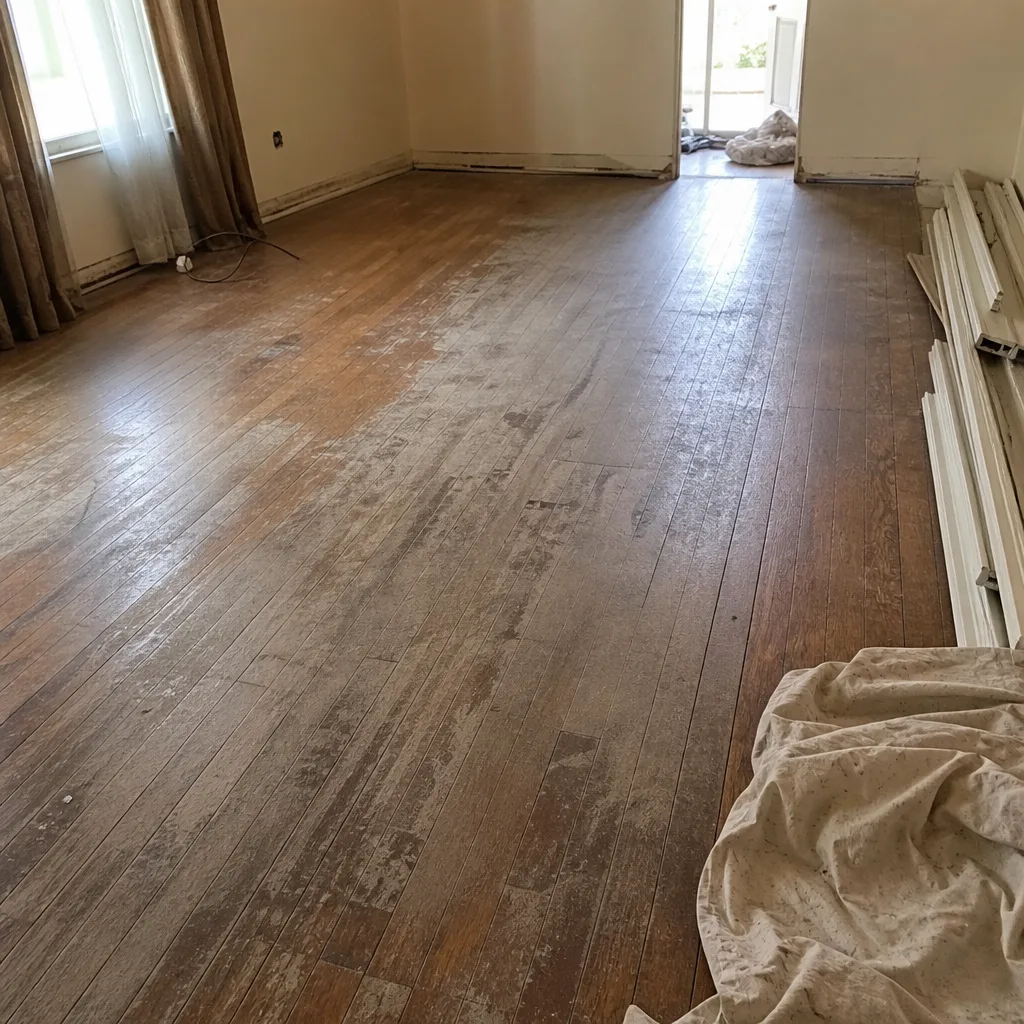 Before
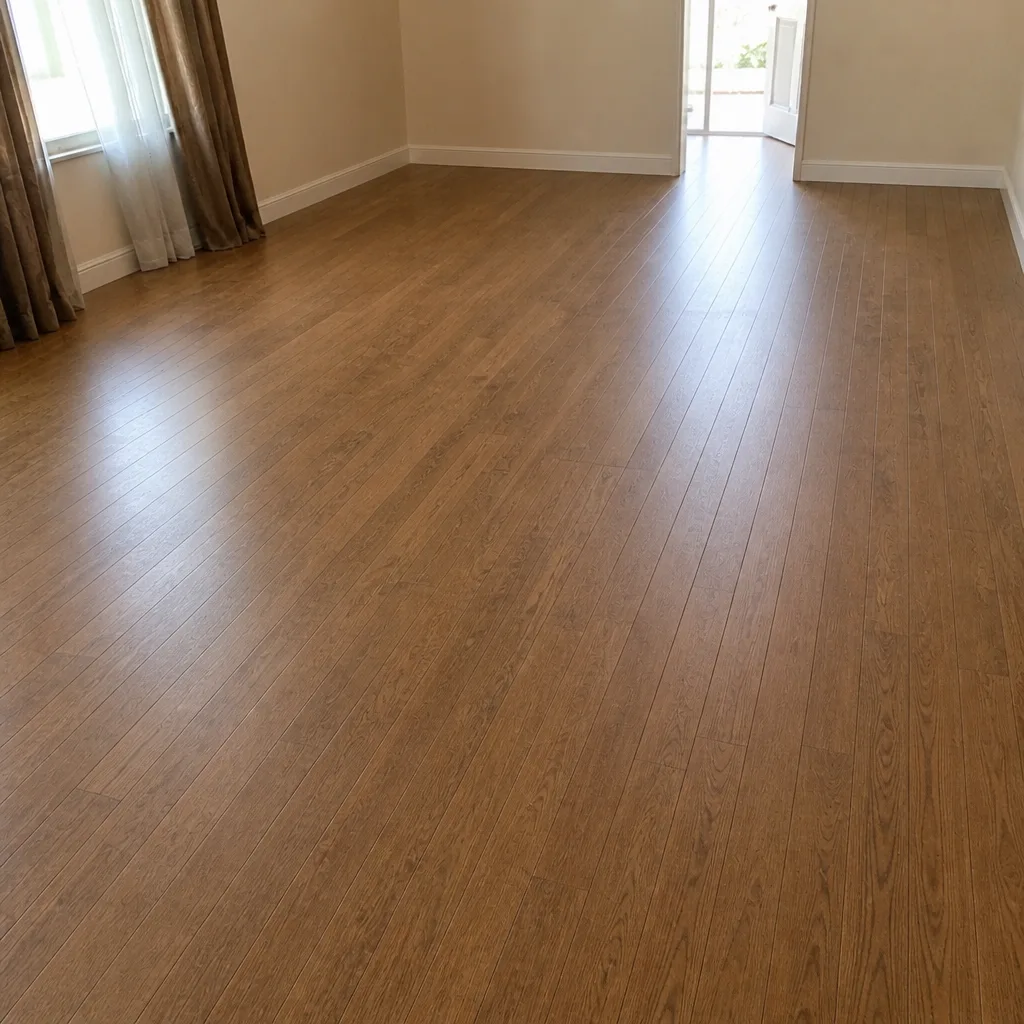 After
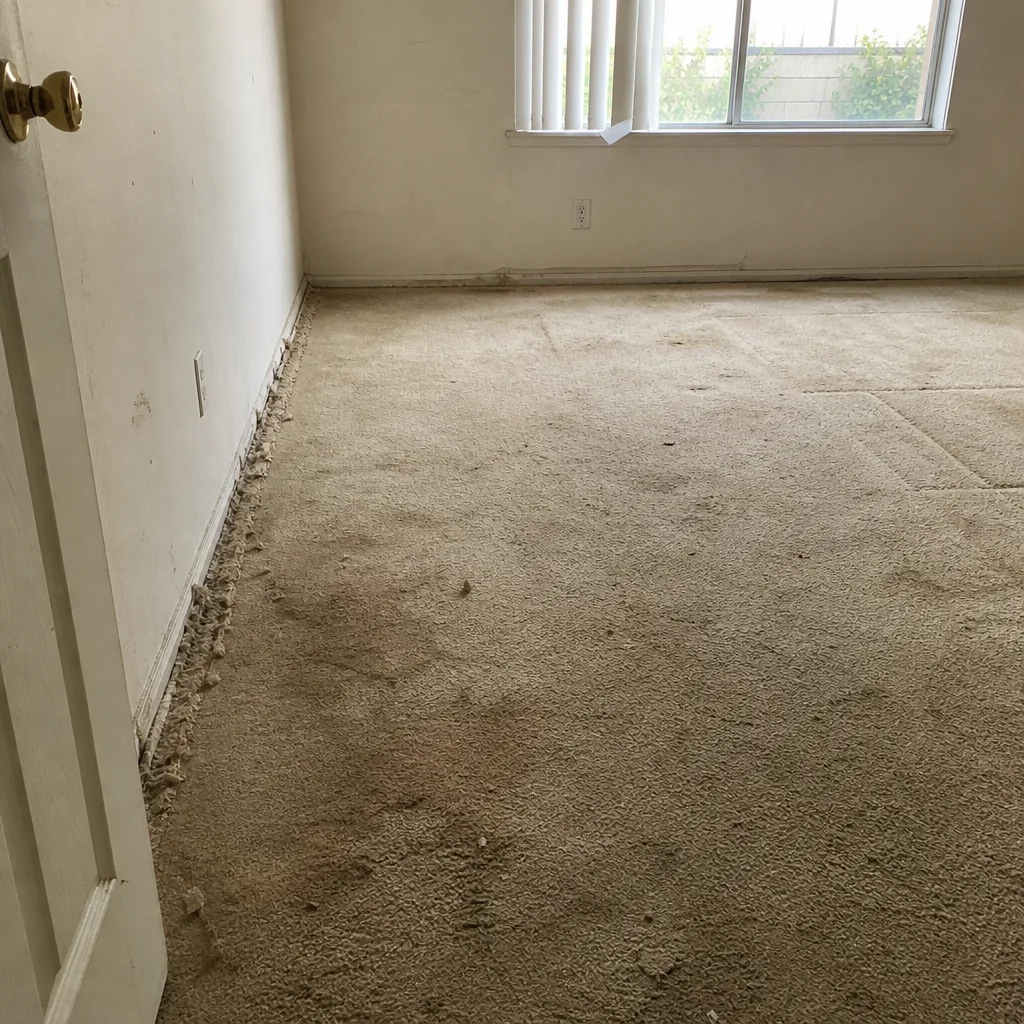 Before
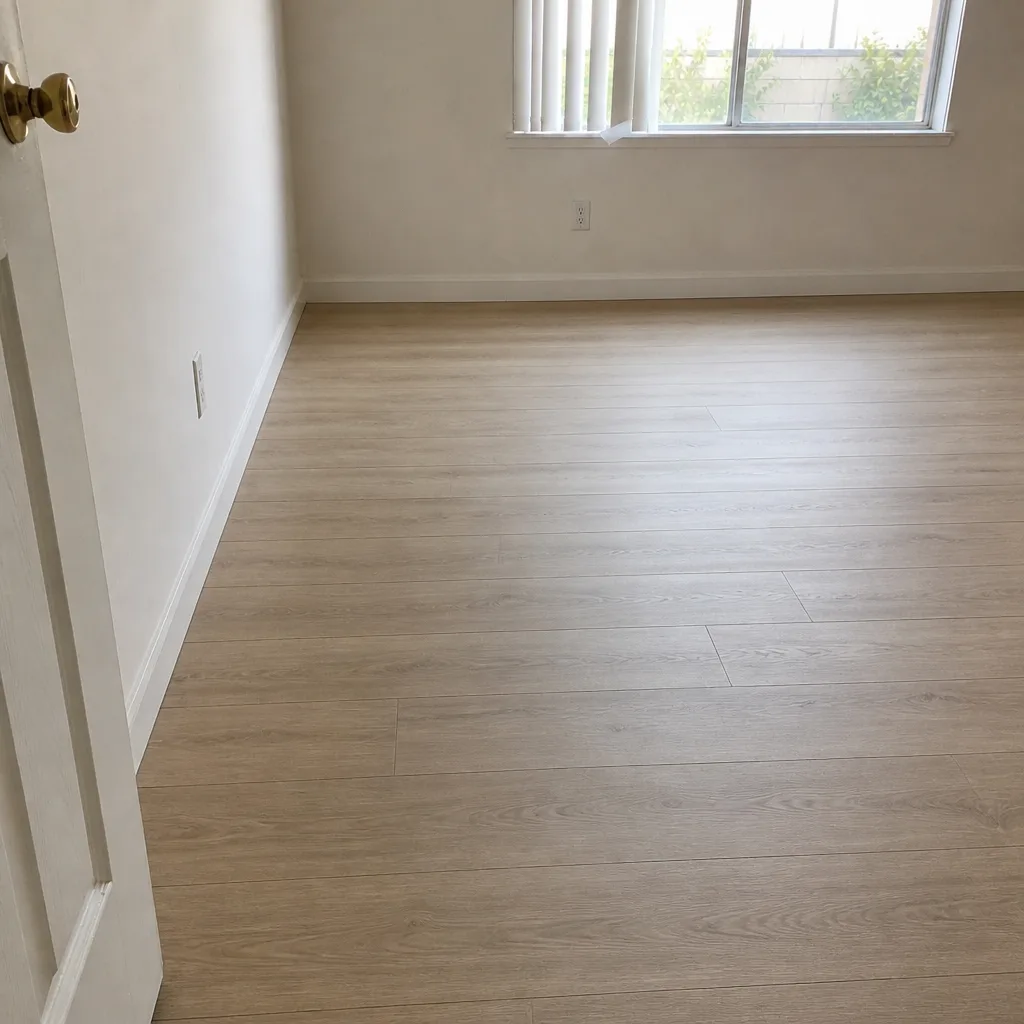 After
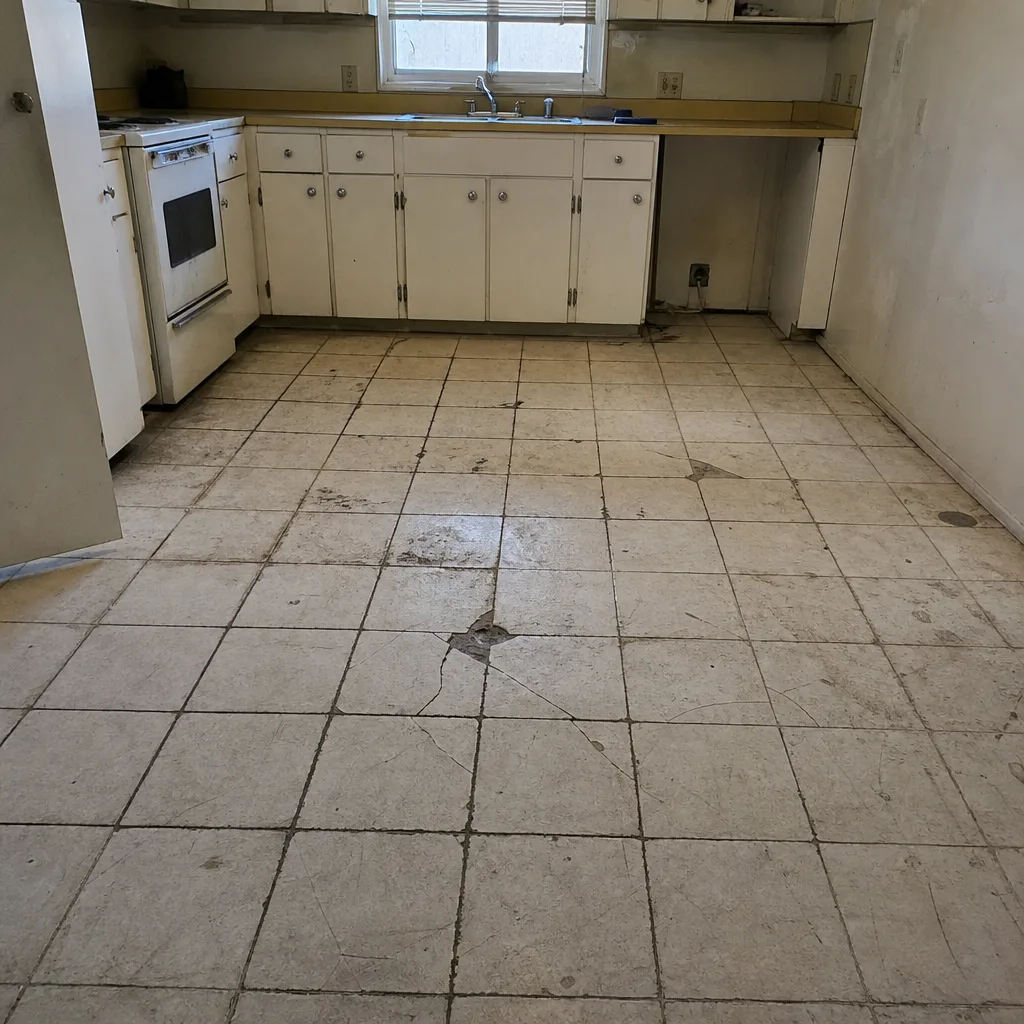 Before
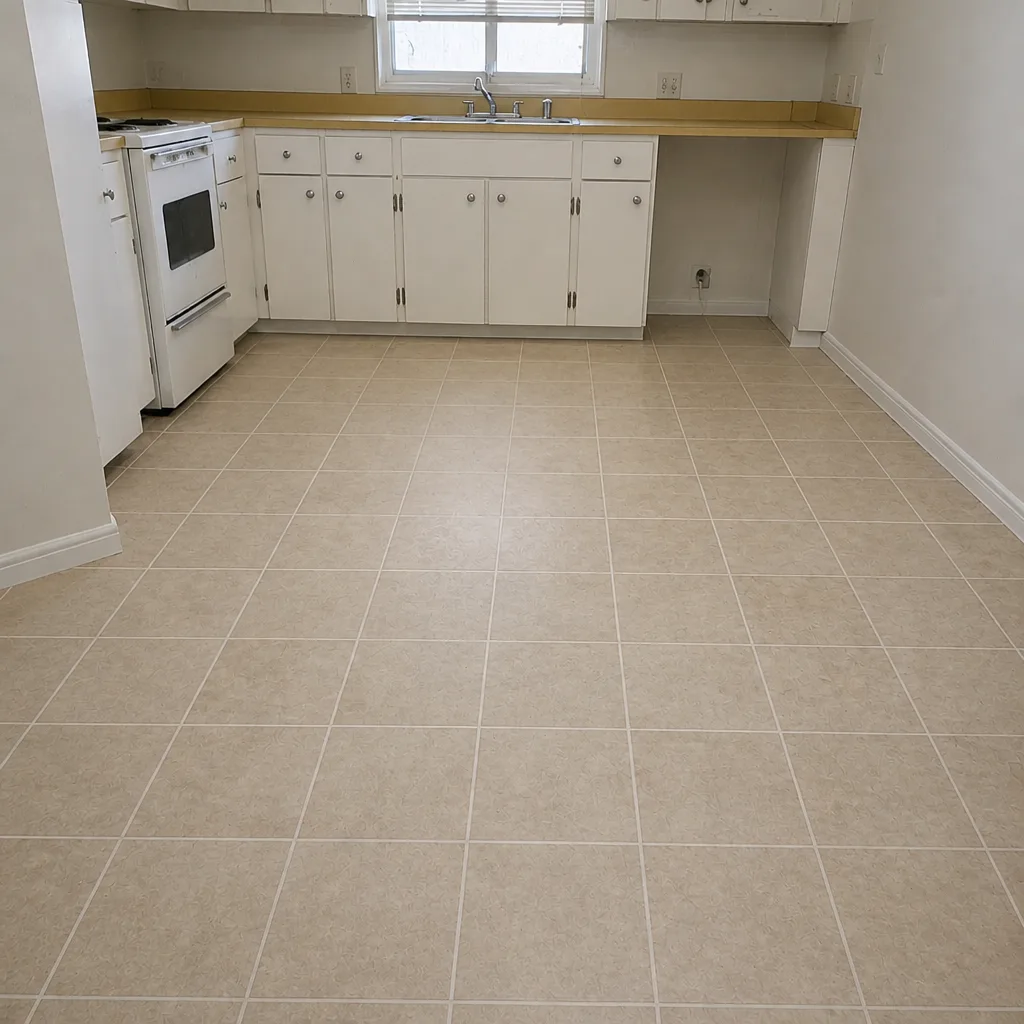 After
When to Call a Professional
If your existing floor is gapping at the seams every winter, cupping or buckling in summer, or lifting along the walls, that’s a sign the installation wasn’t built for the Las Vegas humidity swing and it won’t fix itself. The same goes for a sun-faded floor in a west-facing room where the color loss is uneven, or a slab-on-grade floor where you’re unsure how moisture is behaving. Those are all situations where an in-home look is worth the time.
Flooring Installation Las Vegas offers free estimates in Las Vegas and handles flooring installation Las Vegas as our core service, plus carpet, tile, and hardwood refinishing through one team. Our technicians have up to 13 years of experience matching products to real conditions. Call (888) 294-5867 to schedule your free estimate. We answer 24/7. Fast dispatch from 7am to 7pm.
Frequently Asked Questions
Porcelain and ceramic tile and quality luxury vinyl plank are the most stable choices for Las Vegas homes because they barely move with the humidity swing. Engineered hardwood is a solid option for interior rooms that don’t get direct sun. Solid hardwood and thin laminate work but need careful installation for expansion. Call (888) 294-5867 for an exact recommendation based on your rooms – the estimate is free.
They can. Winter indoor humidity in a Las Vegas home drops low, which causes wood to shrink and small gaps to open at the seams. The gaps usually close when humidity returns in summer. The right expansion space at installation reduces the size of the gaps, but seasonal movement is normal for wood floors.
Quality luxury vinyl like COREtec is a strong choice for a garage conversion because the core is stable and doesn’t swell with humidity like wood-based products. Porcelain tile is even more stable. What we avoid in a garage conversion is solid hardwood and thin laminate, because the slab surface temperature swing will move them.
It’s a risk. Evaporative coolers add humidity to the room below, and wood-based flooring absorbs that moisture. Tile or quality luxury vinyl holds up better in a room with a swamp cooler overhead. If you want wood in that room, engineered hardwood with a stable core is the safer option than solid hardwood.
Yes. West- and south-facing rooms get direct sun through glass for hours, which fades finishes and heats the floor surface unevenly. That causes more UV fade and more expansion in the sunlit strip than the shaded part. North- and east-facing rooms see far less of this. It’s a real variable in product choice.
Every job is priced by a free in-home estimate and a written quote, since the cost depends on the product, room count, subfloor condition, and installation method. We don’t quote from a chart over the phone because a garage conversion and a shaded bedroom are very different jobs. Call (888) 294-5867 to schedule your free estimate; the price is set by the written quote.
The Bottom Line
Las Vegas isn’t dry enough to skip humidity planning and it isn’t hot enough to skip sun planning. It’s a climate of swings, and the products that hold up best are the ones built to move a little without failing: porcelain tile, quality luxury vinyl, and engineered hardwood. Match the product to the room, respect the slab, leave the expansion gap the product requires, and the seasonal cycling won’t catch you off guard. Get the product wrong or skip the installation details, and the same swing will pull the floor apart within a season or two. The good news is that with a free estimate, you can get the right answer before you buy.
Call (888) 294-5867 for a free estimate. We answer 24/7. Fast dispatch from 7am to 7pm.
Written by the team at Flooring Installation Las Vegas.