
Last updated November 18, 2026
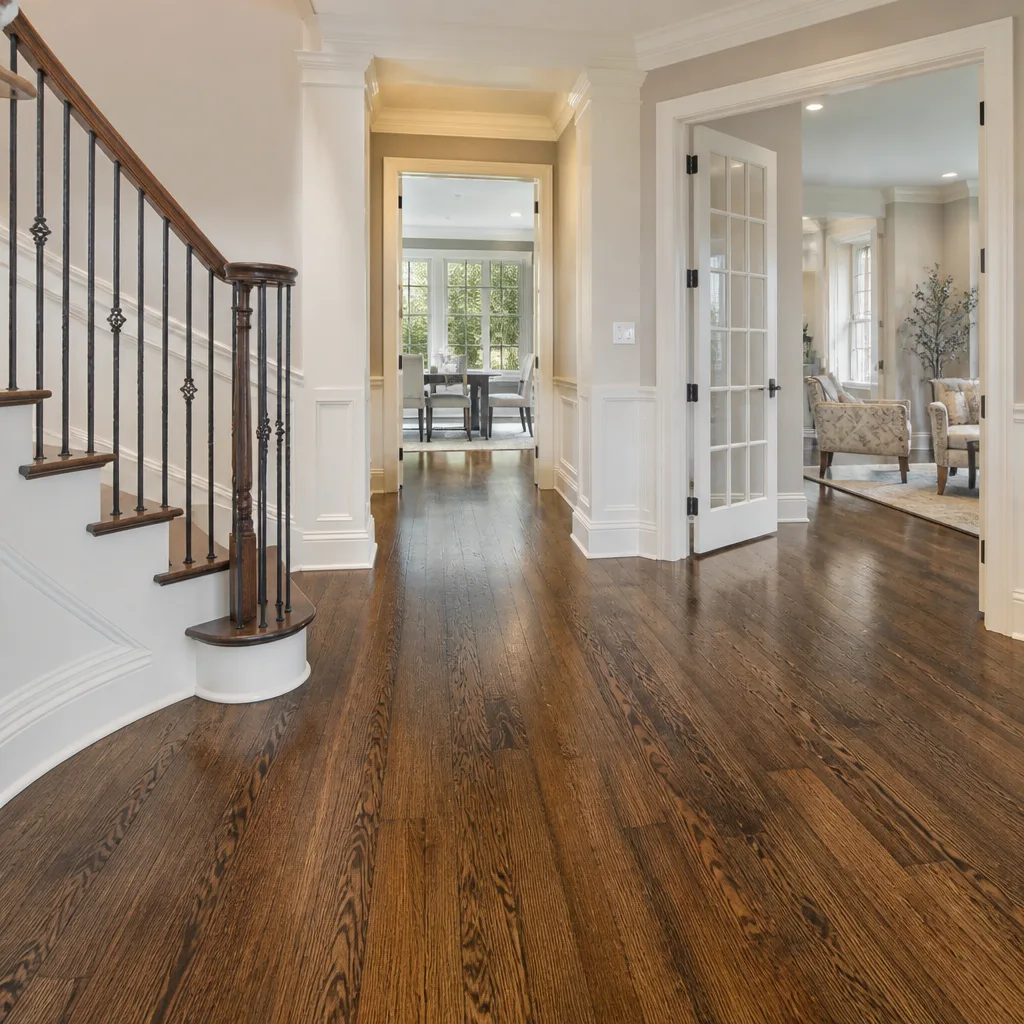 Hardwood
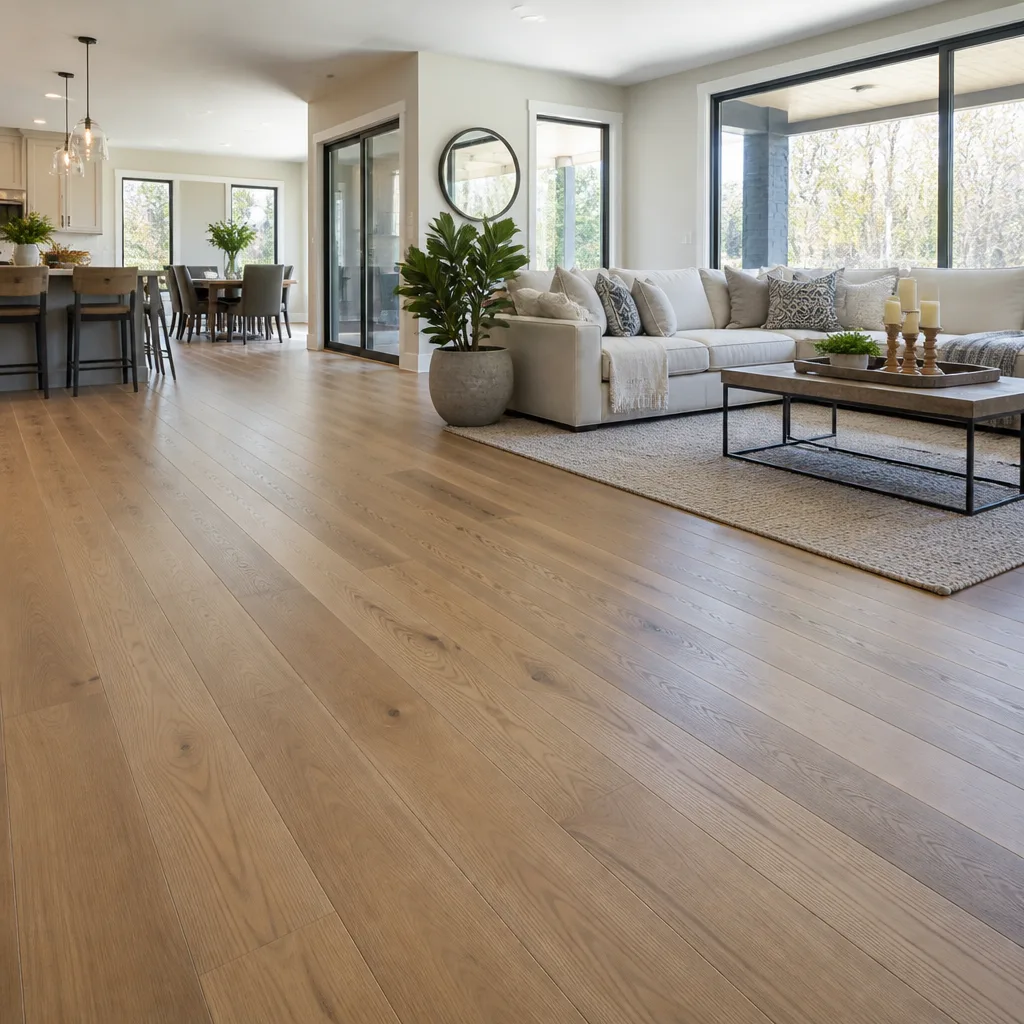 Engineered hardwood
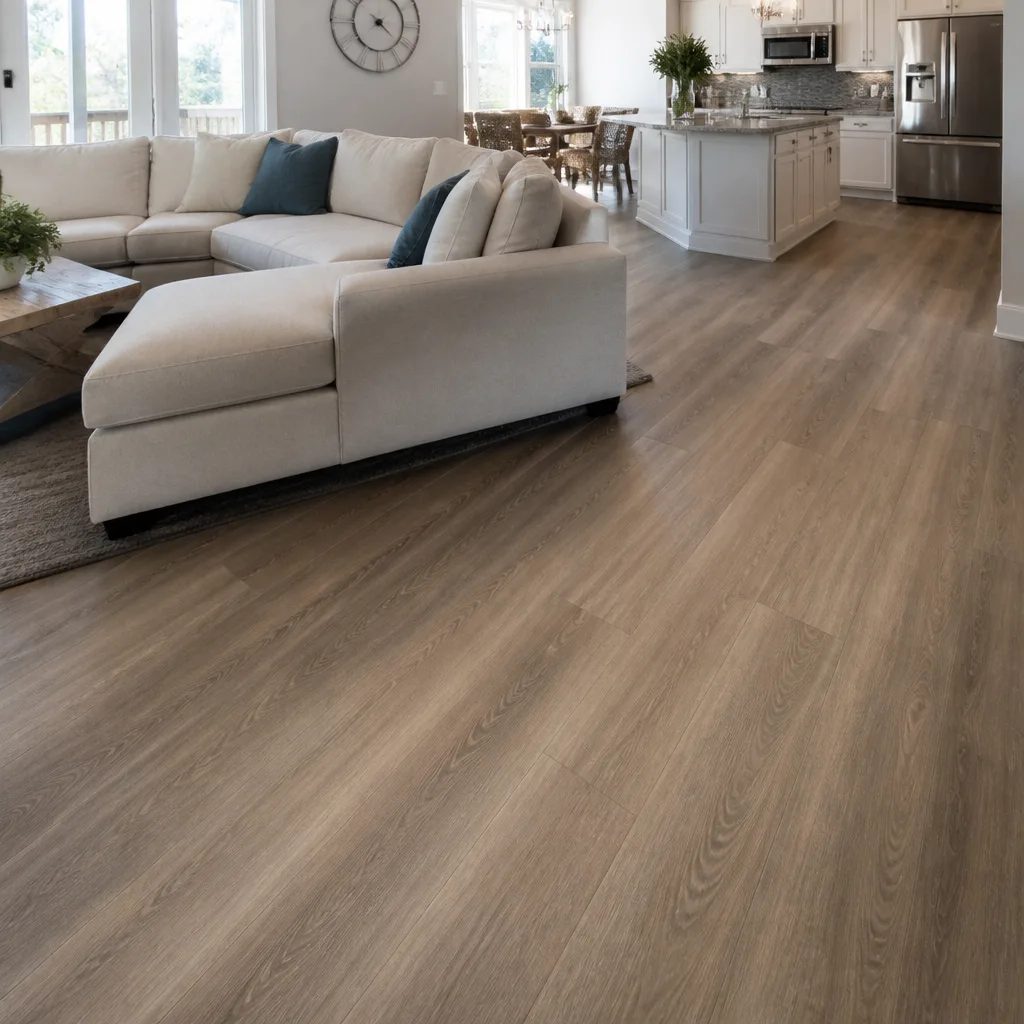 Luxury vinyl plank
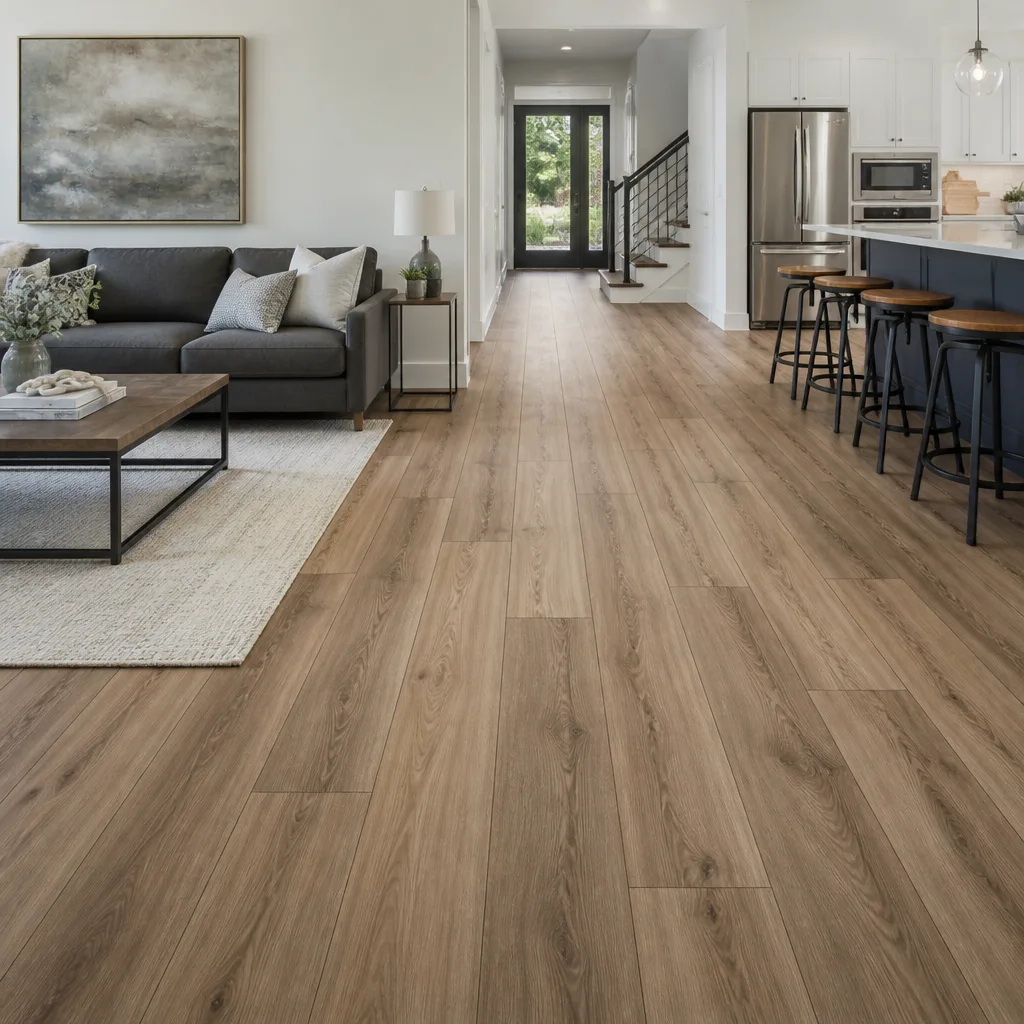 Laminate
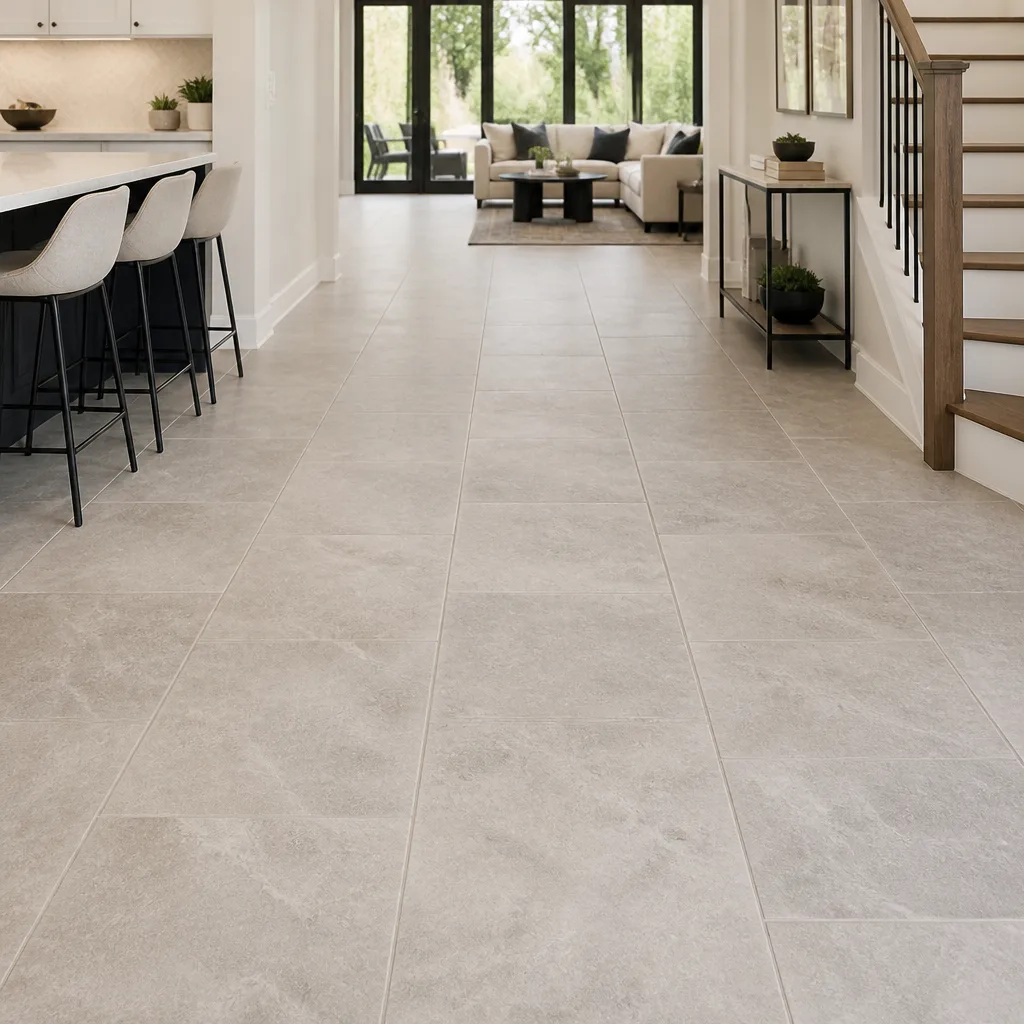 Porcelain tile
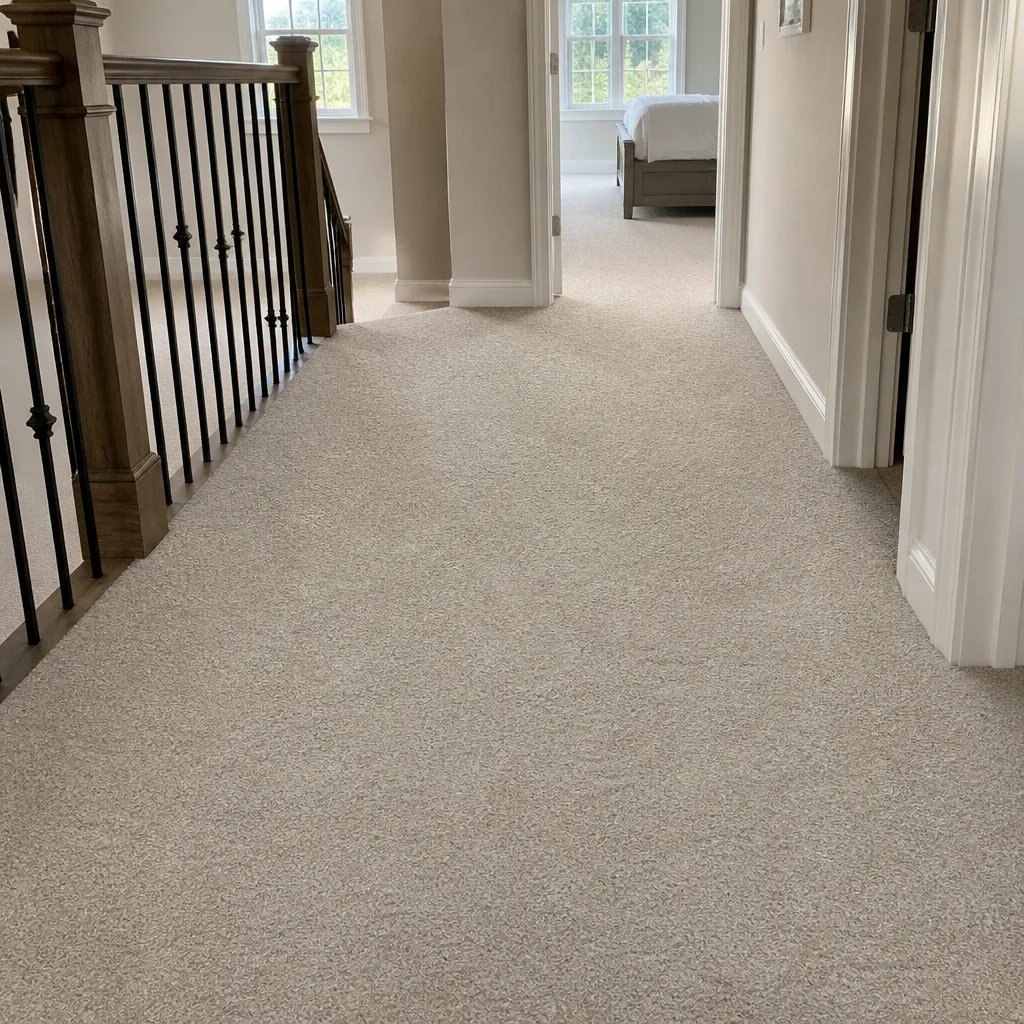 Carpet
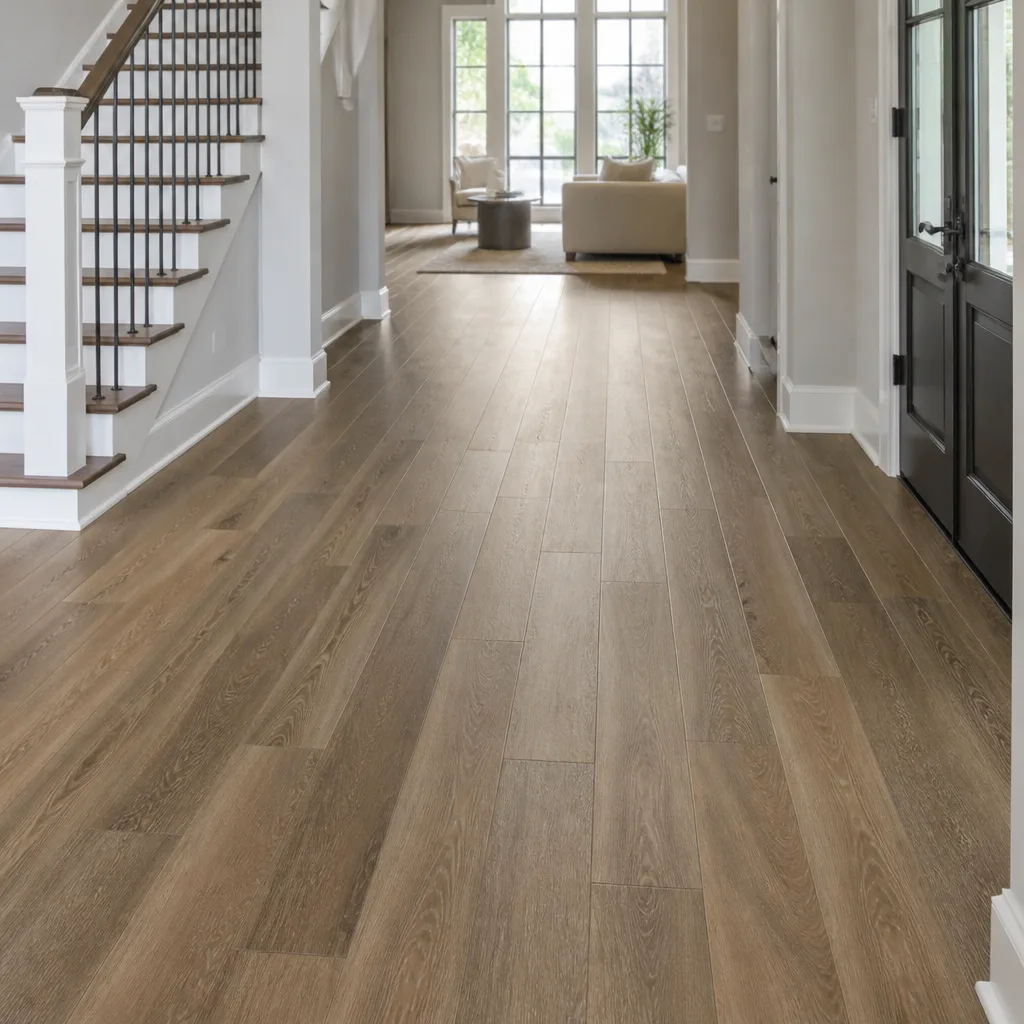 Shaw
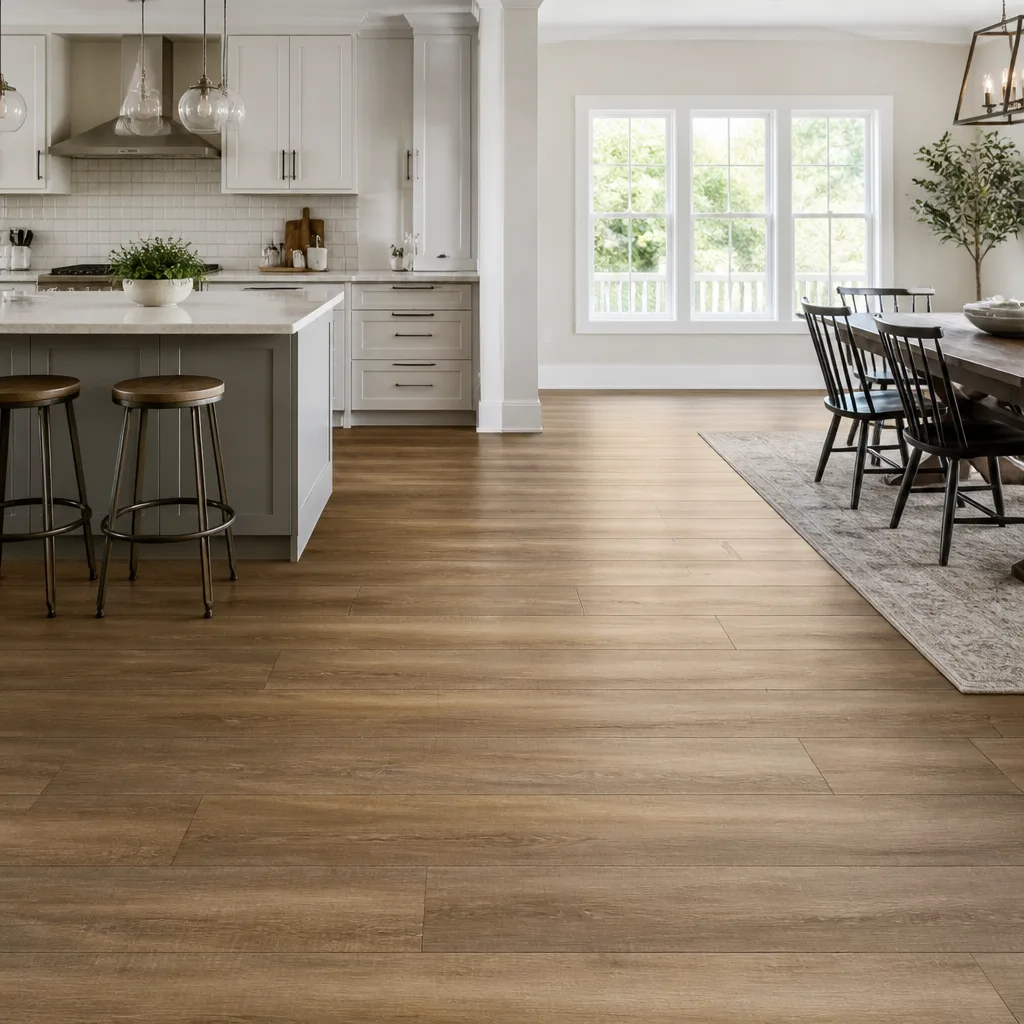 Mohawk
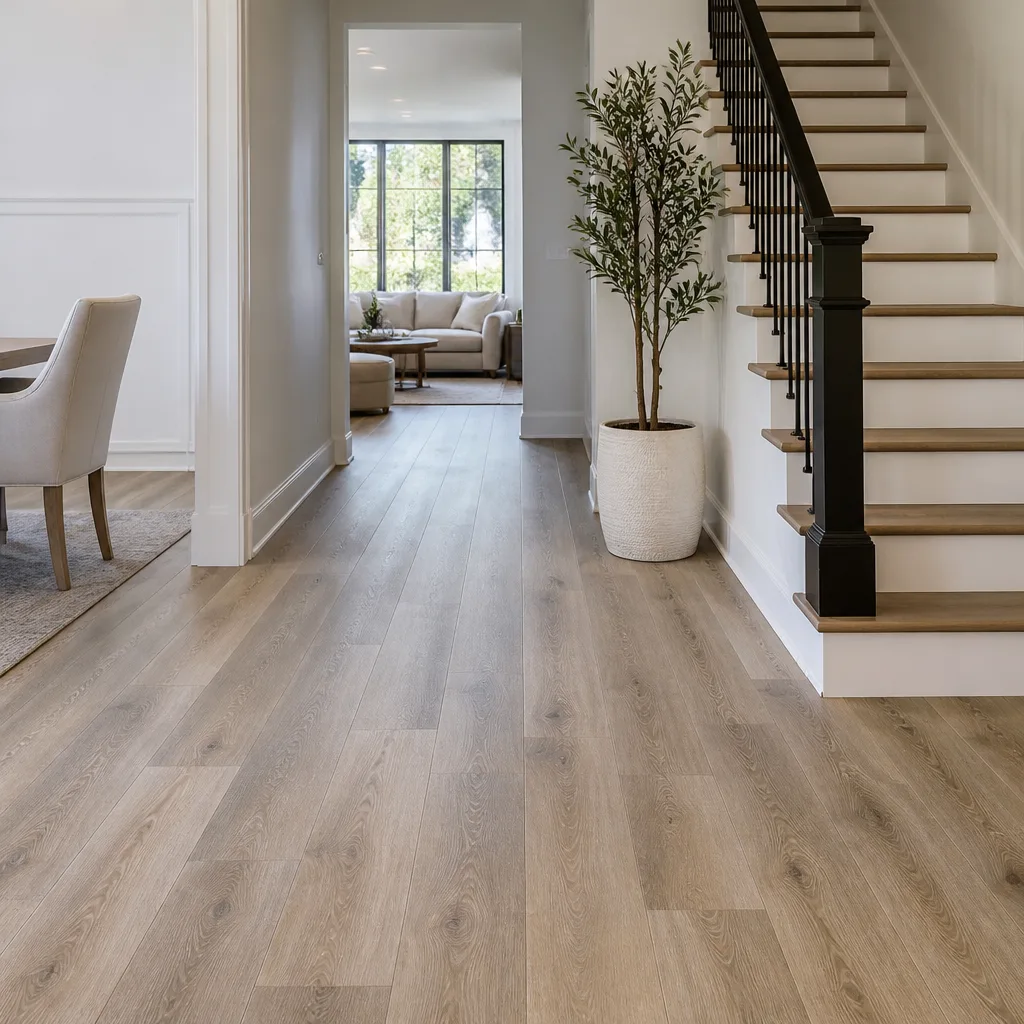 COREtec
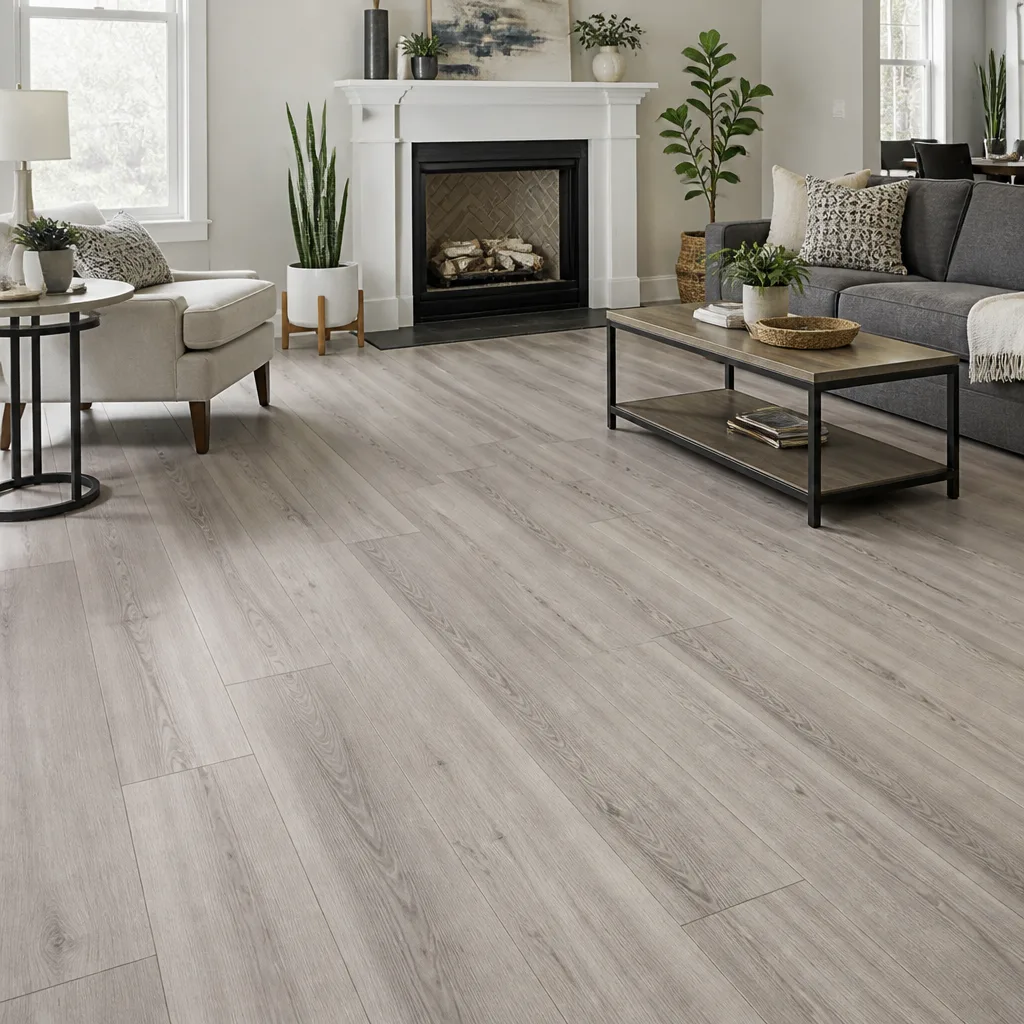 Pergo
Free in-home measure and written estimate: Shaw, Mohawk, COREtec and Pergo lines compared on your own rooms, with carpet, tile, vinyl plank, laminate and hardwood laid out side by side
Get your free estimateThe Complete Guide to Flooring in Las Vegas
Most flooring advice is written for a climate that Las Vegas isn’t. Guide after guide warns about humidity, mold, and damp subfloors, then hands you a product list built for a house in the Midwest. Desert homeowners get the opposite problem and almost none of the guidance. Indoor humidity here can drop into the low teens in summer, and a home without steady HVAC can swing through 20°F or more of temperature change across a single season. That range makes solid hardwood gap, cup, and buckle in ways coastal guides never mention. Meanwhile the house itself is usually built on a concrete slab poured directly on desert soil, which changes how every floor has to go down, from the adhesive to the underlayment to the expansion gap at the wall.
This guide is about those variables. You’ll learn how dry heat fails each flooring category differently, why slab-on-grade construction changes the install method for every product, how Las Vegas HOA rules can dictate what you’re allowed to put down, and how to match a floor to each room by the demands that room actually places on it. We install carpet, install tile, and refinish hardwood, and we work with nine name-brand lines, so we’ve watched desert conditions stress-test all of them. What follows is the field knowledge we wish every homeowner had before they picked a product.
Quick Answer
The best flooring for a Las Vegas home depends on the room: water-resistant luxury vinyl or tile in kitchens, bathrooms, and entries, carpet in bedrooms for comfort and sound, and engineered or refinishable hardwood in living areas where you want real wood. The deciding factors here aren’t style trends. They’re indoor humidity that can fall into the low teens, slab-on-grade construction that transmits moisture and cold directly into the floor, and HOA rules in many master-planned communities that require sound-rated underlayment. Match the material to those conditions room by room and the floor holds up. Ignore them and even a good product will fail early.
Styles & brands we work with
- Hardwood
- Engineered hardwood
- Luxury vinyl plank
- Laminate
- Porcelain tile
- Carpet
- Shaw
- Mohawk
- COREtec
- Pergo
Table of Contents
- Why Las Vegas Rewrites the Flooring Rulebook
- How Dry Heat Fails Each Flooring Material
- Slab-on-Grade Construction: The Variable Nobody Warns You About
- HOA Rules and Sound Underlayment in Las Vegas Communities
- Waterproof Labels, Thermal Expansion, and What Brands Actually Rate For
- A Room-by-Room Priority Matrix for Las Vegas Homes
- Restore What You Have: Hardwood Refinishing in a Dry Climate
- What Flooring Costs in Las Vegas and How to Budget
Why Las Vegas Rewrites the Flooring Rulebook
Las Vegas sits in the Mojave Desert at roughly 2,000 feet, and the climate that surrounds your house is doing something to your floor every day of the year. Summer indoor humidity in a well-sealed home with the air conditioning running can drop to 10 – 15%. Winter is dry too, and the temperature spread between a shaded hallway and a sun-baked west-facing room can be dramatic. None of that is unusual for the valley. All of it is unusual for the flooring industry, which designs most of its guidance around a temperate, moderately humid baseline.
What does that mean for a Las Vegas homeowner? Three things ripple through every product decision.
- Wood moves. Solid hardwood is hygroscopic: it takes on and gives off moisture with the air around it. In a Las Vegas home with wide seasonal humidity swings, that movement shows up as gaps between boards in winter and slight crowning in summer. Engineered hardwood handles it better because the cross-ply core resists movement, but it still needs a stable indoor environment.
- Adhesives and underlayments behave differently. Some products are formulated for humid climates and cure poorly or fail to bond in very dry heat. The right adhesive for a Las Vegas slab isn’t always the one the product was first designed around.
- Sun exposure is its own stress test. A floor along a west-facing sliding door takes direct desert sun for hours. Fading, curling, and adhesive softening concentrate in those zones, not evenly across the room.
The practical takeaway: when you’re shopping for Flooring Installation Las Vegas, the product’s spec sheet matters less than how that product behaves in a 10 – 15% humidity range and over a slab. A guide written for a humid climate will point you toward the wrong material for this house. Our job is to close that gap, because the difference between a floor that lasts and one that doesn’t usually comes down to whether it was chosen for the desert or for the brochure.
How Dry Heat Fails Each Flooring Material
“Heat is bad for floors” is useless advice. Each material fails in its own specific way, and knowing the failure mode tells you whether a product is a good fit for your home or a future problem. Here’s how the major categories behave in Las Vegas conditions.
Carpet
Carpet handles dry heat reasonably well, but the pad and backing matter. Cheap pad compresses and crumbles faster in a hot, dry home, and the carpet loses its cushion and sound absorption long before the face fiber wears out. Carpet also holds desert dust in a way hard surfaces don’t, which is why regular deep cleaning matters more here than in a wetter climate. In bedrooms and on stairs, though, carpet installation remains the comfortable, quiet choice, and quality pad is where you get your money’s worth.
Solid Hardwood
This is the most humidity-sensitive floor you can put in a Las Vegas home. In a house without steady climate control, solid wood will gap along the seams as the indoor air dries, and it can cup or crown when moisture creeps back in. It’s not that solid hardwood is wrong here, it’s that it demands a homeowner who keeps the indoor environment stable. Engineered hardwood, with its layered core, holds up far better and is a smarter default for most desert homes.
Laminate
Laminate is dimensionally stable and resists the humidity swing well, which is one reason it’s popular for budget-conscious rooms. Its weak point is moisture, not dryness. Spills, pet accidents, and any water that sits on the seams can swell the core, and a laminate floor can’t be refinished when the surface wears. It’s a good fit for dry, low-moisture rooms and a poor fit for bathrooms or laundry areas.
Luxury Vinyl (LVT and LVP)
Luxury vinyl is the strongest performer in this climate overall. It’s dimensionally stable, water-resistant when properly installed, and comfortable underfoot. The catch is that “waterproof” marketing doesn’t mean immune to thermal movement. Vinyl expands and contracts with temperature, and a large room installed tight to the walls without proper expansion gaps can buckle in a hot zone like a sunroom or an entry getting full afternoon sun. The material is right for Las Vegas; the installation has to respect expansion.
Tile
Ceramic and porcelain tile are essentially unaffected by humidity and temperature swings, which makes them the most climate-proof floor you can install. The risk sits underneath the tile, not in it. A slab that transmits moisture, or a deflection issue in the subfloor, can crack tile and grout regardless of how good the tile is. That’s why tile flooring installation is really a subfloor and prep job, and why prep is where a tile floor is won or lost.
Slab-on-Grade Construction: The Variable Nobody Warns You About
Most Las Vegas homes are built slab-on-grade, meaning the concrete floor is poured directly on the ground and there’s no crawlspace or basement underneath. That single fact changes the installation method, adhesive choice, and underlayment requirement for every product type. The slab is in direct contact with desert soil, and it does three things you have to plan around.
- It transmits moisture from below. Concrete is porous and pulls ground moisture upward. In a wetter climate that’s a mold problem. Here it’s a slow vapor drive that can quietly degrade the wrong adhesive or warp the wrong floor. A moisture test at the slab is a step you skip at your own risk.
- It transmits temperature. A slab floor stays cooler than the air on winter mornings and can feel cold underfoot. That affects comfort, and it affects how some adhesives and underlayments cure.
- It’s rarely perfectly flat. Concrete slabs settle and develop high and low spots. Most flooring manufacturers specify a flatness tolerance before their product goes down, and a floor installed over an out-of-tolerance slab will telegraph those dips and humps or fail at the seams.
For a Las Vegas install, that means the plan starts at the slab. Moisture testing, patching and leveling low spots, and choosing a vapor-retarding underlayment or adhesive rated for slab conditions come before product selection is even final. This is also why we don’t treat installation as a commodity: two crews can lay the same box of flooring over the same slab and get completely different results depending on prep. A general contractor who “also does floors” often skips the moisture test. On a desert slab, that’s the step that decides whether the floor is still flat and tight in five years.
HOA Rules and Sound Underlayment in Las Vegas Communities
If you live in a master-planned community or a condo, check your HOA rules before you buy a single box of flooring. Many Las Vegas HOAs require a sound-rated underlayment under hard flooring regardless of which floor of the building you’re on, and some specify an Impact Insulation Class (IIC) rating the assembly has to meet. Hard surfaces like tile and hardwood reflect sound, and a community built with shared walls, shared floors, or close neighbors often writes that requirement into its governing documents.
Why does this matter before you shop? Because the underlayment is part of the flooring assembly, and the wrong one can fail inspection or violate your CC&Rs even if the flooring itself is beautiful. It also changes your budget: a sound-rated underlayment adds cost and thickness, and it can affect your finished floor height at doorways and transitions. In our experience, the homeowners who avoid trouble are the ones who read the HOA documents first and hand the requirements to whoever is installing the floor.
Three practical steps for a Las Vegas HOA homeowner:
- Request the flooring and sound-rating requirements in writing from your HOA or management company before ordering product.
- Share those requirements with the installer before the estimate is finalized, so the underlayment and assembly are priced correctly.
- Keep documentation of the underlayment spec in case the HOA asks for it after installation.
HOA rules vary from community to community across the valley, so nobody can hand you a universal answer. What we can do is install to the spec your HOA gives us. The requirements are yours to confirm; the assembly is ours to get right. If you’re new to a neighborhood in Las Vegas, this is one of the first local details worth sorting out, right alongside your utility setup and your landscaping rules.
Waterproof Labels, Thermal Expansion, and What Brands Actually Rate For
There’s a gap between a product’s marketing and its spec sheet, and in a desert climate that gap has real consequences. A label that says “waterproof” tells you the product resists water. It says nothing about how that product handles thermal expansion, which in a sun-baked Las Vegas room is the failure mode that actually matters. Here’s how to read past the label.
Luxury vinyl products like those in the LifeProof and COREtec lines are genuinely water-resistant for everyday spills and damp mopping, and that’s a real advantage in a kitchen or a pet-heavy household. Water-resistant is the accurate word; standing water and moisture coming from below still have to be dealt with, and no floor is immune to a slab that’s driving vapor up through the assembly. Where “waterproof” labels mislead is thermal movement. Vinyl expands and contracts with temperature, and the larger the uninterrupted room, the more that movement adds up. A big open-plan great room running to a west-facing window wall is exactly where a floor installed too tight will buckle. The product isn’t the problem; the installation has to account for expansion with proper gaps and, in large rooms, movement joints.
This is where carrying nine brands pays off. Shaw and Mohawk give us broad coverage across carpet, resilient, and hardwood categories, so a whole-home project can stay coordinated room to room. Karndean covers the high-design end of luxury vinyl. Daltile handles premium ceramic and porcelain for kitchens, baths, and entries where the tile itself is the design statement. The point isn’t to push a brand. It’s that different products are engineered around different conditions, and we can match one to your house instead of steering you to whatever a single manufacturer happens to make. The right floor for the room is a functional decision first. Fashion comes second.
A Room-by-Room Priority Matrix for Las Vegas Homes
Flooring decisions fail when they’re made for the whole house at once. Each room places different demands on a floor, and in Las Vegas a few local factors sharpen those demands: pool access tracking water and grit through the house, desert dust blowing in at every door, and the high-traffic paths of a single-story open-plan layout where one continuous floor takes everything from the front entry to the back patio. Here’s how we think through it room by room.
Kitchen, Bathrooms, Laundry, and Entry
These are the moisture and traffic zones. Tile, especially porcelain from a line like Daltile, is the most climate-proof and water-tolerant hard floor you can put down. Water-resistant luxury vinyl is the comfortable, warmer alternative for kitchens. Laminate and solid hardwood don’t belong in a wet room.
Living and Great Rooms
These carry the highest foot traffic in an open-plan single-story home and take the most direct sun. Engineered hardwood gives you real wood with better dimensional stability, and it can usually be sanded and refinished later, which stretches its life. Luxury vinyl is the practical pick with pool traffic around, since it shrugs off tracked-in water. Either way, plan expansion gaps for any floor running wall to wall in a large space.
Bedrooms and Stairs
Comfort and sound are the priorities here, and that means carpet. Quality carpet underfoot quiets the house, holds warmth on a cold slab winter morning, and softens the stairwell. Broadloom from a Shaw or Mohawk line covers this well.
Entry Transition Zones and Pool Paths
The path from the back door to the pool is where desert dust and dripping swimsuits meet. Hard, water-resistant surfaces work best here, and the transition between hard flooring and carpet should be planned so it lands out of the main traffic line. A planned transition strip and a defined dust zone at each exterior door save the rest of the floor a lot of wear.
What This Means in Practice
A typical Las Vegas whole-home plan mixes two or three materials: tile or water-resistant vinyl in the wet zones, engineered hardwood or vinyl in the living areas, and carpet in the bedrooms. The single-story open-plan layout many valley homes share means the transitions matter, so they should be designed before the products are ordered. That’s the kind of decision we help with at the estimate rather than after the boxes have arrived.
Restore What You Have: Hardwood Refinishing in a Dry Climate
Before you shop for new flooring, it’s worth asking whether the wood floor you already have can be restored. Hardwood refinishing is a dedicated skill, and it protects a real investment. In a Las Vegas home, refinishing an existing wood floor also has a practical edge over replacement: the wood that’s already acclimated to this house and this climate is sometimes more stable than new product brought in fresh. That cut can be a meaningful consideration in a desert home where wood movement is the main risk.
Refinishing starts with an assessment, and not every floor can be saved. Whether a wood floor can be refinished depends on the thickness of the wood and its condition, and we check both at the estimate visit. A floor that’s been sanded down too many times, or one showing deep structural damage, may not have enough wear layer left to take another cut. Matching a stain to a sample is also not guaranteed; the wood species and its condition affect the final color, and we say that plainly so nobody is surprised. You can read more about how we approach a restoration at our main flooring page.
The refinishing steps, at a high level, so you know what’s involved:
- Assess thickness, condition, and any board repairs the floor needs.
- Sand the surface to remove the old finish and level the floor.
- Apply the new stain and protective finish, matching the look you’ve settled on as closely as the wood allows.
- Let the finish cure according to the product instructions, which set how long the floor stays off-limits.
Refinishing is the go-to option for a homeowner who loves the character of existing wood, or for a landlord restoring a rental between tenants on a tighter budget than a full replacement. It’s also the part of our work that shows real craft, because restoring a floor takes a different set of skills than laying a new one. If you’re weighing restore versus replace, ask at the estimate; we’ll tell you honestly which one your floor supports.
What Flooring Costs in Las Vegas and How to Budget
There’s no single price for a flooring project, because the number depends on the material, the square footage, the condition of the slab, and whether the job is one room or a whole house. What we can tell you is how to budget for it in a way that accounts for the local realities this guide has covered.
The written estimate is where the final price is set, and it should itemize the parts that aren’t the floor itself:
- Material. The flooring line and grade you choose, whether that’s a budget laminate or a premium Karndean luxury vinyl.
- Slab prep. Moisture testing, patching, and leveling as needed.
- Underlayment and adhesive. Including any sound-rated underlayment your HOA requires.
- Transitions and labor. The material and work at doorways and between rooms.
- Refinishing, if it applies. Priced per the floor’s condition and the finish you select.
Two budget notes specific to a desert project. First, don’t treat slab prep as optional; it’s the step that keeps a correctly chosen floor from failing. Second, if your home is in an HOA community, get the sound-underlayment requirement in writing before you budget, because it’s a real line item. When you request an estimate, ask for it broken down by these categories so you can see where the money goes. That also lets you compare bids honestly, since a low quote often means prep was skipped.
Common Mistakes to Avoid
- Choosing products from humid-climate advice. A floor guide written for a wet climate will point you toward materials that don’t suit a 10 – 15% humidity range. Read the product’s spec sheet for desert behavior before you commit, not just the brochure.
- Skipping the slab moisture test. On a Las Vegas slab-on-grade foundation, moisture from below is a real variable. Install the wrong adhesive over an untested slab and you’ll find out the hard way, months later.
- Treating “waterproof” as “stable.” A water-resistant vinyl floor still expands with heat. Install it tight to the walls in a sun-baked room and it will buckle. Ignore expansion gaps at your own expense.
- Forgetting the HOA before you buy. Many master-planned communities require a sound-rated underlayment for hard floors. Order the wrong assembly and you may be pulling it back out to pass a requirement you could have priced up front.
- Running one material through the entire house. Putting the same floor in the bathroom and the bedroom trades comfort for convenience. Las Vegas homes reward a room-by-room match based on moisture, traffic, and sun exposure.
- Assuming every wood floor can be refinished. Wear-layer thickness and condition decide whether refinishing is possible, and a stain match is never guaranteed. Get the assessment before you plan around it.
- Choosing on trend instead of function. A flooring line that’s fashionable this year may be the wrong product for a pool-side living room. Match the floor to the room’s real demands and you won’t be replacing it on a trend cycle.
See the difference
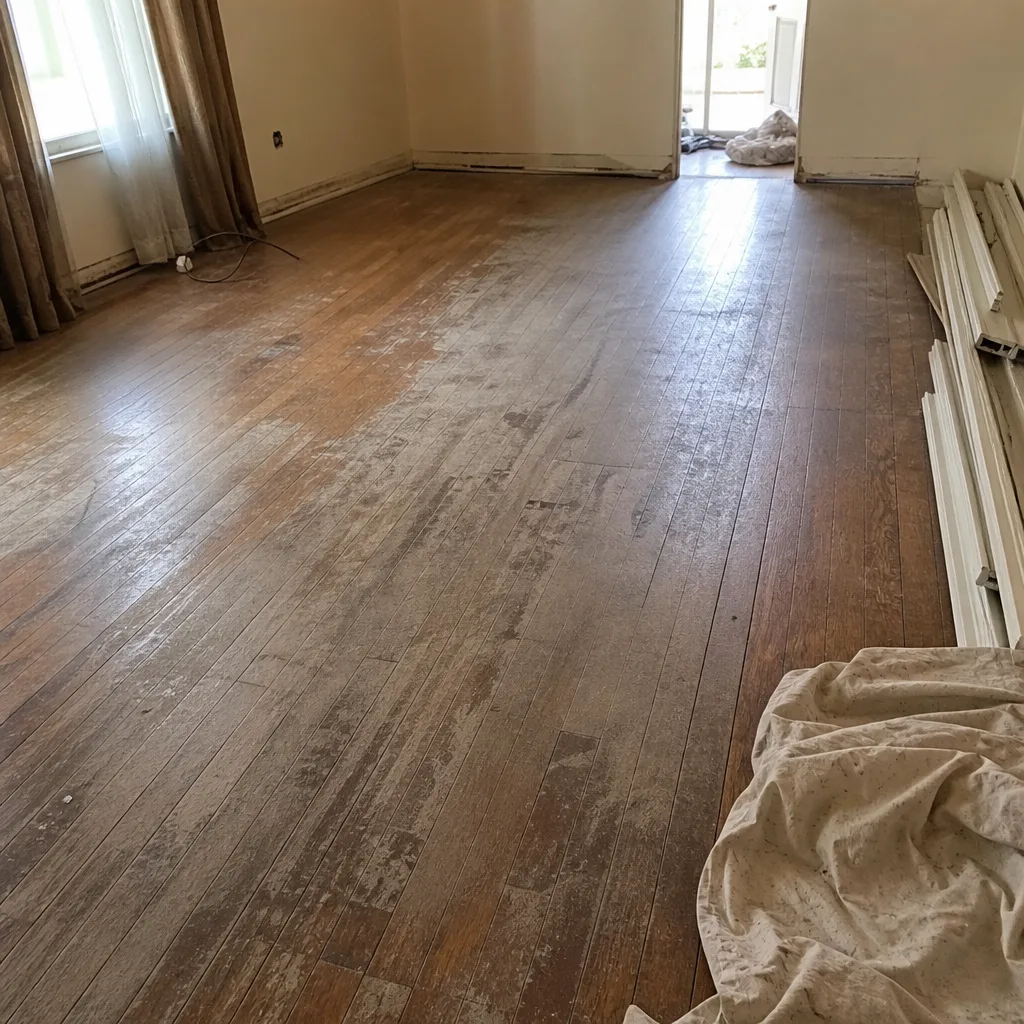 Before
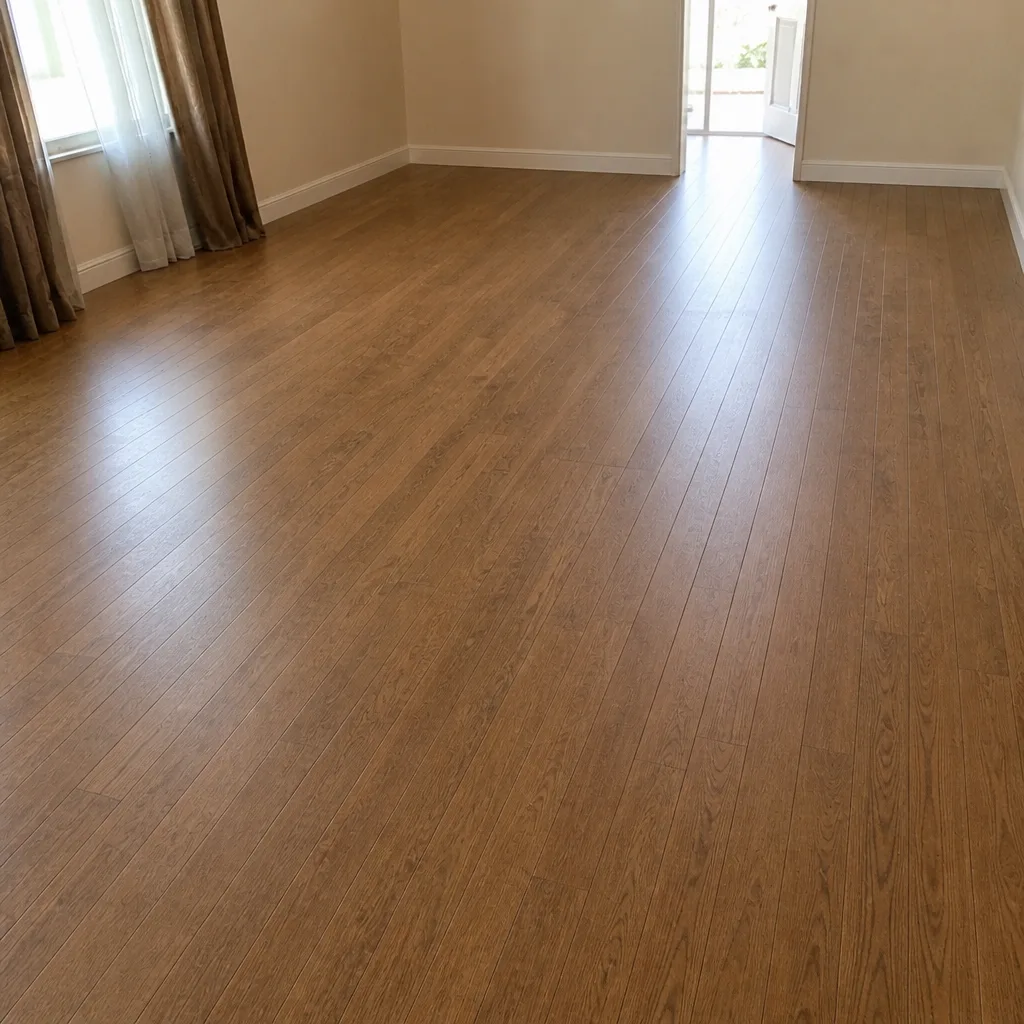 After
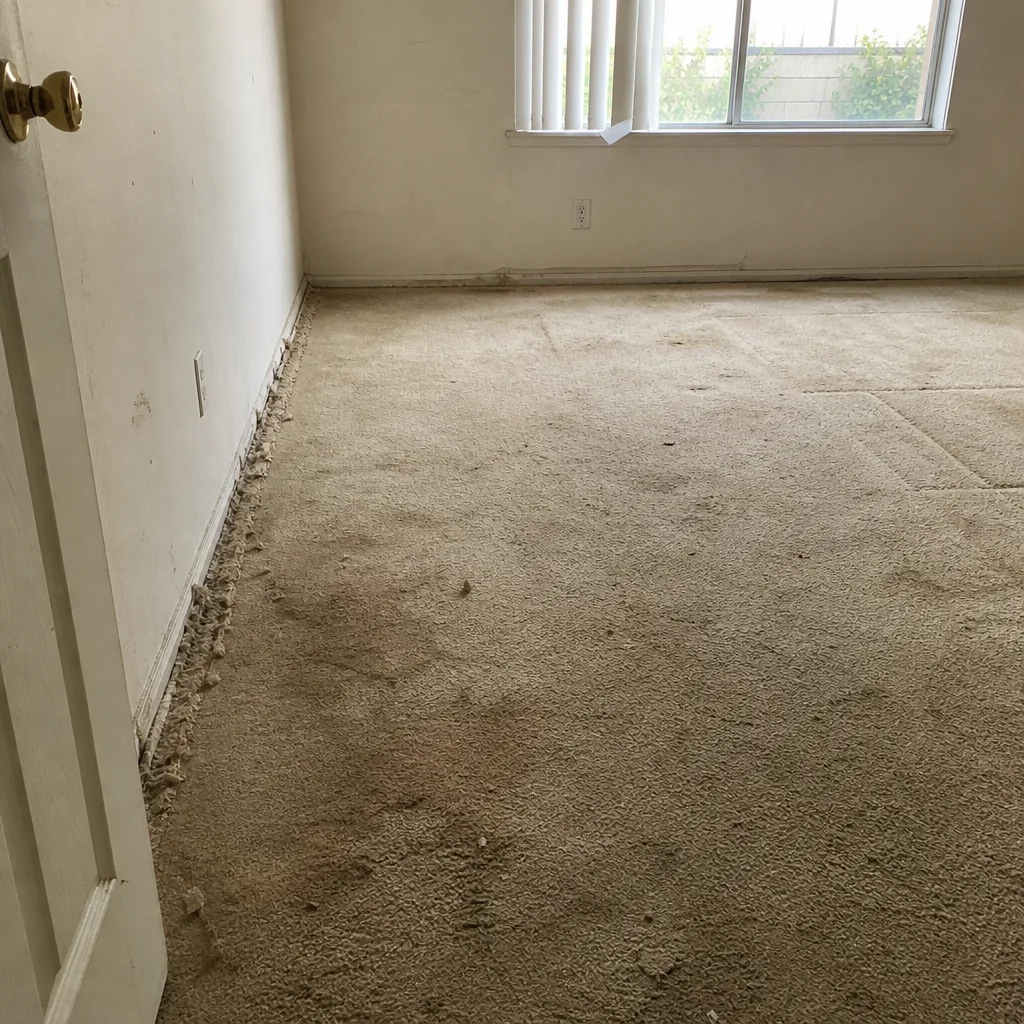 Before
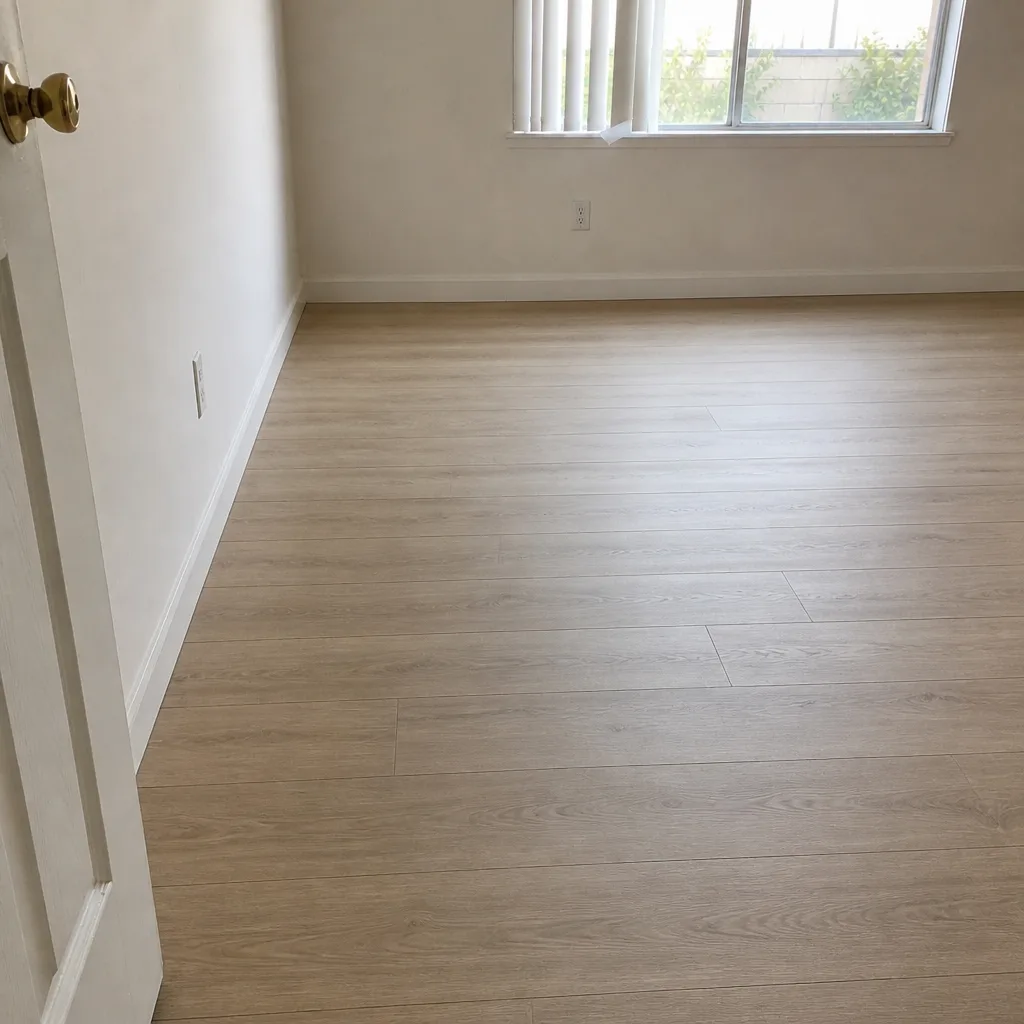 After
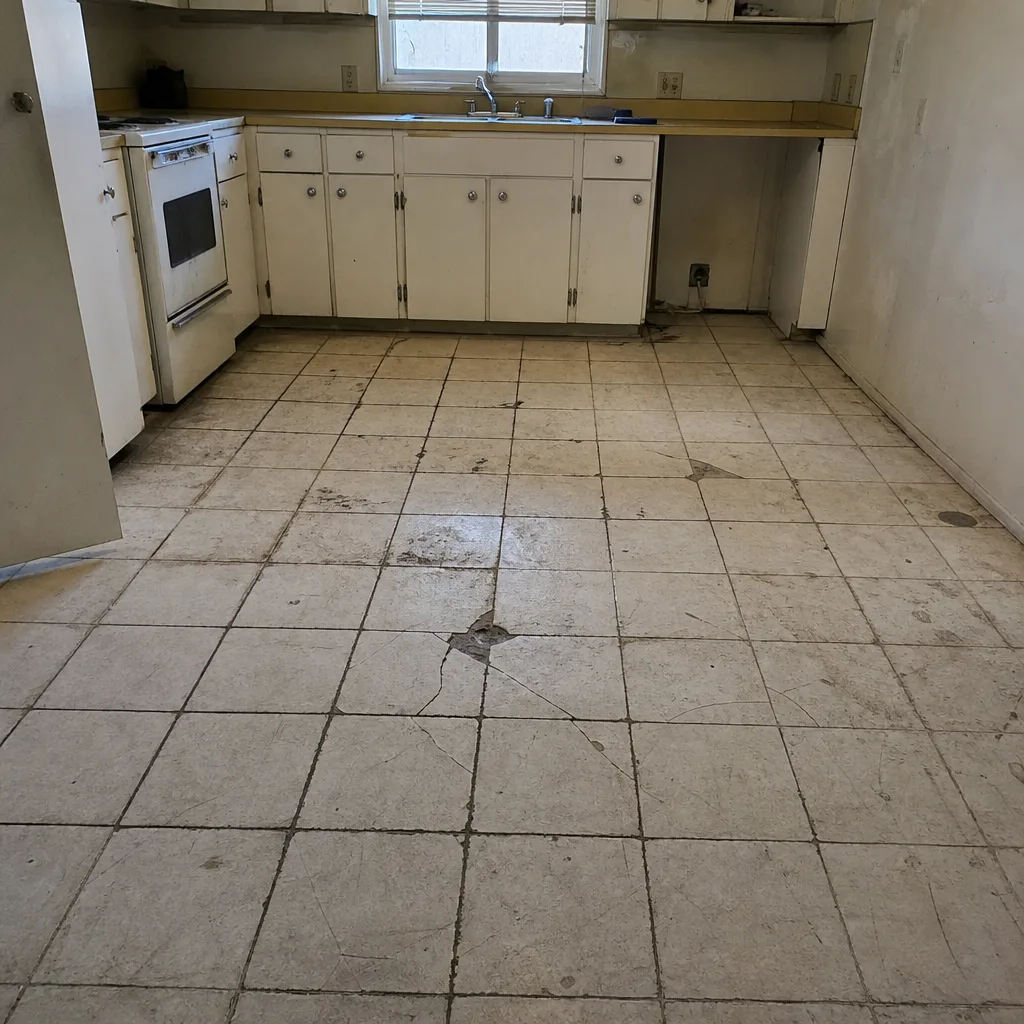 Before
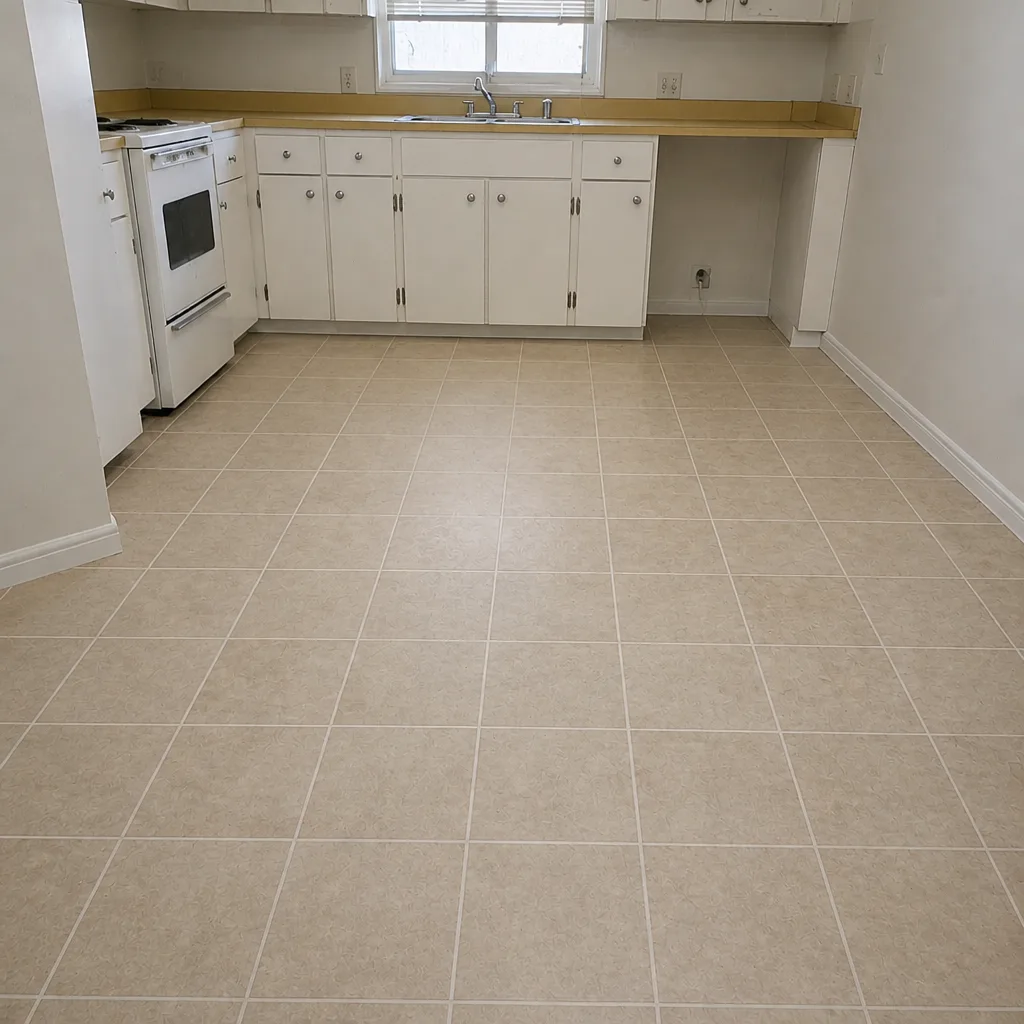 After
When to Call a Professional
Some flooring work is genuinely a homeowner’s call, like rearranging furniture or pulling up a rug. But several situations call for a pro who has dealt with desert conditions before. If your concrete slab is uneven or you’ve never had it moisture-tested, get an assessment before you buy. If your HOA requires a sound-rated assembly, a proper install protects you from a costly redo. If your home sits in a hot, sun-facing zone where a large vinyl floor has buckled, the fix is an install correction, not a new product. And if you’re considering refinishing existing wood, only an assessment can tell you whether the floor supports it.
Flooring Installation Las Vegas offers free estimates in Las Vegas. Call (888) 294-5867 to schedule yours. Our technicians have up to 13 years of experience, we install carpet, tile, and refinish hardwood, and we work with nine name-brand lines so you can match the right floor to each room. The estimate is free, the price is set per job by the written estimate, and it’s the right time to ask every question this guide raises about your specific house.
Frequently Asked Questions
There’s no single best floor, because the right choice depends on the room. Tile or water-resistant luxury vinyl suits kitchens, baths, and entries; carpet suits bedrooms and stairs for comfort and sound; and engineered hardwood suits living areas where you want real wood. The deciding factors in Las Vegas are low humidity, slab-on-grade construction, and any HOA sound requirement, so match the material to those conditions room by room. Call (888) 294-5867 for an exact quote, since the written estimate sets the final price and estimates are free.
Solid hardwood gaps and buckles because it takes on and gives off moisture with the air around it, and Las Vegas indoor humidity can swing widely across a season. In a home without steady climate control, the wood shrinks in dry summer air and swells when moisture returns, which shows up as gaps and cupping. Engineered hardwood, with its layered core, resists that movement far better and is usually the smarter choice for a desert home. If your existing floor is gapping, call (888) 294-5867 to talk through options; estimates are free.
Yes, it changes three things: the adhesive choice, the underlayment requirement, and the prep work. A concrete slab on desert soil transmits moisture from below and can be uneven, so a moisture test and patching or leveling come before the flooring goes down. Skipping that prep is the most common reason a good floor fails early. We price slab prep into the written estimate so there are no surprises. Call (888) 294-5867 for a free estimate on a Las Vegas slab.
Not necessarily. Many Las Vegas HOAs, especially in master-planned communities and condos, require a sound-rated underlayment under hard flooring and may specify an IIC rating the assembly has to meet. Requirements vary from community to community, so request your rules in writing before you order product. We install to whatever spec your HOA provides. Call (888) 294-5867 and have those requirements in hand when we estimate your project.
Refinishing is worth considering when your existing wood has enough wear-layer thickness and is in good enough condition to take another sanding, which we check at the estimate visit. It protects a real investment and keeps wood that’s already acclimated to your home, which matters in a dry climate. Not every floor can be refinished, and a stain match isn’t guaranteed, so it starts with an assessment. Call (888) 294-5867 for a free estimate; we’ll tell you honestly which option your floor supports.
It means the product resists water from spills and damp mopping; water-resistant is the more accurate term, since standing water and moisture from below still have to be managed. It does not mean the floor is immune to thermal expansion, which is the failure mode that matters in a hot, sun-baked Las Vegas room. Large vinyl floors need proper expansion gaps and movement joints to avoid buckling. Call (888) 294-5867 for an exact quote on a properly installed floor; estimates are free.
The Bottom Line
Las Vegas isn’t just a hot place to live; it’s a stress test that eliminates flooring products built for a temperate, humid climate. The winning approach is simple to state and easy to neglect: choose each material for the room’s real demands, test and prep the slab before anything goes down, respect the HOA’s sound requirements, and account for thermal expansion in any floor running through a sun-baked open-plan space. Nine trusted brands, one installation team, means the product can match the room instead of the room being squeezed to fit one product. Restore the wood you already love or start fresh, but make the decision for this climate, not the brochure. Call (888) 294-5867. We answer 24/7. Fast dispatch from 7am to 7pm, Sunday through Friday. Estimates are always free, and the written estimate sets the final price.
Written by the team at Flooring Installation Las Vegas.