
Last updated November 18, 2026
 Hardwood
 Engineered hardwood
 Luxury vinyl plank
 Laminate
 Porcelain tile
 Carpet
 Shaw
 Mohawk
 COREtec
 Pergo
Free in-home measure and written estimate: Shaw, Mohawk, COREtec and Pergo lines compared on your own rooms, with carpet, tile, vinyl plank, laminate and hardwood laid out side by side
Get your free estimateFix It or Start Over: Flooring Repair vs Replacement
The most expensive flooring mistake in Las Vegas isn’t choosing the wrong product. It’s paying to repair a floor that has been signaling subfloor failure for two years, then replacing everything six months later anyway. We see the reverse just as often: homeowners tear out a floor that had one fixable problem, usually because nobody explained the difference between surface damage and structural failure. The decision isn’t really about how bad the floor looks. It’s about whether the subfloor underneath can support another layer of material, and whether the existing installation is still doing its job. This guide walks you through the same diagnostic framework we use on-site, so you can walk into a Las Vegas estimate already knowing which direction makes sense.
Quick Answer
Repair makes sense when the damage is confined to the surface – a cracked tile, a lifting seam, a patch of worn carpet – and the subfloor is sound. Replace when the subfloor is compromised, when the installation itself has failed across a wide area, or when matching materials is impossible or more expensive than starting fresh. Anything in between is a case-by-case call that depends on what’s under the floor, not what’s on top of it.
Styles & brands we work with
- Hardwood
- Engineered hardwood
- Luxury vinyl plank
- Laminate
- Porcelain tile
- Carpet
- Shaw
- Mohawk
- COREtec
- Pergo
Table of Contents
- The Three-Category Triage System
- Las Vegas Failure Patterns and What They Signal
- The Cost Math: Repair vs Replacement
- The Warranty Implication Most Installers Don’t Mention
- The Patch-and-Sell Scenario
- The On-Site Diagnostic: What We Check
- Common Mistakes to Avoid
- When to Call a Professional
The Three-Category Triage System
Every flooring problem we assess in Las Vegas falls into one of three categories. Getting the category right matters more than getting the product right, because the category determines whether a repair will hold or fail again in a year.
Category One: Surface damage only. The subfloor is intact, the installation is sound, and the damage is cosmetic or isolated. A single cracked tile in a bathroom. A burn mark in carpet near a fireplace. A scratched plank in a hallway. These are repair candidates. A repair here is inexpensive relative to replacement and will last because nothing underneath is moving.
Category Two: Installation failure. The material itself is fine but the installation has started to let go. This is the frustrating middle category. Tile that has debonded from the slab but hasn’t cracked. LVP planks that have separated at the seams in one room. Carpet that has pulled loose from the tack strip along one wall. Sometimes this is fixable in a targeted way. Sometimes it’s a symptom that the whole installation was done poorly and the rest is going to follow.
Category Three: Subfloor compromise. This is where we stop talking about repair. If the subfloor has moisture damage, has heaved, has separated, or has lost structural integrity, no amount of surface material is going to fix it. You can patch the top all you want. It will fail again. In this category the answer is replace, and the conversation shifts to what needs to happen to the subfloor before anything new goes down.
The homeowner’s mistake is usually diagnosing from the surface. The surface tells you almost nothing about which category you’re in. You have to look underneath.
Las Vegas Failure Patterns and What They Signal
Las Vegas has its own failure patterns. The climate here is hard on floors in specific ways, and knowing the local patterns helps you predict which category a problem falls into before anyone lifts a board.
Tile cracking along grout lines
Tile cracks along grout lines when the slab underneath has moved. Concrete slabs in Las Vegas experience thermal expansion and contraction through the summer, and they can also develop hairline cracks that telegraph upward into the tile. When you see a crack running cleanly along a grout line, or a crack that follows the same line across multiple tiles, that’s usually slab movement. The critical question is whether the slab is still moving or has settled. If it’s settled, a targeted repair can work – we remove the affected tiles, address the substrate, and set new tile. If the slab is still active, a repair will crack again. A licensed installer should be able to tell you which one you’re looking at.
LVP seam separation from humidity swings
Luxury vinyl plank is a floating floor in most installations. That means the planks interlock and the whole assembly moves as one unit against the walls, with expansion gaps at the perimeter. When indoor humidity swings hard – as it does here between the dry winter and the monsoon season – those planks expand and contract. If the expansion gaps at the walls weren’t left properly, or if the floor was installed tight against a wall or a cabinet toe-kick, the pressure has nowhere to go and the seams start to open. A few separated planks in one area often means the perimeter is pinched. That’s fixable by pulling the baseboard and relieving the gap. Seams opening across the entire room usually means the installation itself was flawed and targeted repair won’t hold. Brands like COREtec and Karndean both perform well in this climate when the install leaves the movement the floor needs.
Carpet delamination in high-heat rooms
Delamination is when the carpet backing separates from the face fibers. It shows up as ripples, wrinkles, or a feeling that the carpet has come loose from itself. In Las Vegas, the worst rooms for this are sun-exposed rooms – west-facing bedrooms, bonus rooms over garages, converted spaces. The heat cycling degrades the adhesive that bonds the backing to the tuft, and once that bond fails, no amount of stretching will fix it. If you see delamination across a whole room, that’s a replacement. If it’s confined to one strip near a window, sometimes it’s an installation defect or a stretch issue that a targeted repair can address. This is one of the cases where the diagnosis matters more than the visible extent of the damage.
The Cost Math: Repair vs Replacement
The math on repair vs replacement isn’t just the repair cost compared to the replacement cost. The hidden variable is what happens after the repair, and specifically whether the material you’re repairing can even be matched.
Here’s the framework we use:
- Is the material still available? If you have discontinued tile, discontinued carpet, or a discontinued LVP line, a repair that needs matching material is going to cost more than the estimate suggests because you’re paying for the material search, the overage purchase, and the labor of blending old and new. Sometimes discontinued LVP can be blended with a Karndean or Shaw line that reads close. Sometimes the color match fails and the patch is visible.
- How many square feet are actually affected? A single plank repair is a small job. A fifteen-square-foot tile repair is a slightly bigger job. If the affected area is under a couple of hundred square feet, and the subfloor is sound, repair almost always wins.
- What’s the labor floor? Repairs have a labor floor that doesn’t scale down with area. Pulling baseboard, moving furniture, prepping a small area, and resetting a patch takes roughly the same number of hours whether the patch is ten square feet or fifty. On a very small repair, the labor can be more than half the total.
- How long will the repair last? A repair on a sound installation lasts. A repair on a failing installation is a stopgap. The cost math should discount the stopgap accordingly – if the repair only buys you a year, it isn’t really saving you anything against replacement.
- What’s the disruption difference? A repair is a morning. A full replacement is a scheduled multi-day job with furniture moved out, baseboards off, and the room out of service. The disruption has real cost for a household.
The rule of thumb: if a repair costs more than roughly a quarter of the replacement cost, and the replacement has a serviceable subfloor, we lean toward replacement. If the repair is small and the installation is sound, repair wins easily. The written estimate from a free measure sets the actual number for your room.
The Warranty Implication Most Installers Don’t Mention
Here’s the detail that gets left out of a lot of repair conversations: repairing a floor often voids or limits the remaining manufacturer warranty on the original installation.
Manufacturer warranties on flooring materials – and the installation warranties that often accompany them – typically require that work is performed by an approved installer using the manufacturer’s specified methods. A patch repair that another crew performed, using another brand’s adhesive, on a floor that was originally covered by a Mohawk or Shaw warranty, can be a warranty-voiding event. If the floor has been down a substantial time, the warranty may be near its end anyway and the point is moot. But if the floor is relatively new and still under warranty, a repair that voids that warranty is a much bigger cost than the invoice suggests.
How to handle it:
- Find your original install paperwork and your product warranty documents. If you don’t have them, contact the original installer.
- Read the repair section of the warranty – most include specific language about who can perform work and what voids coverage.
- Ask your repair team to document exactly what they did and what materials they used, for the record.
- If the warranty is still live and would be voided by a third-party repair, factor that into the repair-vs-replacement decision. Sometimes replacement under a warranty claim is a better route.
None of this is a reason to avoid repairs. It’s a reason to ask the question before the work starts, rather than after. A free estimate should include a discussion of warranty implications for your specific floor.
The Patch-and-Sell Scenario
If you’re prepping a Las Vegas home for resale, the repair-vs-replace question is really a disclosure question. A patch that passes inspection is fine. A patch that creates a disclosure problem is not.
The pattern we see: a seller has a floor with visible damage – a cracked tile here, a lifted plank there – and the fastest path to listing is a cosmetic patch. That works if the patch is genuinely a repair of isolated surface damage and the underlying floor is sound. The patch passes the buyer’s inspection because there’s nothing to find.
Where it goes wrong is when the patch covers up a Category Two or Category Three problem. If the subfloor had moisture damage that was not addressed, or if the installation was already failing across the room and the seller patched one visible spot, a competent inspector will find it. Pre-listing inspections look at transitions, baseboards, and anyplace the floor meets a wall, cabinet, or threshold. Lifted or missing baseboard at a patch site is one of the ways these things are detected. In some cases this creates a disclosure obligation, and in every case it creates a negotiation problem – the buyer’s agent asks for a credit that’s often larger than the original replacement would have been.
The practical guidance: if a floor is going to be replaced, replace it before listing. If it’s going to be repaired, repair it honestly – address the underlying cause, not just the visible symptom, and keep the paperwork. “We repaired the subfloor and reset the tile, and here’s the record” is a better listing asset than a fresh patch with no documentation.
The On-Site Diagnostic: What We Check
This is the sequence a professional uses when evaluating a repair-vs-replacement question. You can walk the same steps yourself to prepare for the estimate.
- Find the moisture history. Any evidence of past moisture – staining at the base of the wall, a swollen subfloor edge, a soft spot anywhere – sends you to Category Three until disproven. Las Vegas is dry, but plumbing leaks, evaporative cooler overflow, and slab moisture from below are all real here.
- Check for hollow spots. Tapping the floor with a hard object (a screwdriver handle) tells you whether tile is bonded to the slab. Hollow sound means debonded. Debonded over a small area is a repair. Debonded over a large area means the installation has failed.
- Check the perimeter. Look at where the floor meets the walls and any fixed cabinet or door frame. If the floor is tight with no gap, that’s the source of a lot of floating-floor failures. A repair that fixes the visible problem but leaves the floor pinched will fail again.
- Check transitions. The seams between rooms, or between flooring and a threshold, are where most installation failures show up first. Gaps, lifting, or a difference in height between adjacent rooms are all informative.
- Check the joists and subfloor from below if accessible. If you can see the subfloor from a crawl space or basement, do it. If it looks intact, you’re in Category One or Two. If it’s stained, sagging, or separating, you’re in Category Three.
- Identify the material. Brand, product line, and whether the material is still available matters. Note it before you call for an estimate so the conversation can be specific.
Working through this sequence before your first call means the estimate conversation is about the actual decision, not discovery. It also means you’ll spot a Category Three problem before you commit to a repair budget.
Common Mistakes to Avoid
- Diagnosing from the surface. A cracked tile looks like a tile problem. It’s usually a slab or installation problem. Always check what’s underneath before you decide to repair.
- Patching a Category Three floor. If the subfloor is compromised, a surface repair will fail. In Las Vegas, this is most common after monsoon season plumbing leaks or slab movement – both of which need a substrate fix, not a new tile.
- Ignoring expansion gaps. A floating floor installed tight against walls and cabinets has nowhere to move. Pulling out the pinched baseboard and relieving the gap is often the entire fix for a seam-separation problem.
- Repairing without checking the warranty. A third-party patch on a floor still under a Shaw or Mohawk warranty can void the warranty. Read the paperwork first.
- Matching discontinued materials without a backup plan. If the floor is old and the product is discontinued, budget for a blend, an accent border, or a transition strip – a perfect color match often doesn’t exist.
- Patch-and-sell without disclosure. Cosmetically patching a floor you know has deeper issues creates a disclosure problem and a negotiation problem. Honest repair with documentation is the better listing.
- Skipping a second opinion. A repair-vs-replace recommendation is a significant spending decision. A free second estimate from a specialist is worth the time, especially on anything over a couple of hundred square feet.
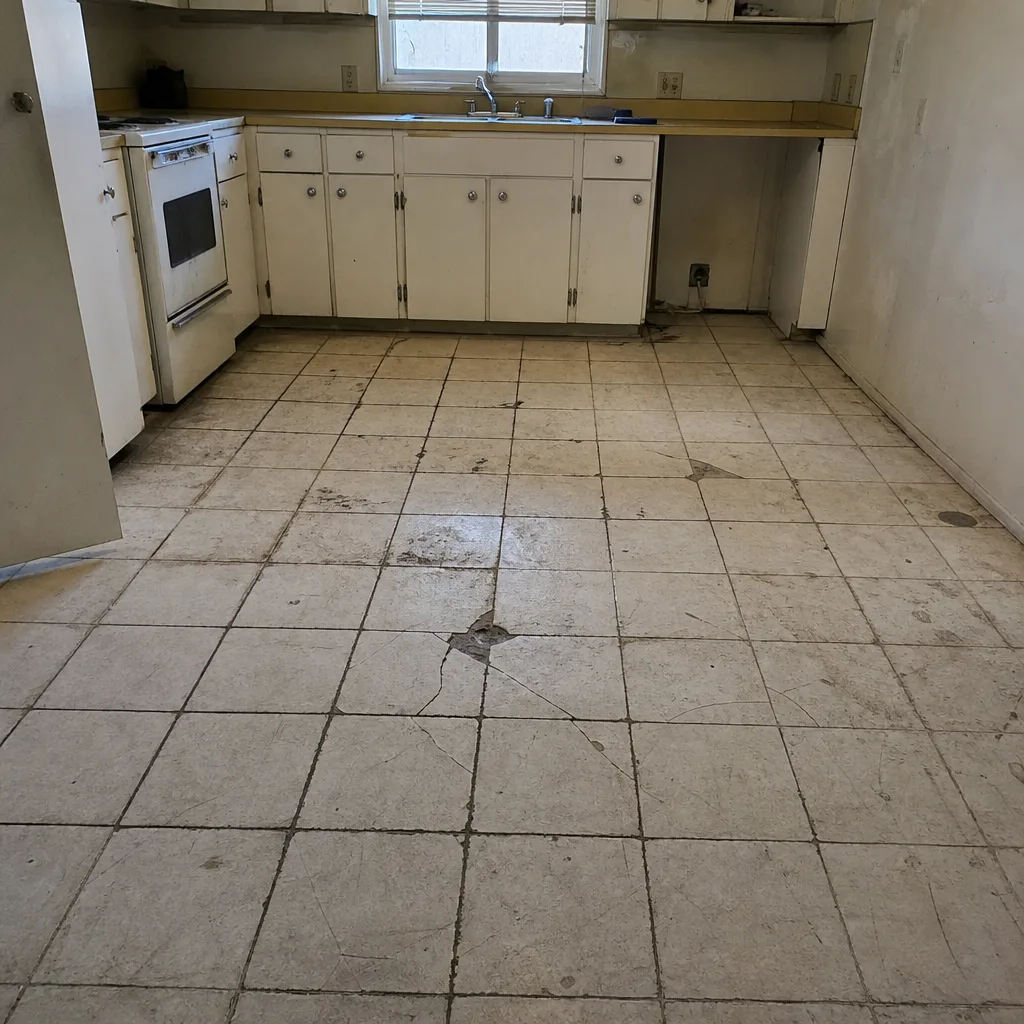
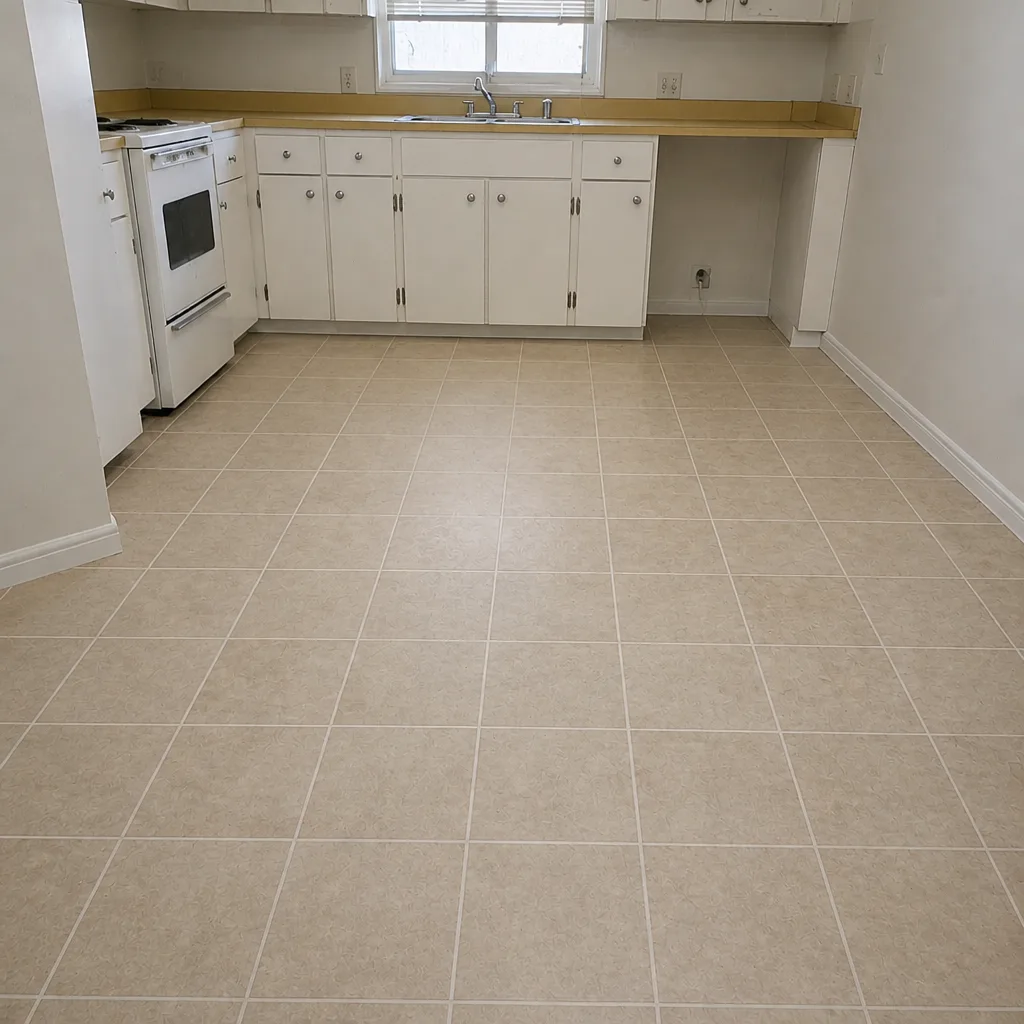
See the difference
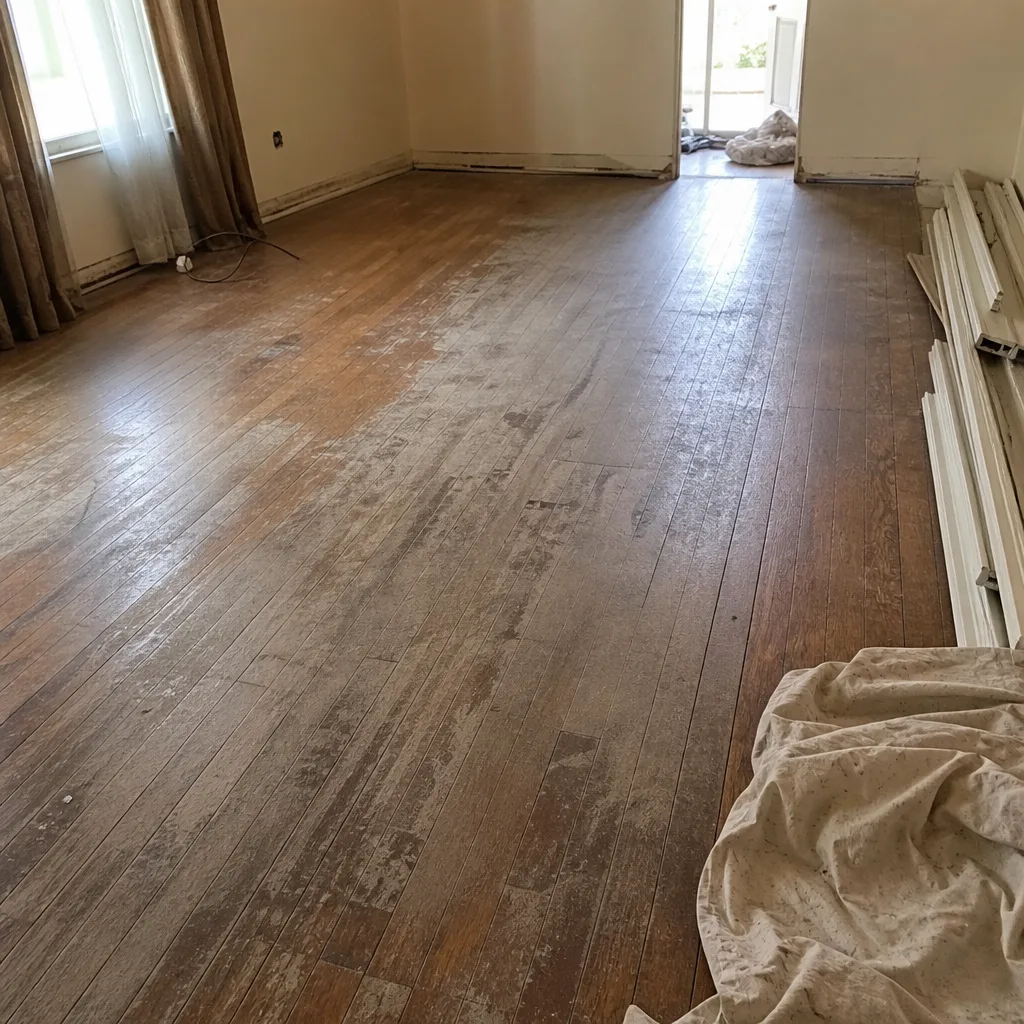 Before
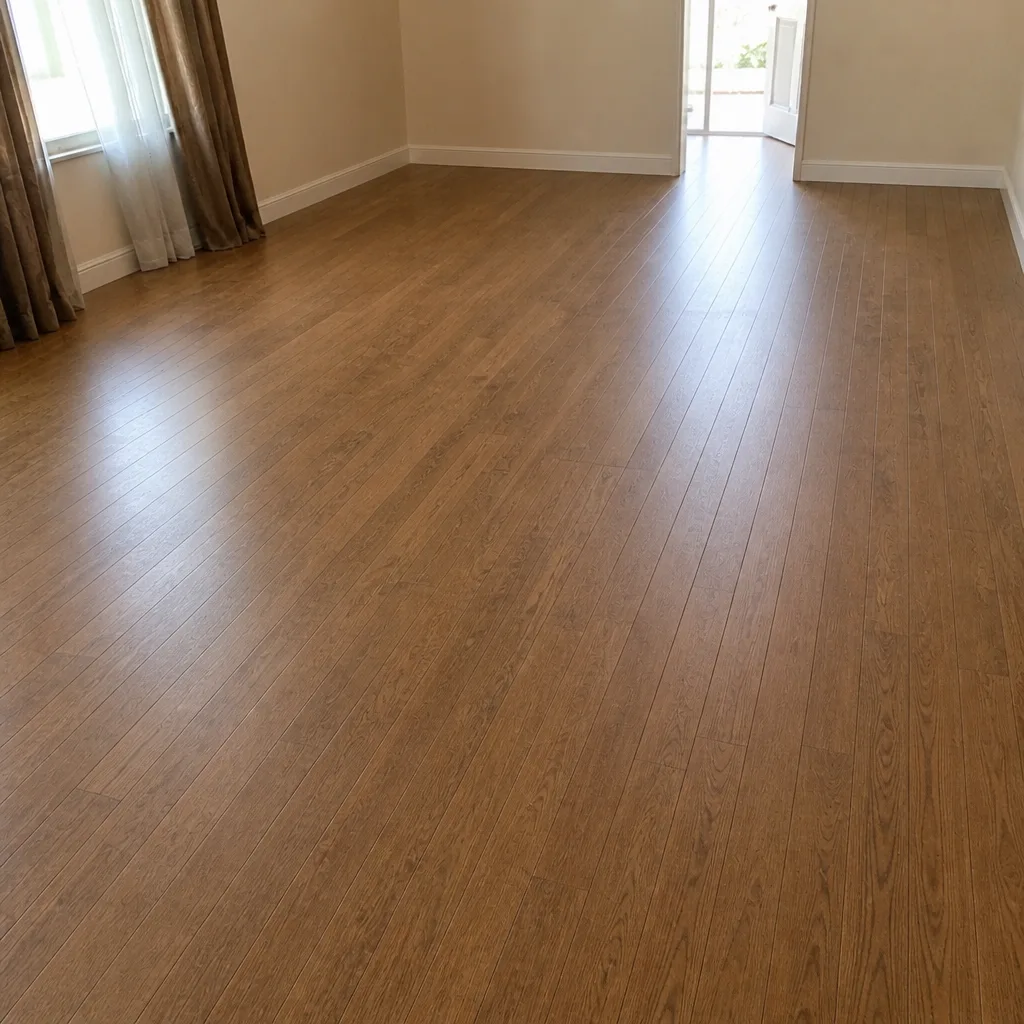 After
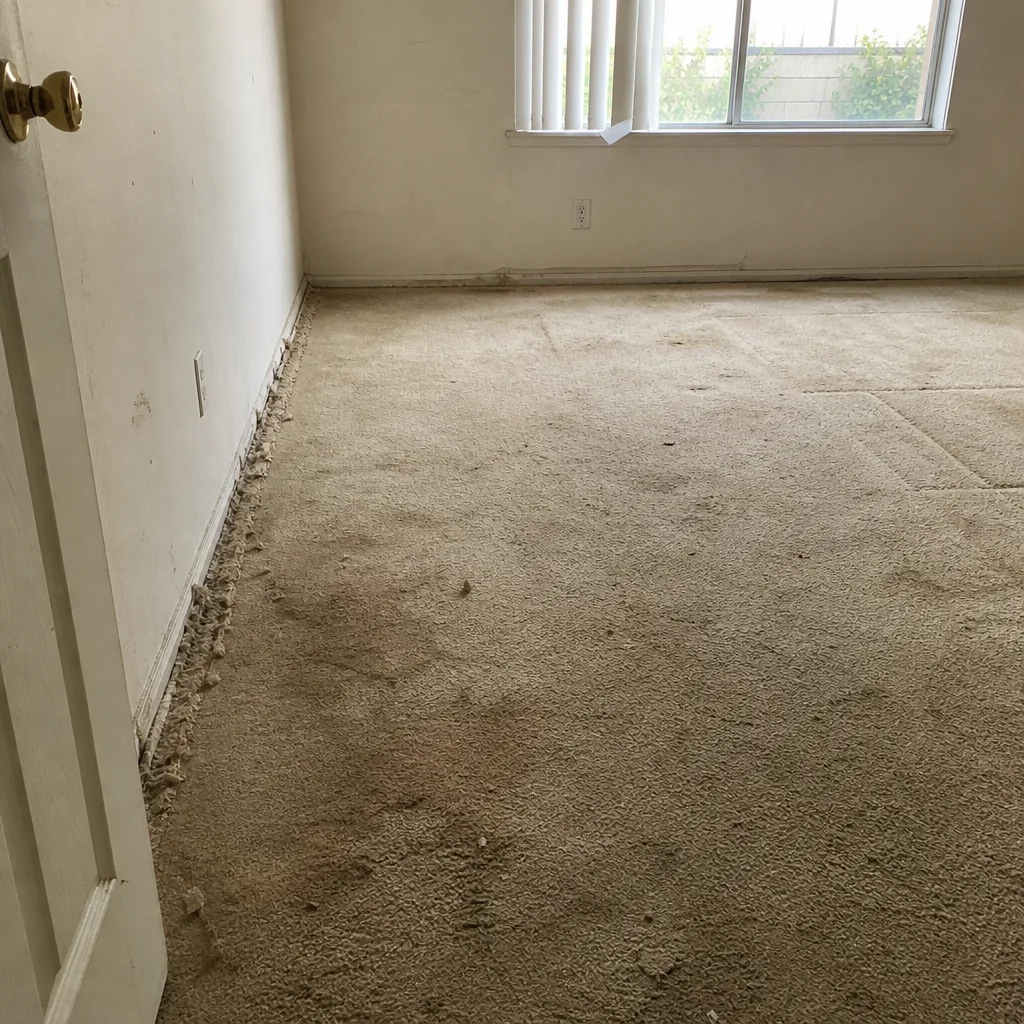 Before
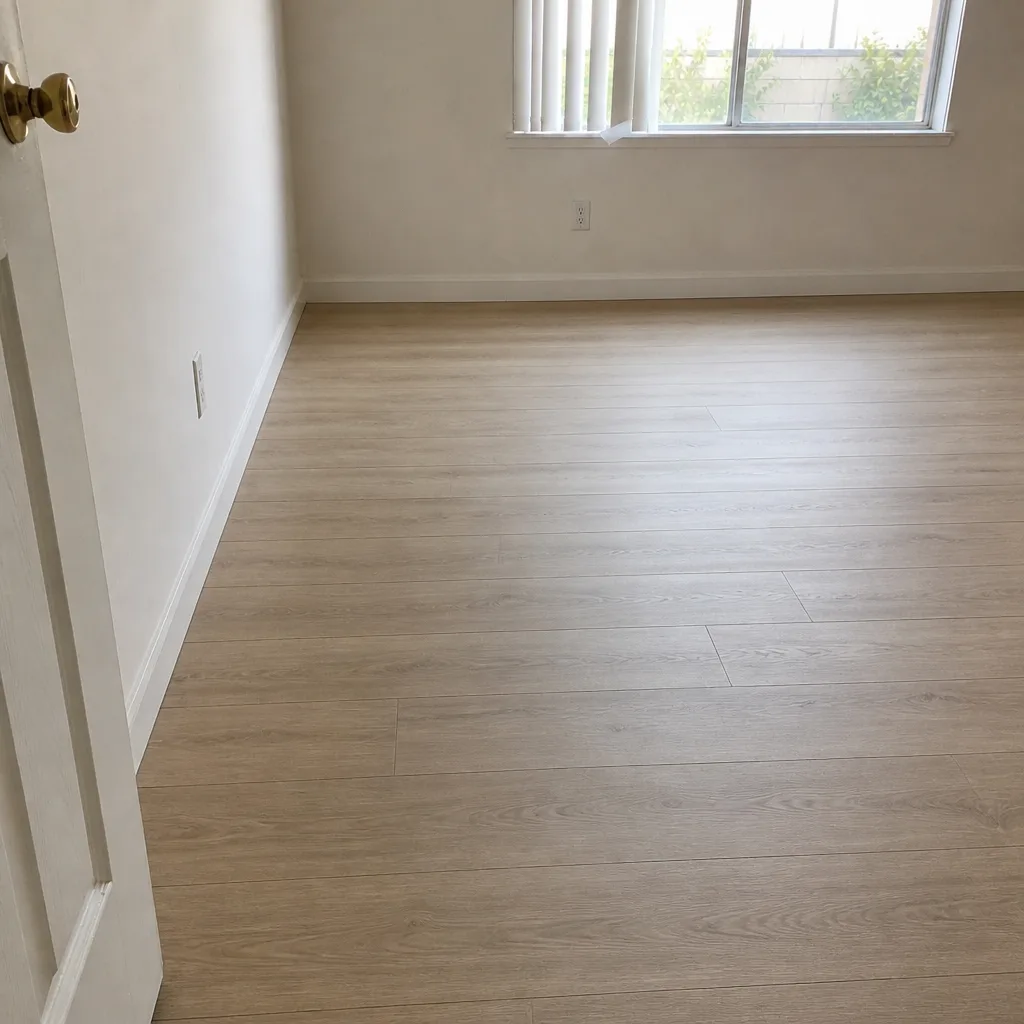 After
 Before
 After
When to Call a Professional
Call us when you can’t determine the category from the surface, when you suspect subfloor damage, when the repair is more than a small isolated area, when the material is discontinued or hard to source, or when the floor is still under a manufacturer warranty. Those are the cases where an on-site diagnostic prevents the expensive mistake of repairing a floor that was going to fail. A free in-home measure and estimate lets us identify the category, look at the subfloor, and give you a written number in both directions – repair cost and replacement cost – so you aren’t making the decision blind. Flooring Installation Las Vegas offers free estimates in Las Vegas – call (888) 294-5867. We answer 24/7. Fast dispatch from 7am to 7pm, Sunday through Friday. Nine trusted brands, one installation team, covering carpet installation, tile flooring installation, and hardwood refinishing, so the decision on your floor doesn’t have to be split across three contractors.
Frequently Asked Questions
Look underneath before you look at the surface. If the subfloor is sound and the damage is confined to an isolated spot, repair. If the subfloor is compromised or the installation has failed across a large area, replace. Anything in between needs an on-site diagnostic to call. Call (888) 294-5867 for a free estimate – we can walk the floor with you and tell you which category you’re in.
Repair is cheaper for small, isolated surface damage on a sound subfloor. Replacement is cheaper in the long run when the repair is a stopgap on a failing installation, because you pay for the repair and then the replacement. That’s the expensive mistake we see most. Call (888) 294-5867 for a written estimate in both directions – estimates are free.
It can, depending on the specific warranty and who performs the work. Most manufacturer warranties require approved materials and installation methods, and a third-party repair can be a warranty-voiding event. Check your original paperwork before any repair begins. If the warranty is still live, factor it into the repair-vs-replacement decision. Call (888) 294-5867 to talk through what applies to your floor.
Usually slab movement. Concrete slabs in Las Vegas expand and contract through the summer and can develop hairline cracks that telegraph up into the tile. A crack along a grout line or following the same line across multiple tiles is the signature. Whether it’s repairable depends on whether the slab has settled or is still active. Call (888) 294-5867 for a free diagnostic – estimates are free.
Yes, if the patch is a genuine repair of isolated surface damage on a sound subfloor. No, if the patch is cosmetic and covers a known structural problem – that creates a disclosure problem and a negotiation problem. Honest repair with documentation is the better listing. Call (888) 294-5867 for a free pre-listing estimate and a written repair record.
A repair on a sound installation lasts indefinitely. A repair on a failing installation is a stopgap and will likely need to be redone within a fairly short window. That’s why the on-site diagnostic matters more than the repair cost itself – the number is only meaningful if it holds. Call (888) 294-5867 for a free estimate and a straight answer on how long the repair should hold – estimates are free.
The Bottom Line
The repair-vs-replace question comes down to what’s underneath your floor, not what’s on top of it. Surface damage is a repair. A failed installation is a case-by-case call. Subfloor compromise means replace, and the surface diagnosis doesn’t change that. Las Vegas has its own failure patterns – slab movement cracking tile along grout lines, humidity swings opening LVP seams, heat cycling delaminating carpet in west-facing rooms – and knowing them helps you predict the category before an installer shows up. Check the warranty, factor in the discontinued-material problem, be honest about pre-listing patches, and get a free written estimate in both directions so the decision is informed. See the full range of carpet installation, tile flooring installation, and hardwood refinishing at Flooring Installation Las Vegas, and browse the broader Flooring Installation Las Vegas service line for the material choices that match your room. Restore what you have or start fresh – either way, walk into the estimate knowing the answer.
Call (888) 294-5867 for a free estimate. We answer 24/7. Fast dispatch from 7am to 7pm, Sunday through Friday. Serving Las Vegas and the surrounding valley, with the diagnostic framework above built into every free measure.
Written by the team at Flooring Installation Las Vegas.