
Last updated November 18, 2026
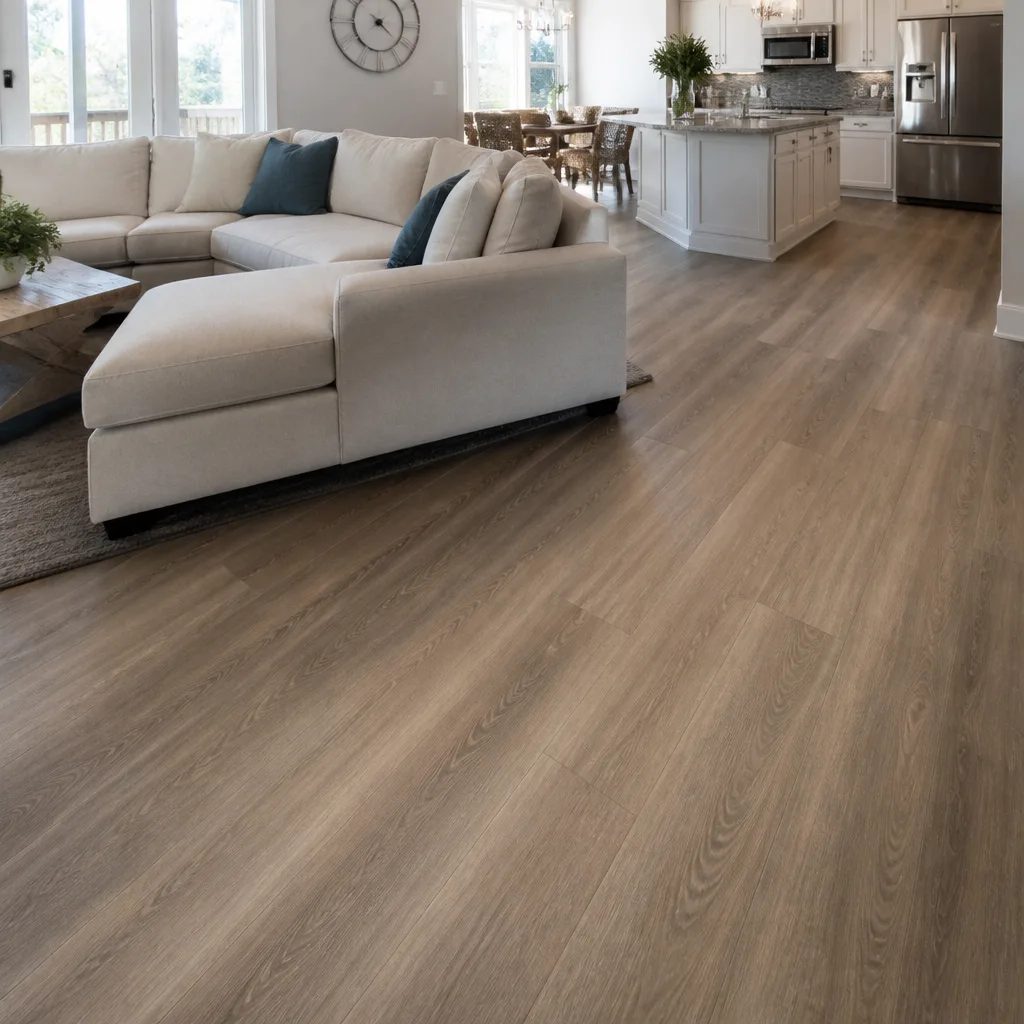 Luxury vinyl plank
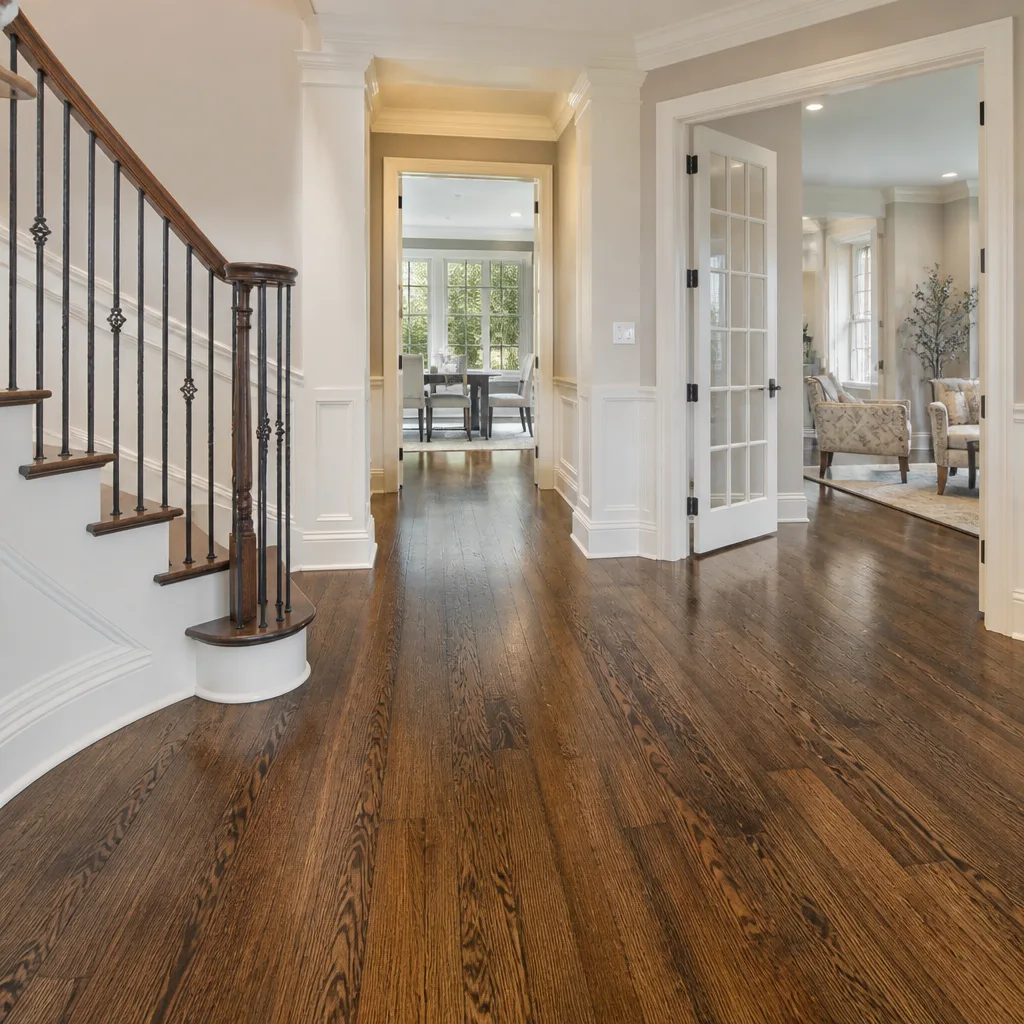 Hardwood
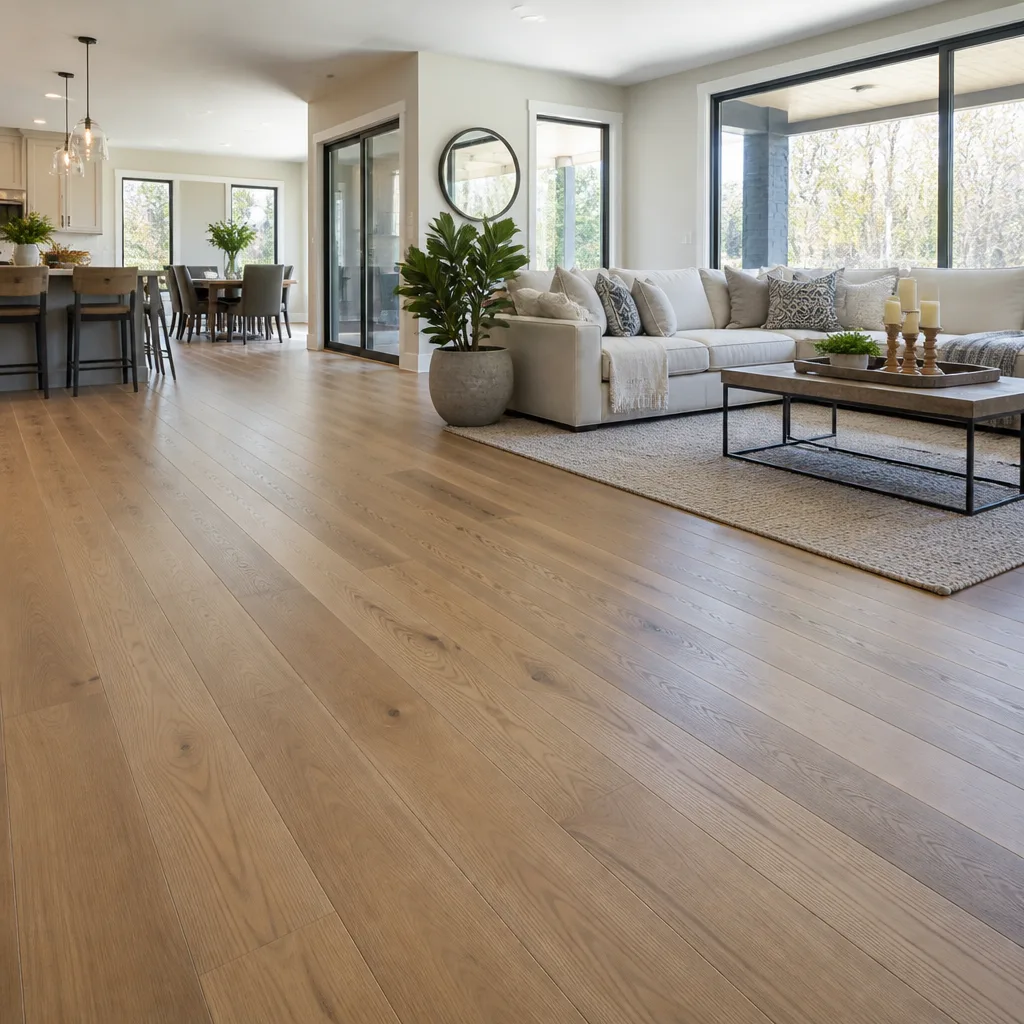 Engineered hardwood
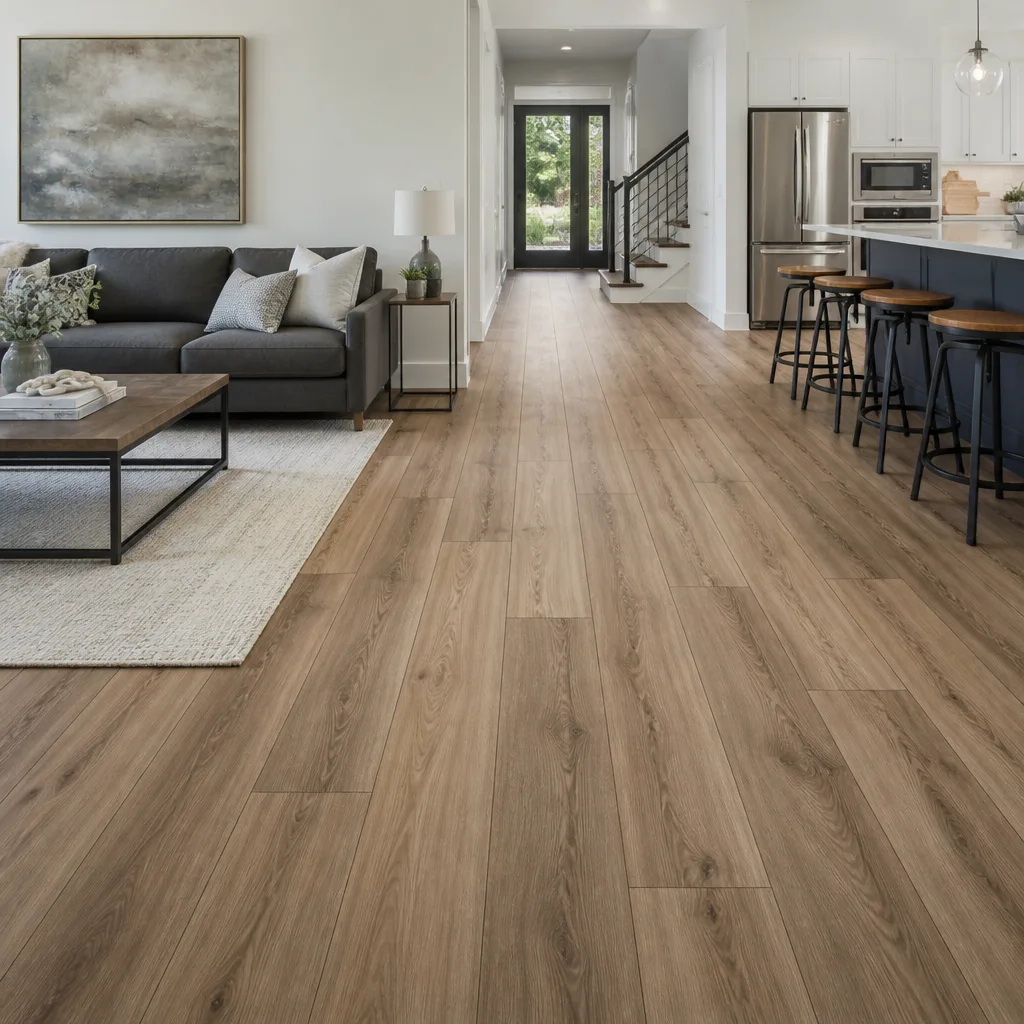 Laminate
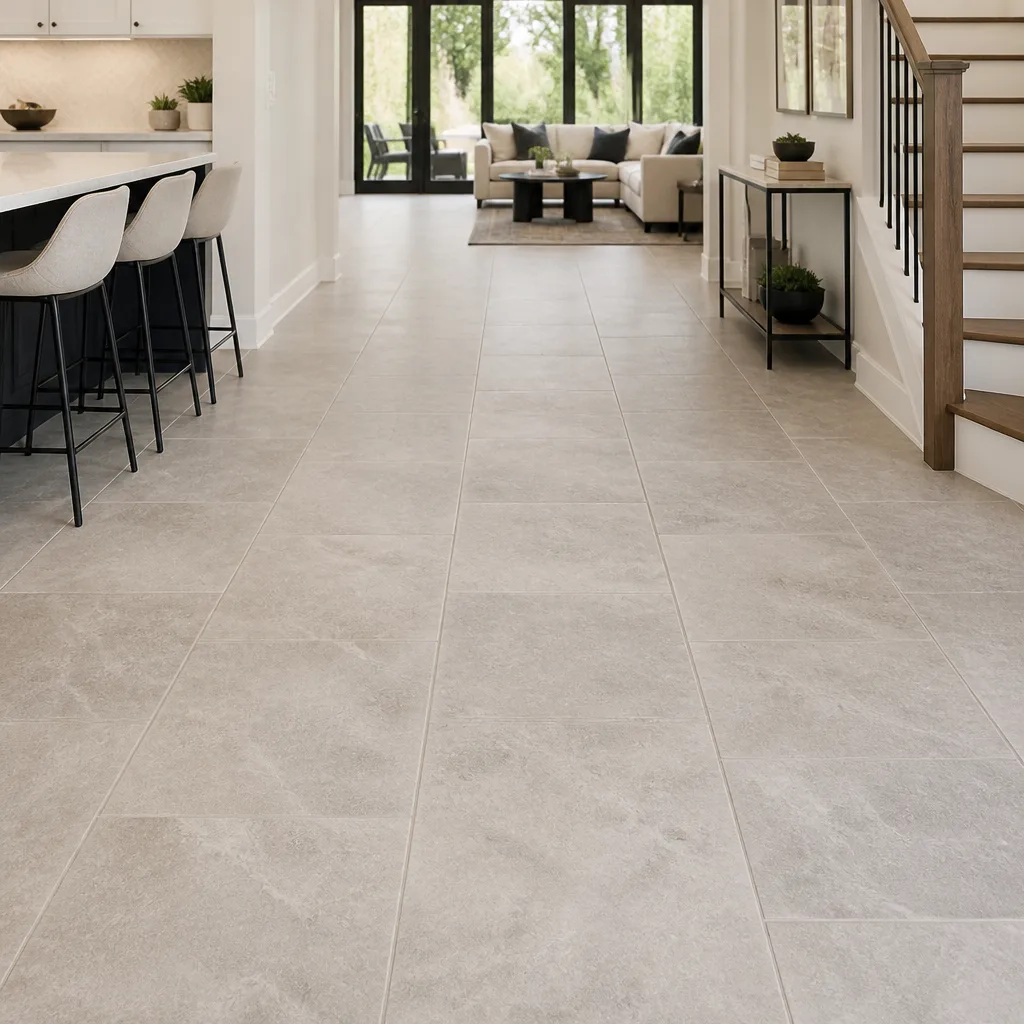 Porcelain tile
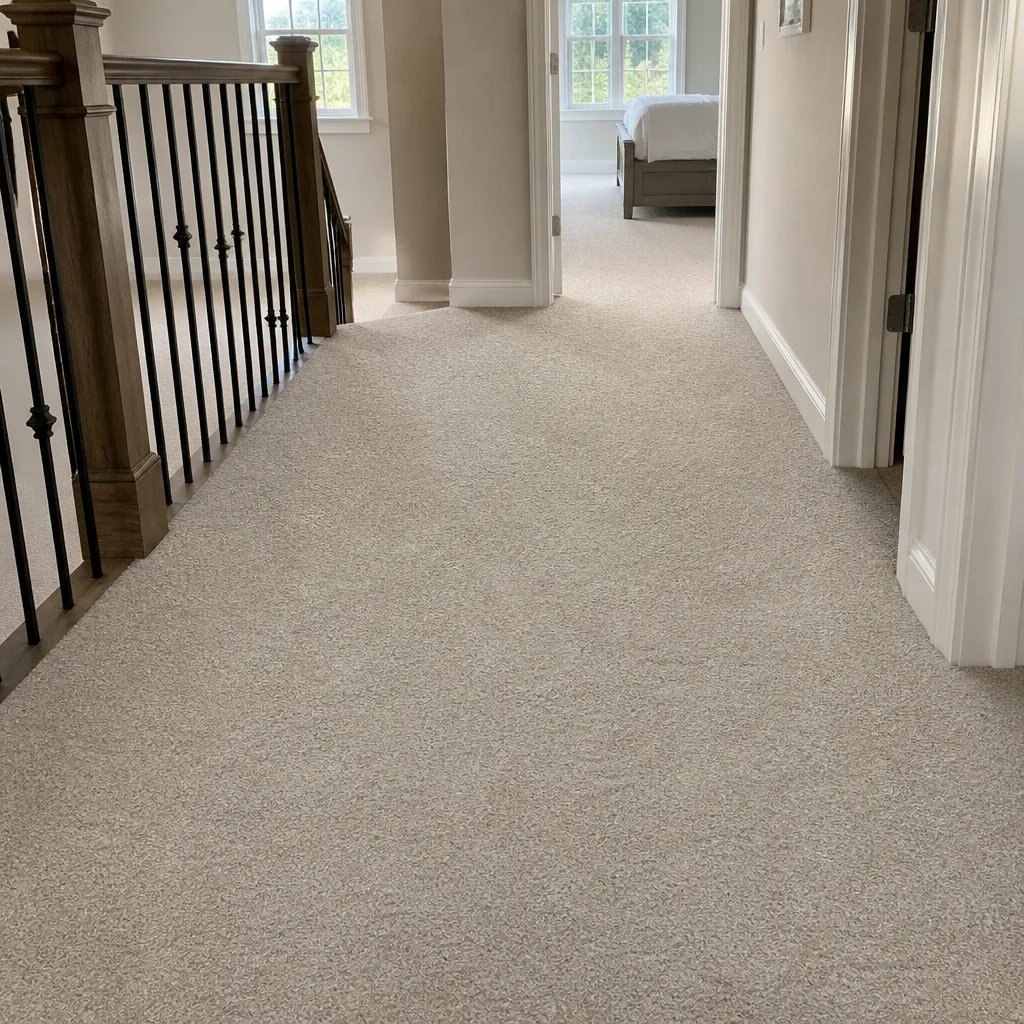 Carpet
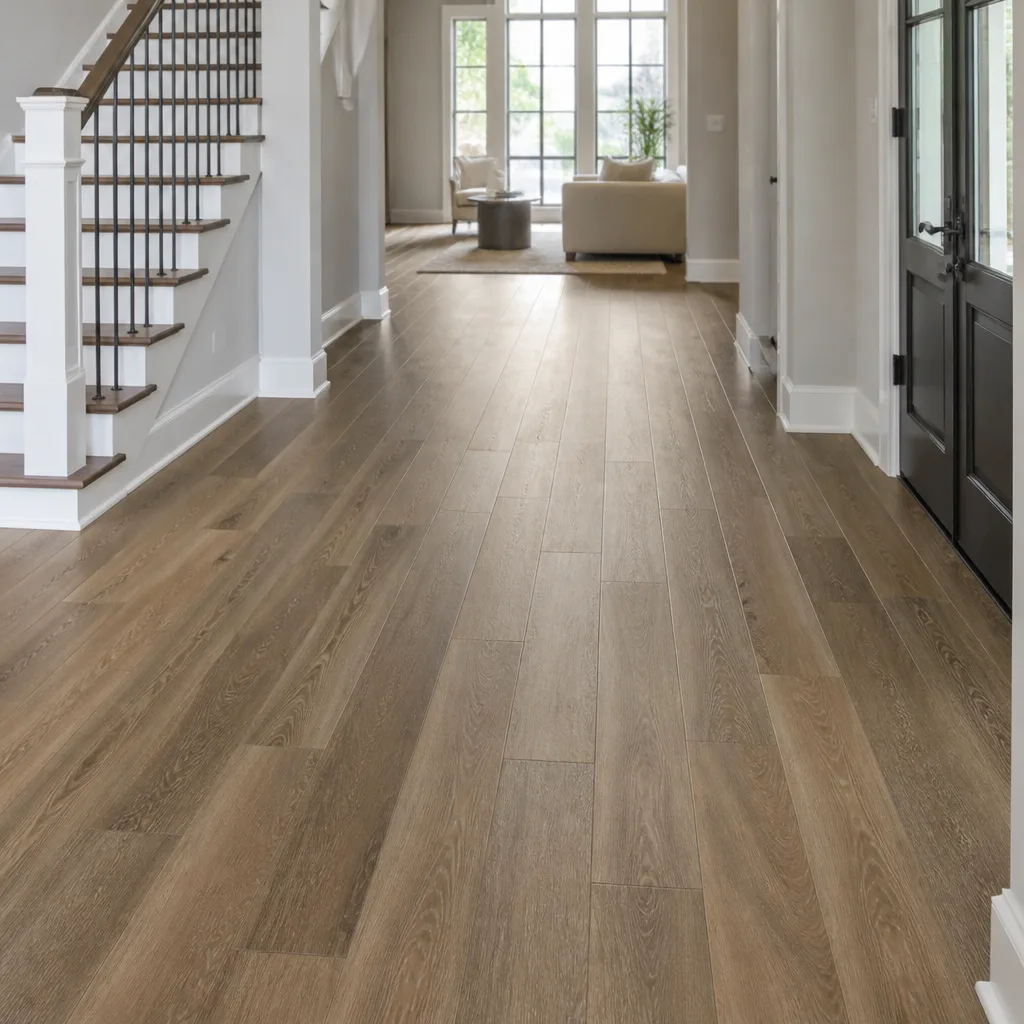 Shaw
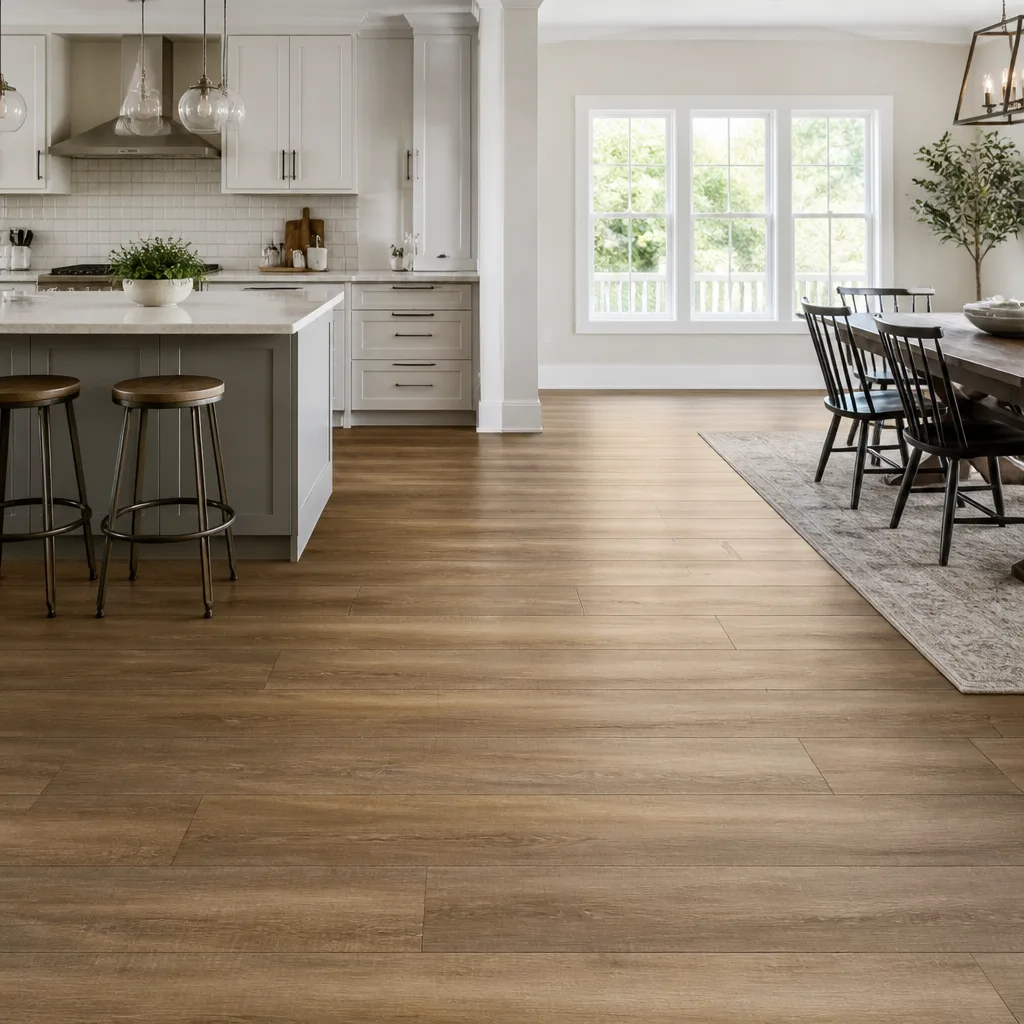 Mohawk
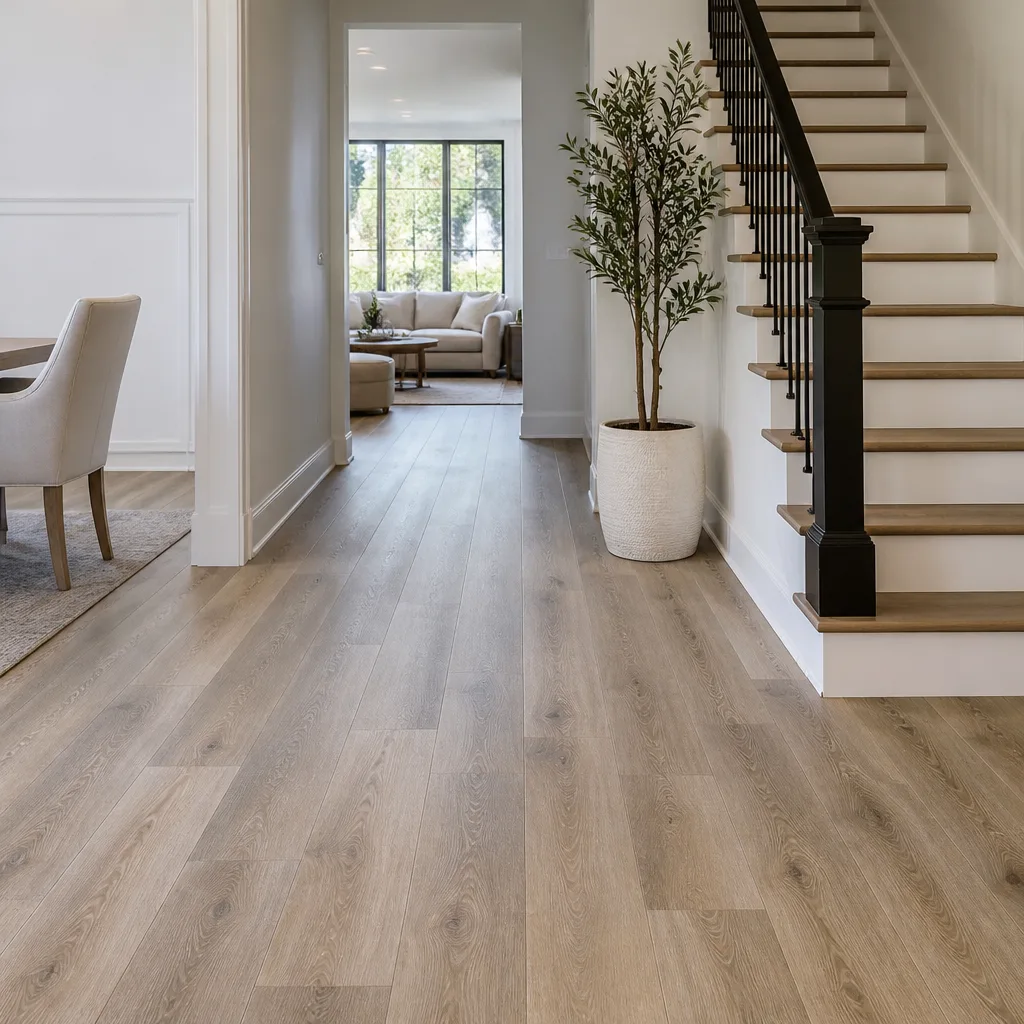 COREtec
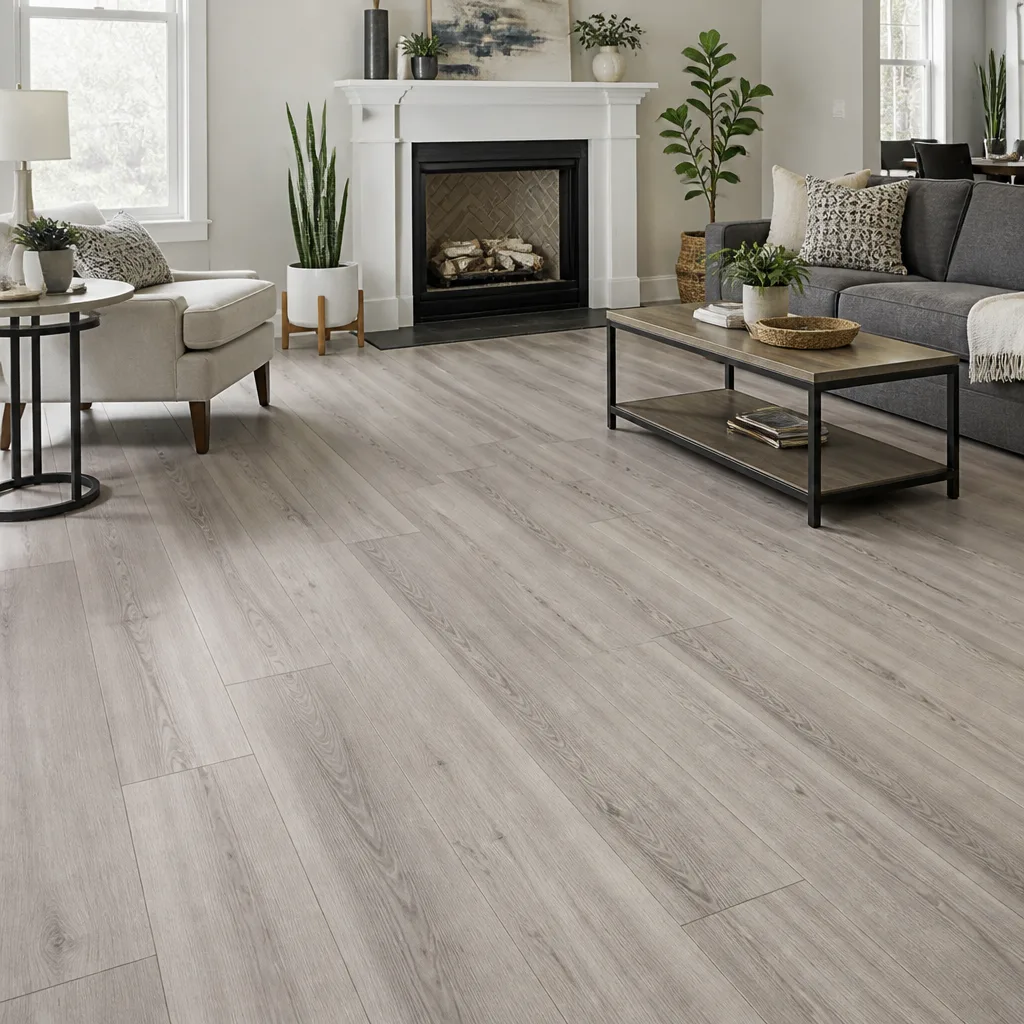 Pergo
Free in-home measure and written estimate: Shaw, Mohawk, COREtec and Pergo lines compared on your own rooms, with carpet, tile, vinyl plank, laminate and hardwood laid out side by side
Get your free estimateHardwood, Vinyl Plank, Laminate or Tile: How Las Vegas Homeowners Decide
Most Las Vegas homeowners assume the floor they pay the most for comes with the strongest protection. In solid hardwood’s case, the opposite is often true. The warranty documents that ship with solid hardwood from the major mills carry a humidity clause, usually somewhere in the 35 – 55% relative humidity range. Las Vegas homes, especially through summer air conditioning season and winter heating season, routinely sit outside that window. So the floor with the highest sticker price can be the one with the thinnest warranty coverage. This guide walks through what actually happens to each material in Las Vegas conditions, and how to pick the floor that survives your house, not just the showroom.
Quick Answer
For most Las Vegas homes, luxury vinyl plank or large-format porcelain tile outperforms solid hardwood and laminate over a ten-year horizon, mainly because the desert’s low indoor humidity and high surface temperatures stress wood and laminate in ways their warranties don’t cover. Engineered hardwood can work, but only under specific conditions: consistent HVAC, a plywood subfloor, and a proper acclimation period. Solid hardwood is a beautiful choice for the right home, but its warranty is the one most likely to be voided by Las Vegas’ climate.
Styles & brands we work with
- Hardwood
- Engineered hardwood
- Luxury vinyl plank
- Laminate
- Porcelain tile
- Carpet
- Shaw
- Mohawk
- COREtec
- Pergo
Table of Contents
- What 10 – 15% Indoor Humidity Does to Each Floor Type
- Why Engineered Hardwood Has a Narrow Window in Las Vegas
- The LVP Detail Most Las Vegas Buyers Miss: Core Temperature Ratings
- When Large-Format Porcelain Tile Is the Right Answer
- What Laminate Can and Can’t Handle Here
- Warranty Survivability: Which Floors Keep Their Coverage
- Side-by-Side Decision Matrix
- Ten-Year Cost of Ownership
What 10 – 15% Indoor Humidity Does to Each Floor Type
Las Vegas indoor relative humidity routinely drops into the 10 – 15% range, sometimes lower during summer air conditioning season. That single fact drives different failure modes in different materials, and it’s the reason a floor that performs beautifully in Houston can fail in a Summerlin house within a couple of seasons.
Here’s the specific failure mode by material:
- Solid hardwood. Wood shrinks as it dries. When indoor humidity drops far below the mill’s target zone, planks shrink across their width, opening gaps between boards. On narrow strip flooring those gaps run from hairline to visible slivers. On wide-plank solid hardwood, the gaps can open far enough to collect debris and become permanent. Cupping may also occur in reverse, with edges lifting, when moisture returns unevenly.
- Engineered hardwood. The cross-ply construction resists shrinkage better than solid, but the top veneer layer is still wood and can check, split, or delaminate at the edges if humidity swings hard. Engineered wood survives Las Vegas better than solid but isn’t immune.
- Luxury vinyl plank. Dimensionally stable in low humidity because the core is synthetic rather than wood-based. Gaps and shrinkage are essentially non-issues. Watch instead for adhesive failure if installed over a slab, and for telegraphing of subfloor imperfections through thin planks.
- Laminate. Laminate core is HDF, which is wood fiber and reacts to humidity like wood does. In 10 – 15% indoor humidity, seams can open slightly and edge swelling can occur if the floor has ever been exposed to moisture. Laminate holds up reasonably well in dry indoor air but isn’t as dimensionally stable as LVP.
- Porcelain and ceramic tile. Essentially unaffected by low indoor humidity. Grout may develop hairline cracks from structural movement, but the tile itself doesn’t shrink, swell, or check. This is the most climate-stable category.
We see this pattern play out in Las Vegas homes across every neighborhood, from older ranch houses in the central valley to newer construction in the northwest. The floor type matters less than whether the material was matched to the indoor environment the house actually has.
Why Engineered Hardwood Has a Narrow Window in Las Vegas
Engineered hardwood occupies a real but narrow window of viability in Las Vegas homes. It gives you the look and feel of real wood with better dimensional stability than solid, but it only performs well here when three conditions are met. If any one of them fails, engineered hardwood becomes a costly regret.
- Consistent HVAC operation. The house needs to be conditioned year-round, not just during summer. A vacation home that sits with the AC off for weeks at a time will experience the same humidity swings as an unconditioned space, and the engineered wood will react.
- Plywood subfloor, not particleboard. Engineered hardwood wants a stable subfloor. Plywood or OSB is appropriate. Older particleboard underlayment, common in some Las Vegas homes from the 1980s and 1990s, is not, and it can fail when moisture gets into it.
- Proper acclimation before install. The planks need time in the conditioned home to reach equilibrium with the indoor environment before they’re installed. Skipping this step, or rushing it, is one of the most common reasons engineered floors cup or gap in the first year.
When those three conditions are met, engineered hardwood performs well in Las Vegas, especially in living rooms, bedrooms, and hallways where humidity stays more stable. When they aren’t, we steer homeowners toward LifeProof or Mannington luxury vinyl, or toward a tile option, because those materials tolerate dry indoor air without complaint.
The LVP Detail Most Las Vegas Buyers Miss: Core Temperature Ratings
Almost every luxury vinyl plank product sold today carries the word “waterproof” on the box. Far fewer LVP products carry a core temperature rating high enough to survive a Las Vegas sunlit room. That’s a detail that separates a floor that performs for a decade from one that buckles in its first summer.
West-facing windows in Las Vegas can push floor surface temperatures in the direct sun path well above indoor air temperature. In our experience the surface of a dark LVP plank sitting in direct summer sun can climb dramatically higher than the ambient room temperature, and not every LVP core is rated for it. The plank doesn’t necessarily fail dramatically: it can expand, telegraph subfloor imperfections, or delaminate at the edges over one or two summers.
What to look for on the spec sheet:
- A stated maximum surface temperature rating. Reputable LVP brands publish one. If the spec sheet doesn’t mention it, ask the manufacturer before you buy.
- Rigid core construction. SPC or rigid-core planks handle heat and humidity swings better than older flexible-core vinyl.
- UV resistance in the wear layer. Sun fading is a smaller concern than thermal expansion, but it’s real on west-facing floors.
LifeProof and Mannington both offer rigid-core LVP lines that address these concerns, and we install them routinely in Las Vegas homes where the sun exposure is significant. We’re not an authorized dealer or certified installer for any brand, but we do install the floor the homeowner chooses, and we’ll tell you which lines we’ve seen perform here.
When Large-Format Porcelain Tile Is the Right Answer
Large-format porcelain tile, typically 24×24 inches or 24×48 inches, is the most installation-labor-intensive flooring option on this list. It’s also, in many Las Vegas homes, the correct choice. Daltile and similar lines give you ceramic and porcelain tile options suitable for kitchens, bathrooms, laundry rooms, and entryways, and the material handles the desert indoor environment better than any wood-based floor.
The case for tile in Las Vegas is straightforward:
- It doesn’t care about humidity. 10% indoor relative humidity is a non-event for porcelain. It won’t shrink, gap, cup, or delaminate.
- It handles heat. Tile surface temperature can climb in direct sun without issue, which is why tile is common on sunroom and west-facing slab floors.
- It’s the most durable surface over the long haul. Wear is essentially a function of the glaze quality, and quality porcelain glaze lasts.
- It tolerates moisture exposure well. Bathrooms, laundry rooms, and entryways don’t need special handling for tile the way wood and laminate do.
The tradeoffs are real. Installation takes longer and costs more per square foot than most LVP or laminate options. Grout lines need cleaning and occasional resealing. And tile underfoot feels cold, which is unwelcome in winter and often inconvenient in bedrooms. For kitchens, bathrooms, entryways, and any room with significant sun exposure, tile is the answer. For bedrooms, tile is rarely the right call.
For an in-depth look at what a tile project involves, our tile flooring installation page covers layout, subfloor prep, and what to expect during install.
What Laminate Can and Can’t Handle Here
Laminate is the value pick, and in Las Vegas it performs better than many homeowners expect, provided it’s installed correctly and kept away from plumbing leaks and exterior doors. Pergo and Armstrong both offer laminate lines that hold up well in dry indoor air, and for a rental or a lower-traffic room, laminate can be a sensible middle option between budget LVP and brand-name engineered hardwood.
The material’s weakness in Las Vegas is the wood fiber core. Laminate doesn’t cause problems because the indoor air is dry, but if there’s ever a moisture event, a slow leak under the fridge, a washer overflow, or water tracking in from a monsoon-season entryway, laminate’s edges will swell and the seams will fail. LVP and tile recover from those events; laminate usually doesn’t.
Our position on laminate in Las Vegas: good for bedrooms, hallways, and living rooms in homes that haven’t had water issues, less good for kitchens and utility rooms where leaks happen.
Warranty Survivability: Which Floors Keep Their Coverage
This is the section most homeowners skip and later regret. Because solid hardwood warranty documents from every major mill carry a humidity clause, the warranty coverage you actually get to use depends on your home’s indoor humidity, not on the mill’s reputation.
Here’s how coverage breaks down by material:
- Solid hardwood. Warranty is typically conditioned on an indoor humidity range, often stated in the document as a specific window. Las Vegas homes routinely fall below it in summer, which means the most expensive floor on the list often has the weakest usable warranty.
- Engineered hardwood. Same humidity conditioning as solid in most brand documents. The engineering helps the material perform, not the warranty claim.
- Luxury vinyl plank. Warranties focus on wear and manufacturing defect, not on indoor humidity. A luxury vinyl warranty claim is more likely to be honored in Las Vegas than a hardwood claim.
- Laminate. Warranties focus on wear and, in many cases, moisture exclusion. A laminate warranty may be voided by standing water; it generally isn’t voided by low indoor humidity.
- Porcelain tile. Warranty focuses on manufacturing defect and, in some cases, installation. Climate-driven variance is a non-issue.
We always recommend reading the manufacturer’s written warranty before deciding, because the terms vary and the written warranty, not the marketing claim, is what governs.
Side-by-Side Decision Matrix
Here’s how the five main flooring materials compare in Las Vegas conditions:
- Solid hardwood. Low-humidity performance: poor, gaps and checking likely. Warranty survivability in Las Vegas: low, humidity clause often triggered. Sun exposure: fades. Typical installed cost range: supplied by written estimate per job.
- Engineered hardwood. Low-humidity performance: moderate, if HVAC is consistent and subfloor is plywood. Warranty survivability: moderate, conditioned on humidity and acclimation. Sun exposure: can fade. Cost: supplied per job.
- Luxury vinyl plank. Low-humidity performance: strong, no wood core to shrink. Warranty survivability: strong. Sun exposure: choose a heat-rated rigid core for west-facing rooms. Cost: typically the most cost-efficient hard surface installed. Brands: LifeProof, Mannington, COREtec.
- Laminate. Low-humidity performance: good, slight seam gapping possible. Warranty survivability: moderate, voided by water exposure. Sun exposure: can fade. Cost: budget-friendly. Brands: Pergo, Armstrong.
- Porcelain tile. Low-humidity performance: excellent. Warranty survivability: excellent. Sun exposure: no effect on glaze in standard indoor applications. Cost: highest labor content. Brands: Daltile.
Use this as a decision filter, not a ranking. The right floor depends on the room, the household, and the budget, and no single material is right for every Las Vegas home.
Ten-Year Cost of Ownership
Most homeowners compare flooring by sticker price per square foot. The more useful comparison is total cost over ten years, factoring in replacement risk and refinishing opportunity.
- Solid hardwood. High purchase cost, high replacement risk in Las Vegas if the humidity clause voids the warranty. Refinishing is possible if wood thickness allows, but refinishing can’t correct gaps from long-term drying. Likely the highest ten-year cost per square foot.
- Engineered hardwood. Moderate-high purchase cost, moderate replacement risk. Refinishing depends on veneer thickness and is checked during the estimate visit. Middle of the pack for ten-year cost.
- Luxury vinyl plank. Moderate purchase cost, low replacement risk in a conditioned home. No refinishing but long service life with normal care. Lowest ten-year cost per square foot in most Las Vegas homes.
- Laminate. Low purchase cost, moderate replacement risk if moisture ever reaches the core. No refinishing. Low ten-year cost in dry homes, higher if there’s a leak.
- Porcelain tile. Highest upfront cost, lowest replacement risk. Essentially no refinishing needed. Grout may need refreshing every few years, but the tile itself keeps going. Long-term value is excellent.
For most Las Vegas homeowners, LVP and porcelain offer the strongest ten-year cost of ownership. Engineered hardwood is the middle case. Solid hardwood is beautiful but the one most likely to be replaced sooner than the owner expected.
How a Typical Flooring Decision Actually Goes
In our experience, the homeowner walks in wanting hardwood, walks out with a plan that’s a mix of materials, and gets a better floor than they would have gotten with a single-material approach. Here’s how we usually walk through the decision:
- Walk the home room by room. Identify which rooms get direct sun, which are wet (bathrooms, laundry), and which are high traffic (entryways, kitchens). This maps the floor to the room’s demands before product is chosen.
- Check the subfloor. Slab, plywood, or particleboard drives material choices and whether a moisture barrier is needed.
- Measure the room dimensions. Both for square footage and to determine whether large-format tile will require more cuts than its visual gain justifies.
- Ask about the household. Pets, kids, allergy concerns, and how long the homeowner plans to stay all shift the decision.
- Present brand options within each category. LifeProof, Mannington, COREtec, Shaw, Mohawk, Pergo, Armstrong, Daltile, and Karndean all sit in our portfolio, so the recommendation can match the room rather than force a compromise.
- Write a fixed, written estimate. Line items per room, product, and subfloor prep. No hidden allowances, no upsells after the fact.
- Book the install. The schedule is set at the estimate, with the subfloor prep and acclimation steps worked into the timeline.
This is what Las Vegas homeowners can expect when they work with us, whether it’s one room or a whole-home update. Our technicians have up to 13 years of experience, and the install team is the same team that gave you the estimate, not a rotating subcontracted crew.
Common Mistakes to Avoid
- Choosing solid hardwood without checking your indoor humidity. A house that runs 10 – 15% indoor relative humidity in summer will gap its solid hardwood. Run a cheap humidity gauge for a week before deciding.
- Buying LVP based on the “waterproof” label alone. Waterproof and heat-rated are different claims. Check the core temperature spec before buying for a west-facing room, or your floor will be unreliable by its second Las Vegas summer.
- Assuming laminate is waterproof. Laminate is water-resistant at best, and its wood-fiber core swells at the edges if water reaches it. Never install laminate below a potential plumbing leak.
- Skipping acclimation to save a day. Engineered hardwood needs time to adjust to the home before install. Rushing it is the leading cause of gapping and cupping in the first year.
- Choosing a flooring installer who also does roofing and remodeling. Flooring installation is a discipline. Subfloor prep, layout, and transitions are where problems begin, and a generalist is more likely to skip them.
- Not reading the warranty before install. The warranty document is what you have when a problem appears in year three. Read it, especially for solid hardwood and engineered wood, and note the humidity and acclimation clauses.
- Choosing one material for the whole house. Las Vegas homes often work best with a mix: LVP or engineered hardwood in bedrooms and living areas, tile in bathrooms and kitchens, and the occasional refinish of existing hardwood rather than replacement.
See the difference
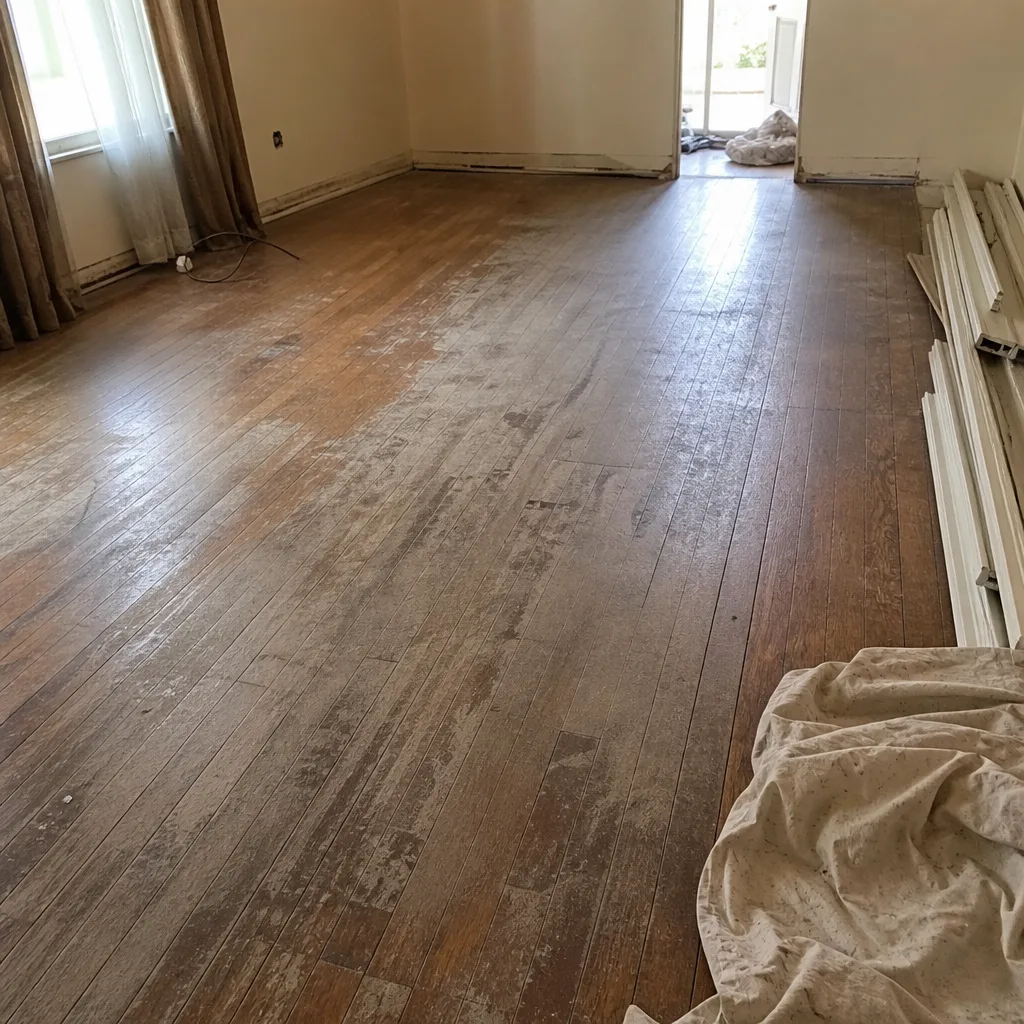 Before
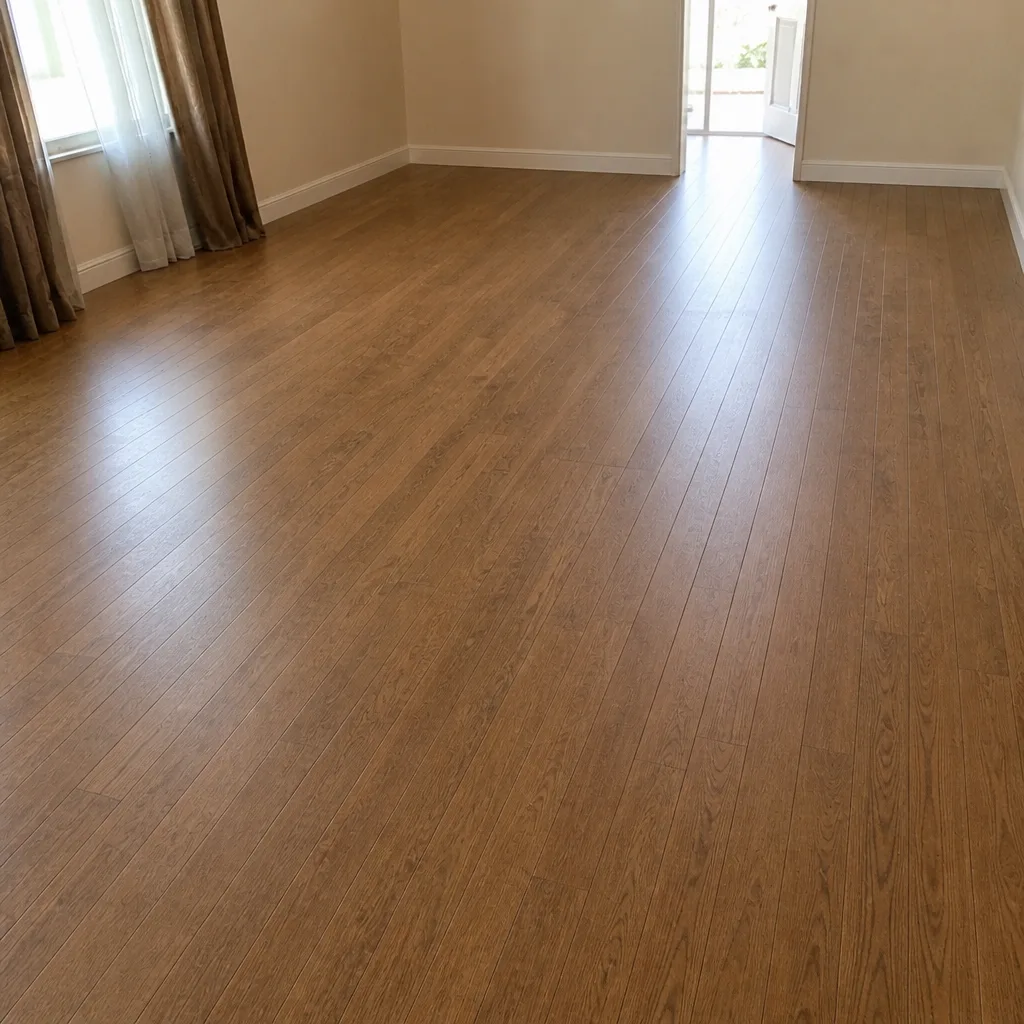 After
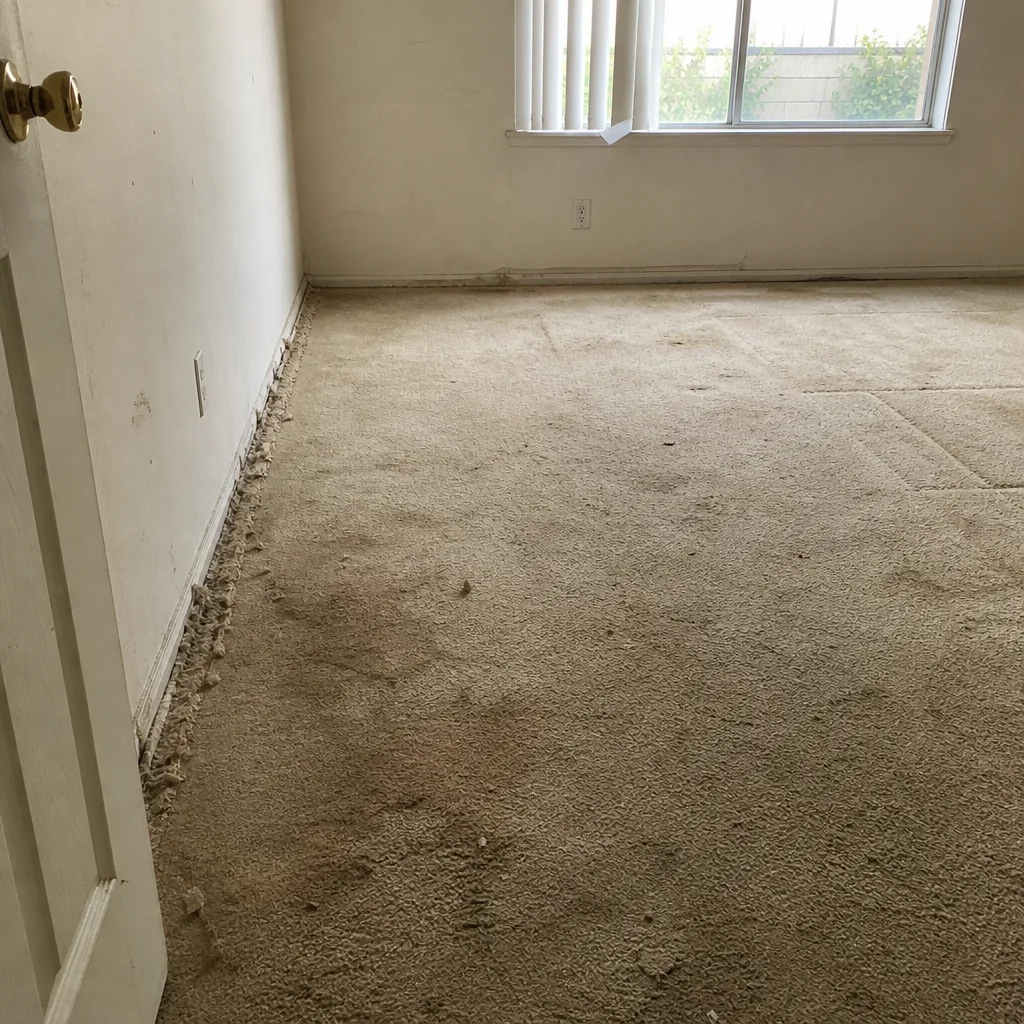 Before
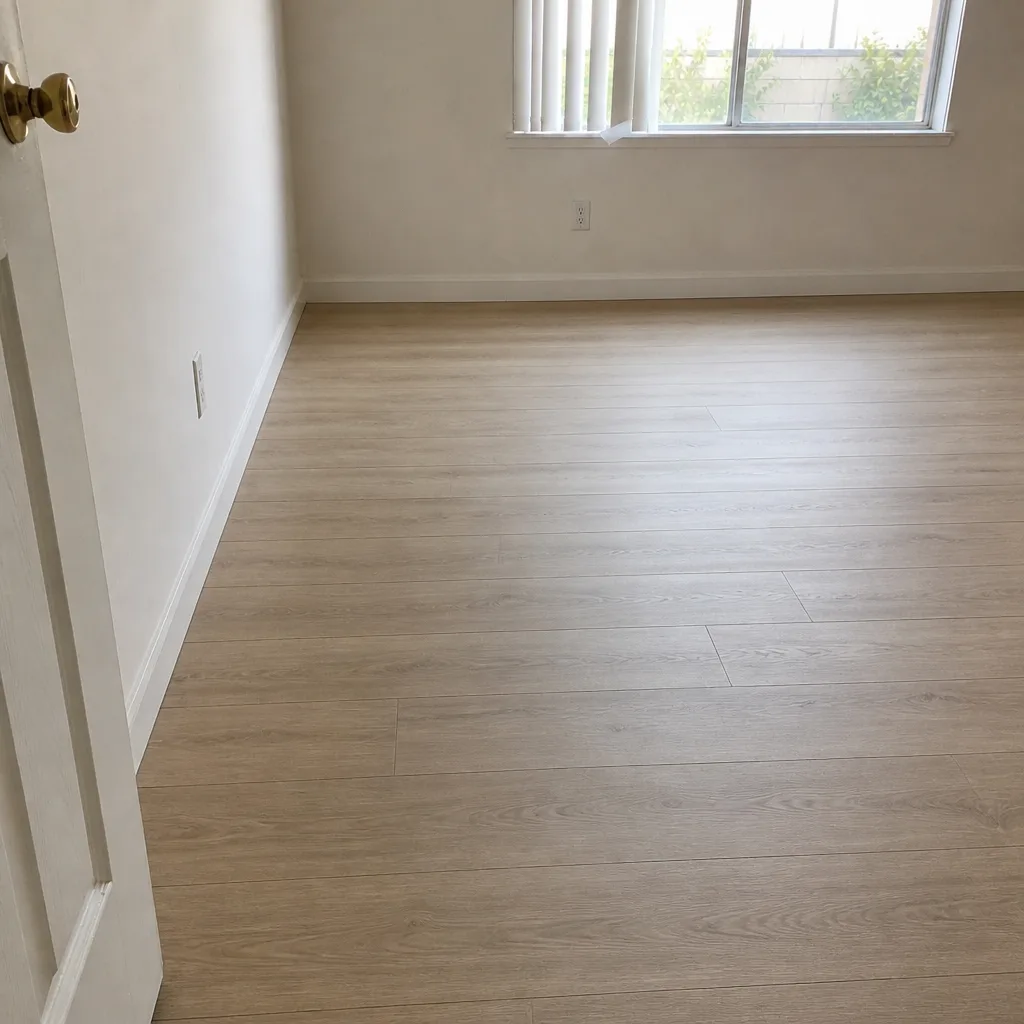 After
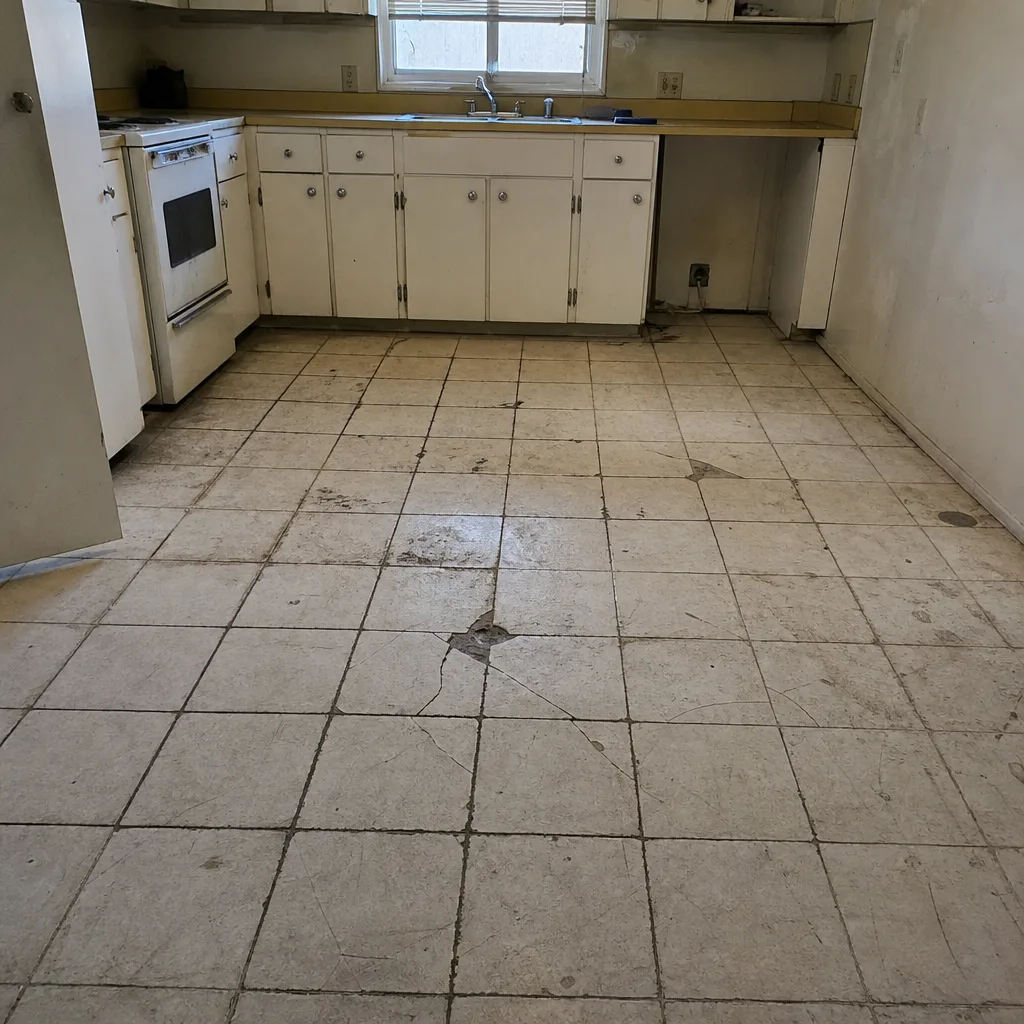 Before
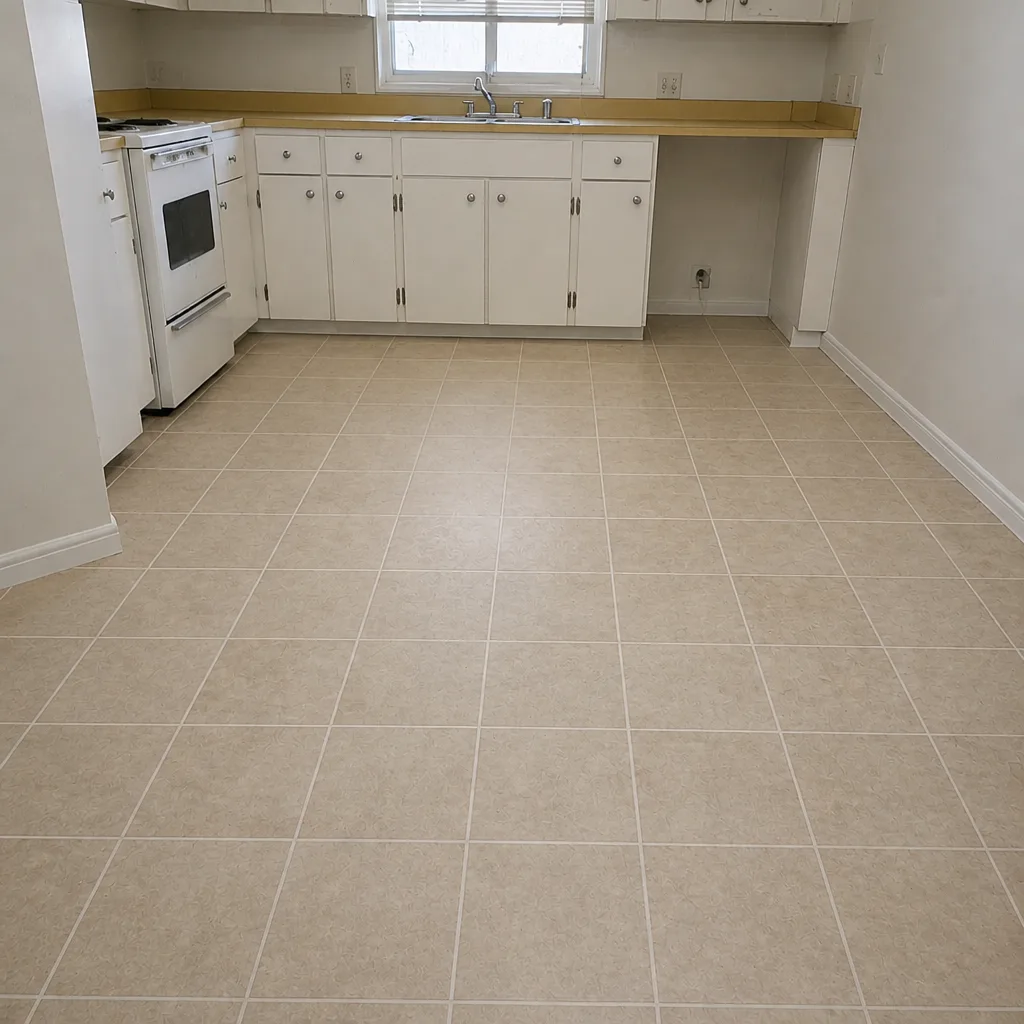 After
When to Call a Professional
Some flooring projects make sense to handle yourself, but several don’t. Call a professional when you’re refinishing existing hardwood (dust, finish chemistry, and drum sander technique are not forgiving), when the subfloor needs prep before install (leveling, moisture barriers, transitions between rooms), when you’re choosing between products for a high-stress room like a kitchen or bathroom, and when the flooring has to be coordinated with other trades. For a whole-home project, the planning and scheduling complexity alone usually justifies professional help. Flooring Installation Las Vegas offers free estimates in Las Vegas. Call (888) 294-5867. We answer 24/7. Fast dispatch from 7am to 7pm, Sunday through Friday. For a broader look at what we install, our flooring installation Las Vegas page covers the full service list.
Frequently Asked Questions
Solid hardwood is not a bad choice, but it’s the most climate-sensitive option on this list, and its manufacturer warranty often contains a humidity clause that Las Vegas homes routinely fall outside of. If the home stays within the mill’s humidity range through HVAC operation, solid hardwood performs. If it doesn’t, the floor may gap and the warranty may be voided by the time you need it. Call (888) 294-5867 for an exact quote, estimates are free.
Engineered hardwood has better dimensional stability than solid because the core is cross-ply construction, so it survives low indoor humidity better than solid hardwood does. It’s still a narrow window, though: engineered only performs well when HVAC is consistent, the subfloor is plywood rather than particleboard, and the planks are properly acclimated before install. Call (888) 294-5867 for an exact quote, estimates are free.
You need an LVP with a published maximum surface temperature rating high enough to handle the sun-loaded surface temperatures a west-facing window creates, and that spec sheet detail is what tells you whether the plank will survive a Las Vegas summer. Not all “waterproof” LVP has a heat rating, and the surface temperature in direct sun can climb well above ambient. Ask the manufacturer for the spec sheet before you buy. Call (888) 294-5867 for an exact quote, estimates are free.
Large-format porcelain tile is often worth the extra install cost in Las Vegas, especially for kitchens, bathrooms, entryways, and any room with significant sun exposure. The material handles low humidity and heat extremely well, and its ten-year cost of ownership is usually competitive once installation is amortized. Tile is typically less appealing for bedrooms. For more detail, see our tile flooring installation page. Call (888) 294-5867 for an exact quote, estimates are free.
Yes, hardwood floor refinishing is one of our three core services. Whether your specific floor can be refinished depends on the wood’s thickness and current condition, which we check during the estimate visit. For bedrooms and living rooms, refinishing existing hardwood is often the better choice. If you’re also considering carpet for a bedroom or hallway, our carpet installation page covers that option. Call (888) 294-5867 for an exact quote, estimates are free.
We install and service floors from Shaw, Mohawk, COREtec, Pergo, LifeProof, Mannington, Armstrong, Daltile, and Karndean. That gives homeowners a full range from budget laminates to premium luxury vinyl and designer tile. Nine trusted brands, one installation team. Call (888) 294-5867 for an exact quote, estimates are free.
The Bottom Line
In a Las Vegas home, the floor that wins over ten years is usually the one whose material matches the room’s humidity and heat demands, not the one with the highest purchase price. For most homes, that means LVP or porcelain tile in the hard-hit spaces, engineered hardwood as a middle case, and solid hardwood only where the indoor environment can actually hold within its warranty range. Laminate is a sensible value pick for dry rooms. A mix of materials across the house is often better than a single-material replacement, and refinishing existing hardwood is a real option worth exploring. The right floor for the room, not just the room on trend.
If you’re choosing flooring for a home or rental in Las Vegas and want to talk through the decision with a team whose entire expertise lives in what goes underfoot, start with a free written estimate. Flooring Installation Las Vegas covers the full spectrum from carpet to tile to hardwood refinishing, with brand options to match the room and the budget.
Call (888) 294-5867. We answer 24/7. Fast dispatch from 7am to 7pm, Sunday through Friday. Estimates are free, and the written estimate sets the final price.
Written by the team at Flooring Installation Las Vegas.