
Last updated November 18, 2026
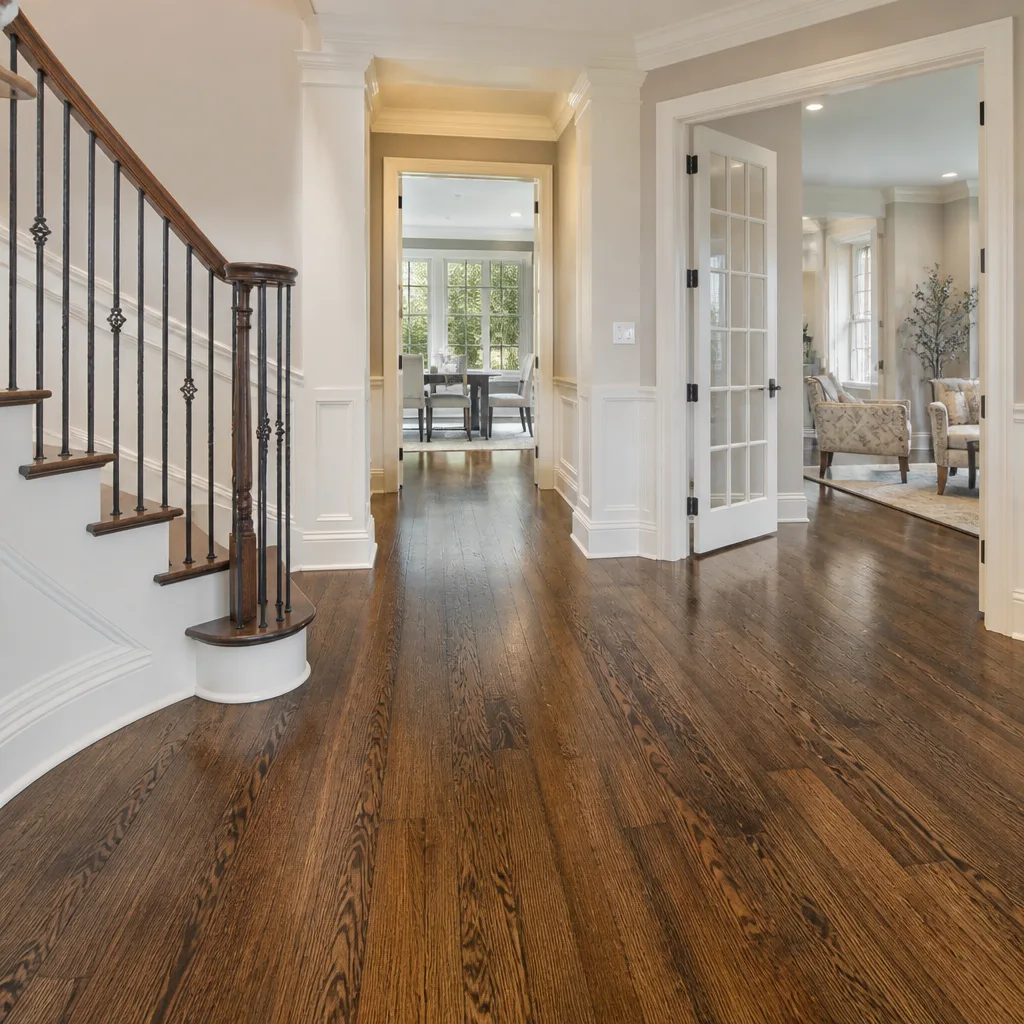 Hardwood
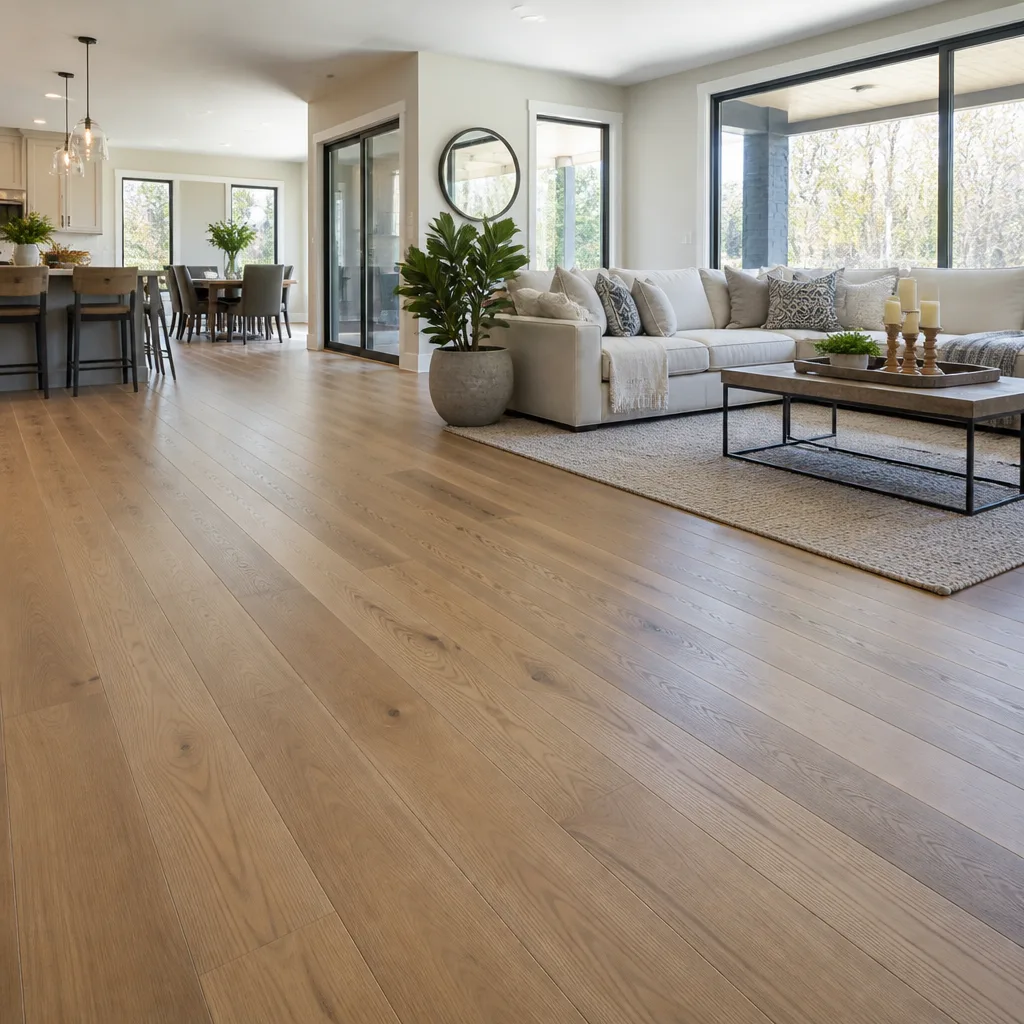 Engineered hardwood
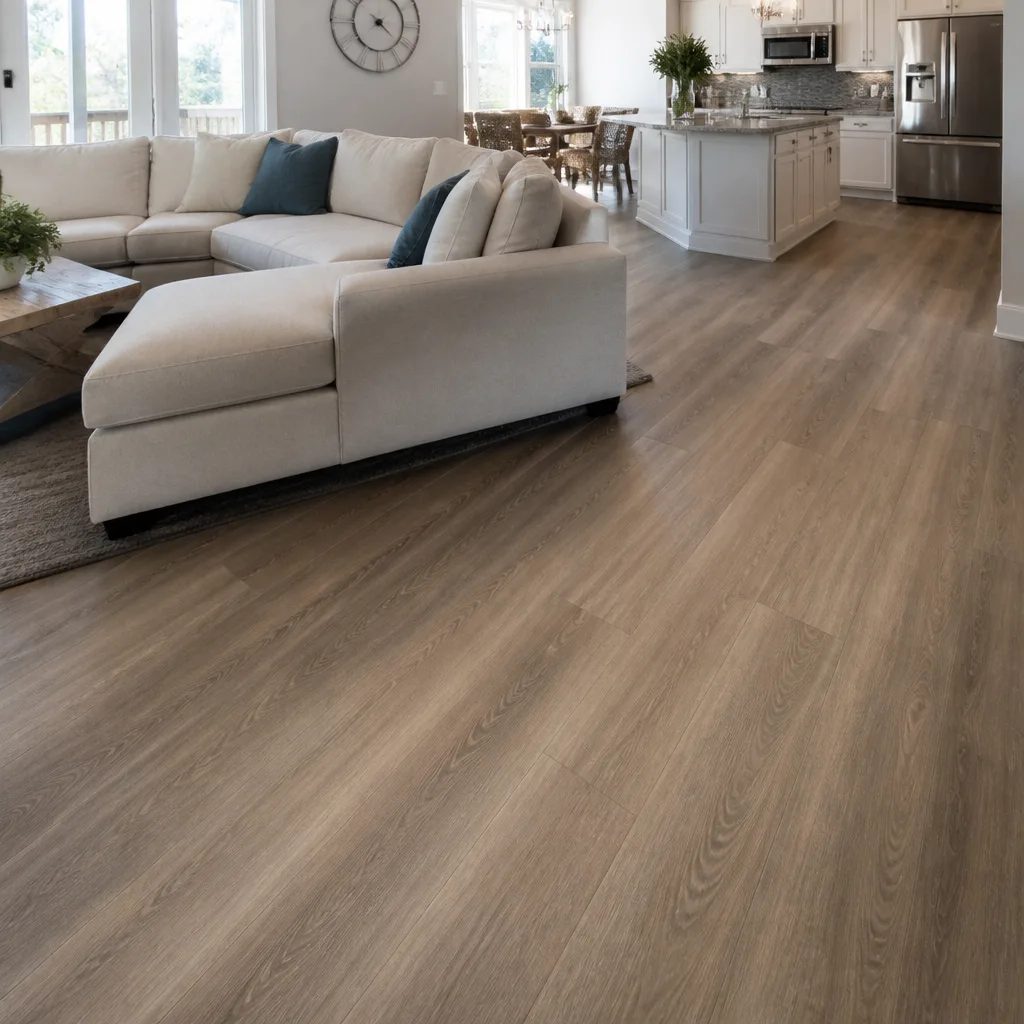 Luxury vinyl plank
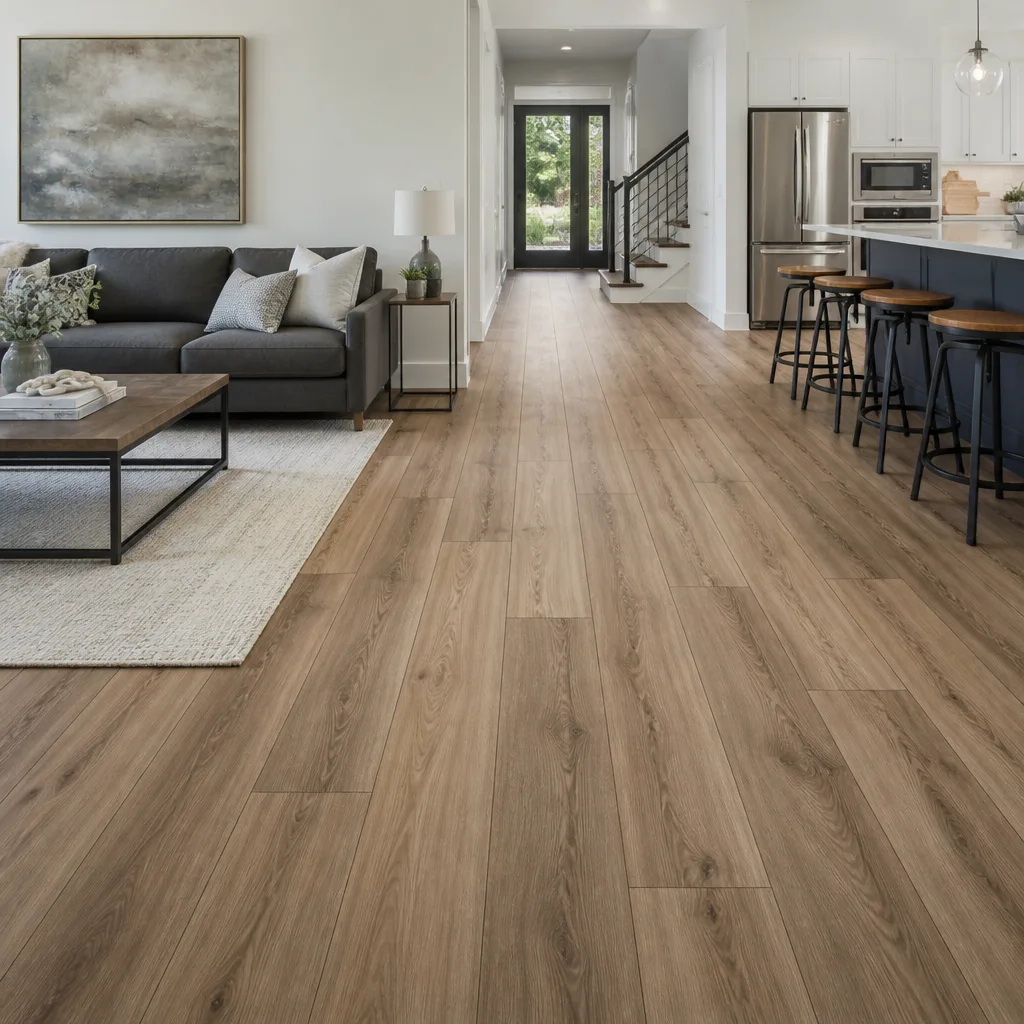 Laminate
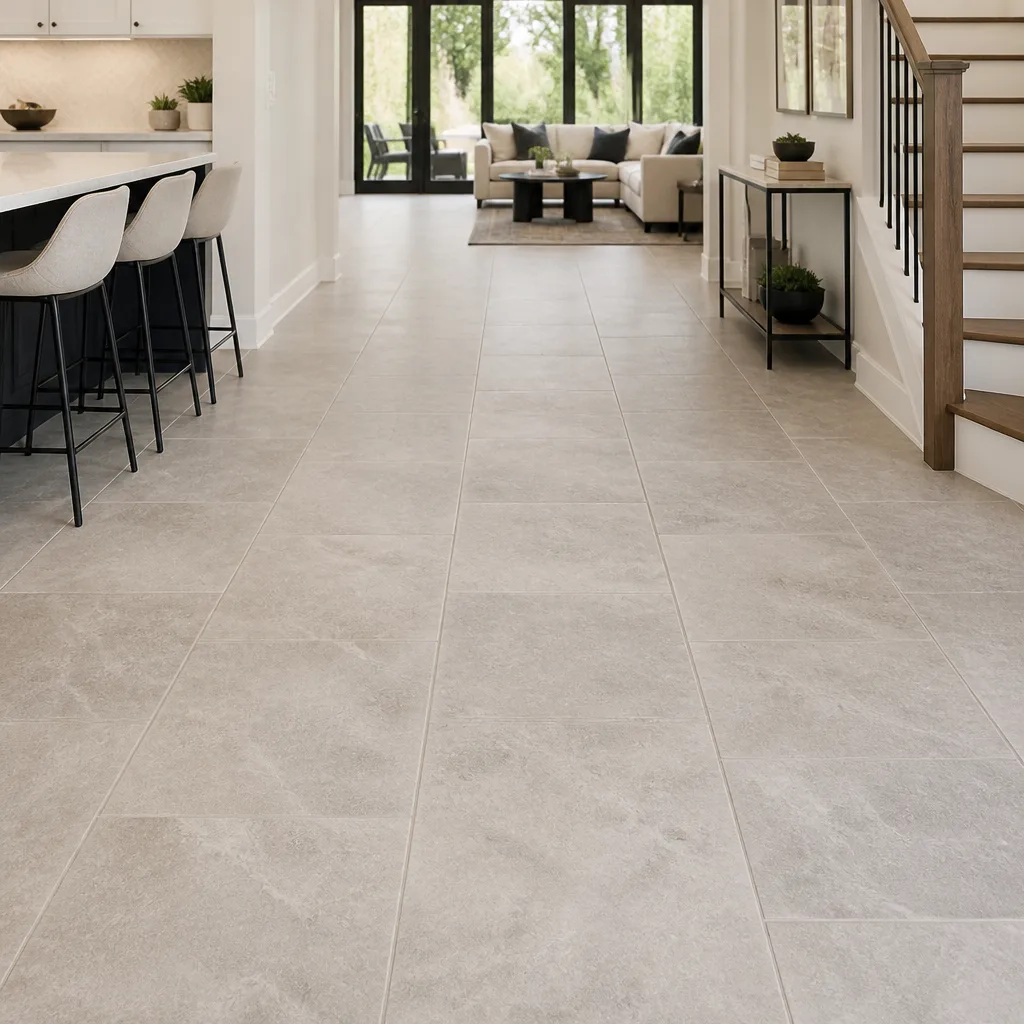 Porcelain tile
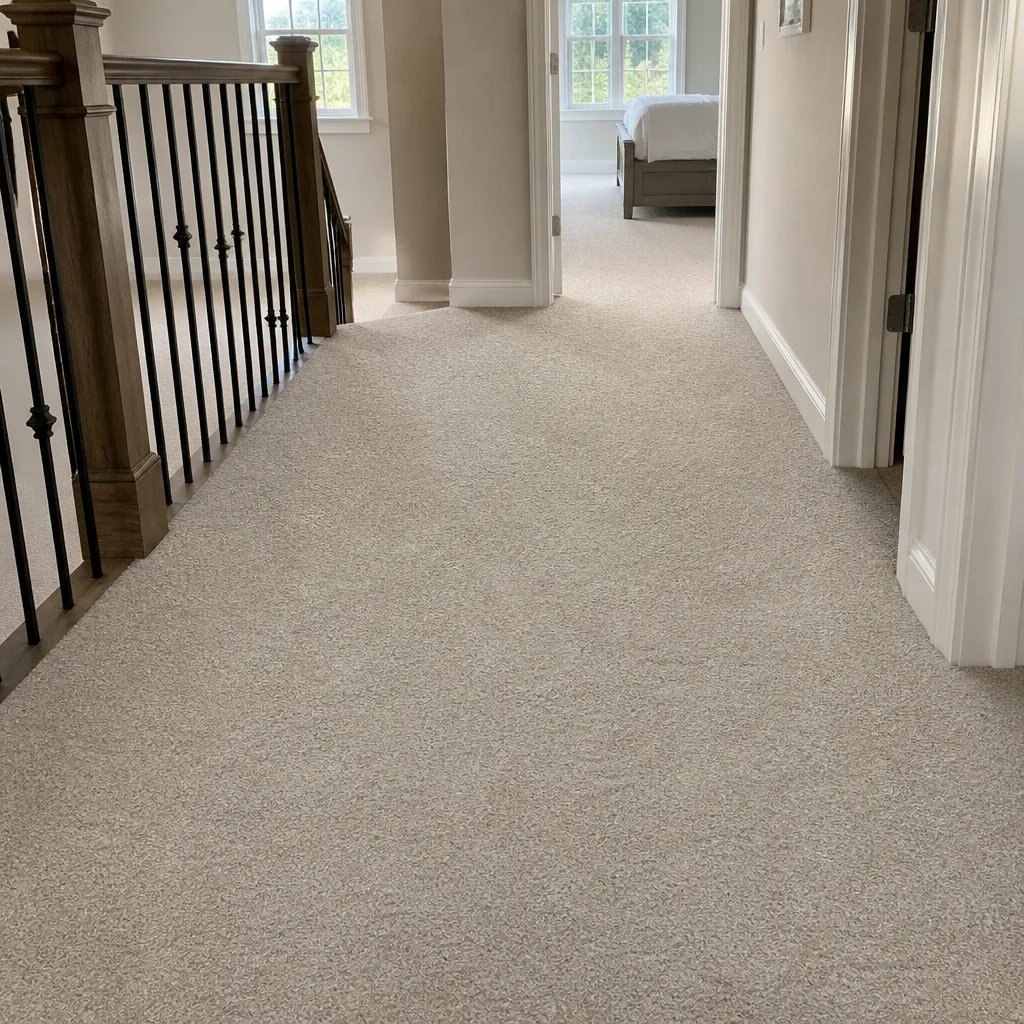 Carpet
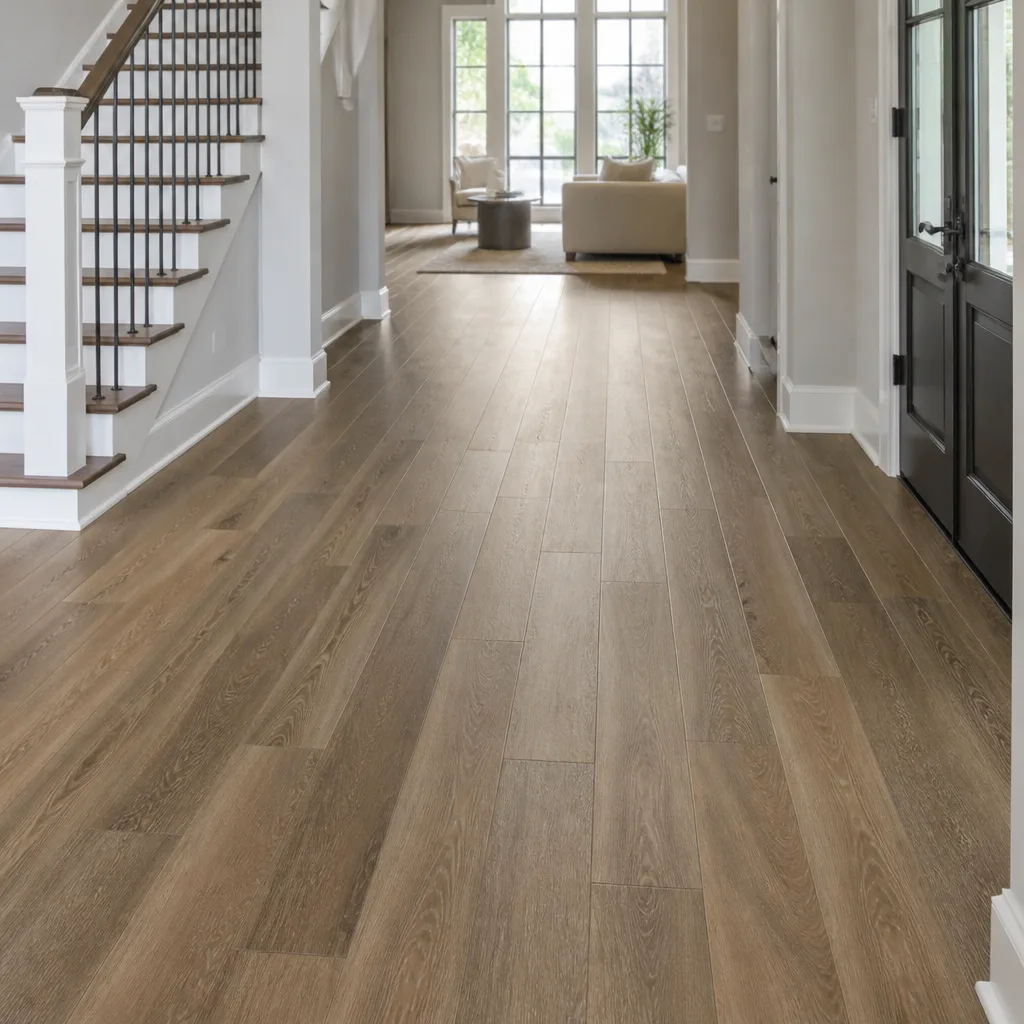 Shaw
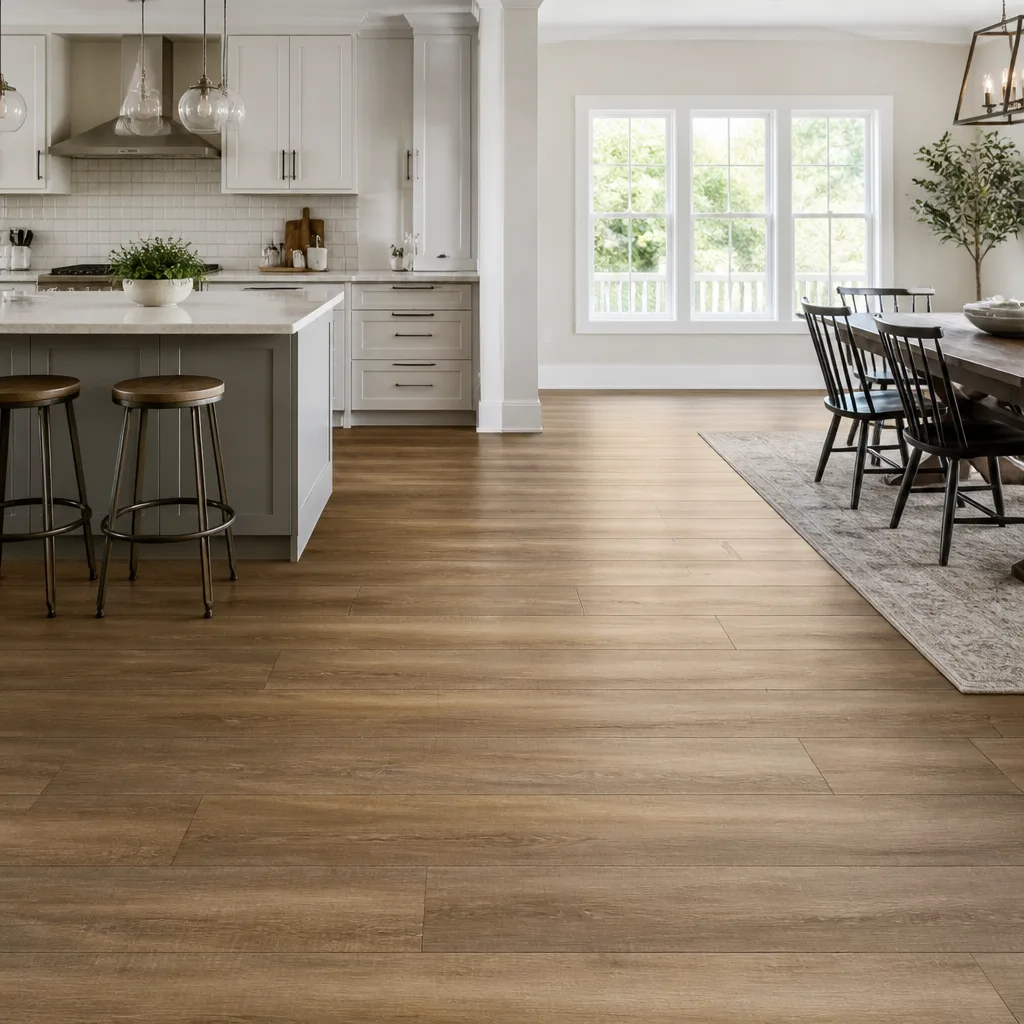 Mohawk
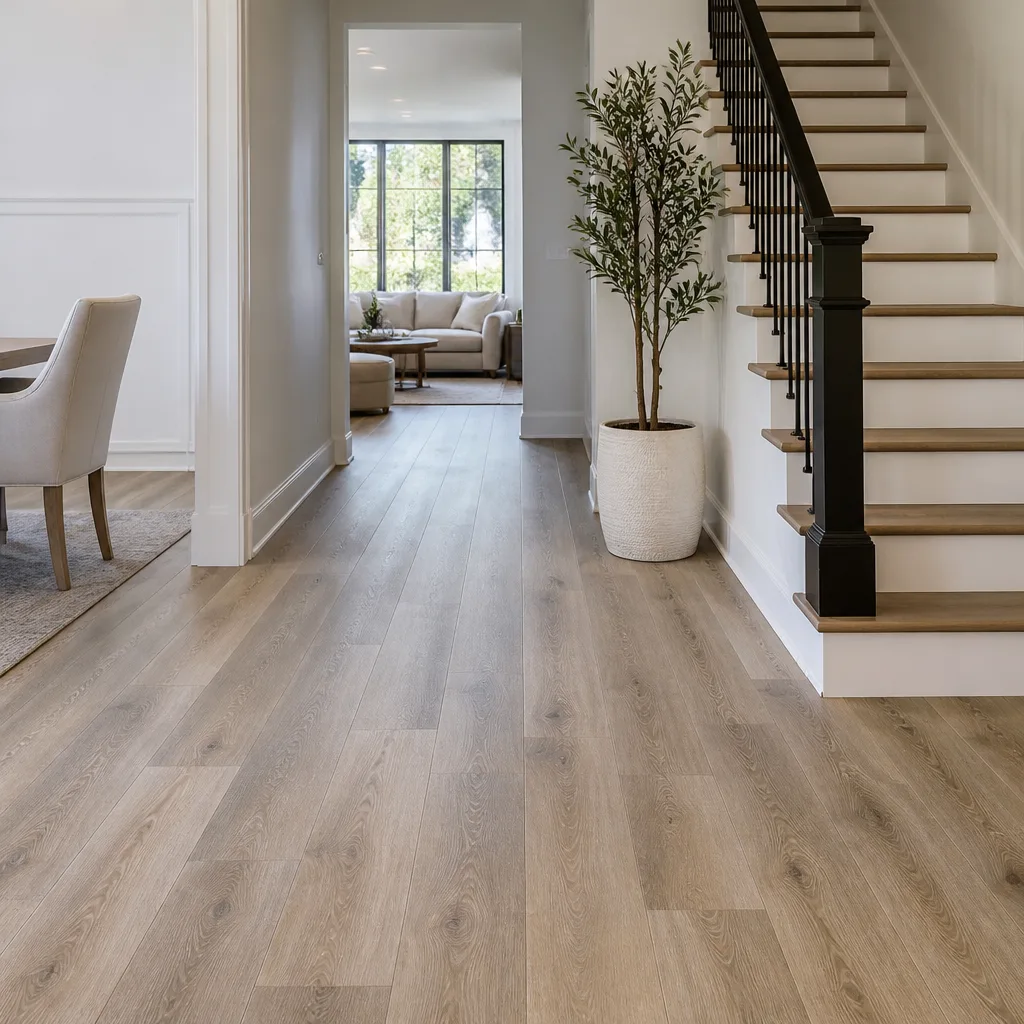 COREtec
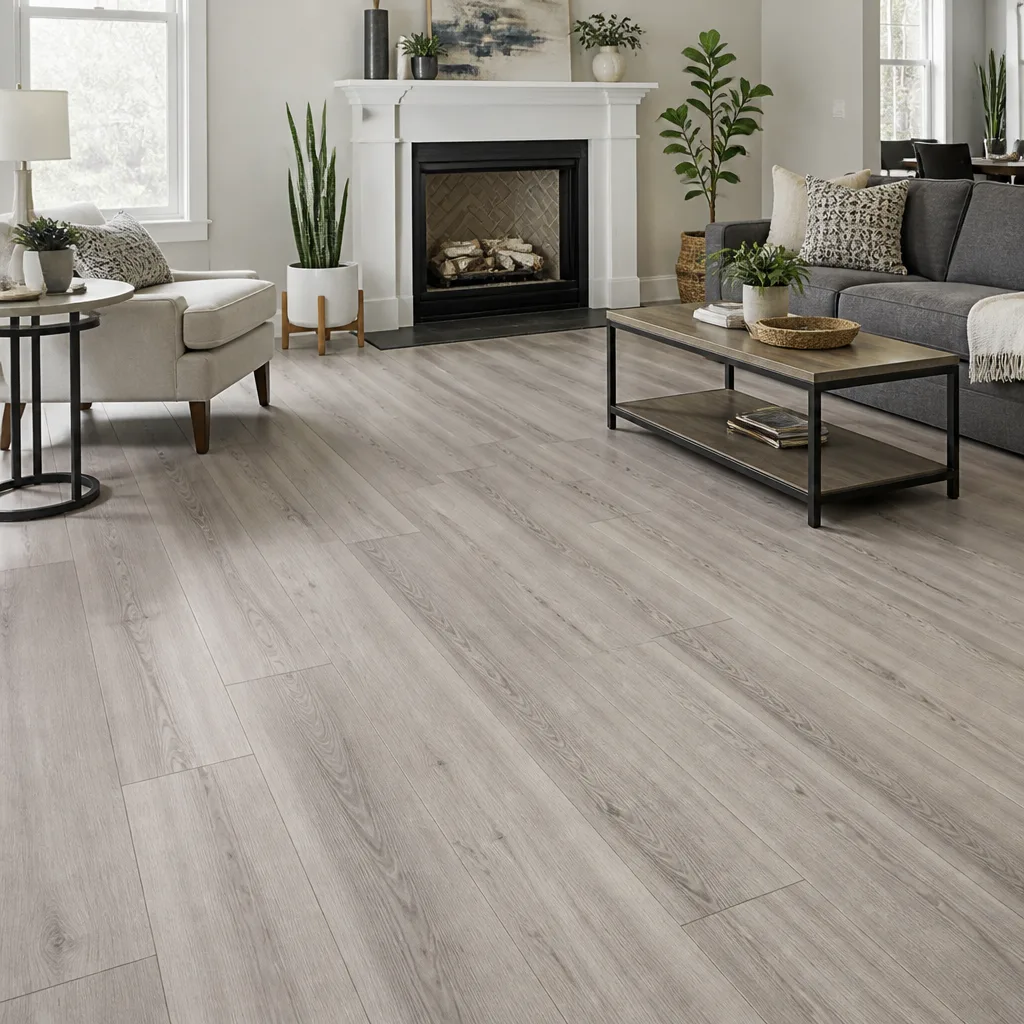 Pergo
Free in-home measure and written estimate: Shaw, Mohawk, COREtec and Pergo lines compared on your own rooms, with carpet, tile, vinyl plank, laminate and hardwood laid out side by side
Get your free estimateChoosing the Right Flooring for Every Room in Las Vegas Homes
The most common flooring regret we hear from Las Vegas homeowners isn’t the material they picked. It’s that they picked four different materials for four connected spaces and ended up with a floor plan that looks chopped into rooms even though the walls are gone. Open-plan living only works when the floor keeps the plan open, which means the kitchen, the great room and the hallway need a material that can run continuously and still handle the job each zone demands. This guide walks through every room in a Las Vegas home, from the slab-heat problem in your kitchen to the bonus room that never cools down, and explains which products and brands make sense where.
Quick Answer
In Las Vegas homes, the best flooring is usually one continuous hard-surface run through the kitchen, great room and hallways, tile or resilient in the bathrooms built to handle dry-air grout movement, and carpet in bedrooms where softness matters more than moisture. The right material depends less on trends and more on what each room faces: intense slab heat in summer, desert dust that settles into every grout line, and the open layouts that force neighboring floors to look like they belong together.
Styles & brands we work with
- Hardwood
- Engineered hardwood
- Luxury vinyl plank
- Laminate
- Porcelain tile
- Carpet
- Shaw
- Mohawk
- COREtec
- Pergo
Table of Contents
- Why One Continuous Material Beats a Transition
- Kitchens and Great Rooms: Picking a Material That Handles Both
- Bathroom Floors and the Dry-Air Grout Problem
- Bedrooms: The Case For and Against Carpet
- Garage-to-Interior Transitions Under Extreme Heat
- Bonus Rooms and Casitas Off the Main HVAC
- Hardwood Refinishing: Restoring What’s Already Underfoot
- How the Brand Portfolio Fits Each Room
Why One Continuous Material Beats a Transition
The single biggest difference between a Las Vegas home that feels finished and one that feels pieced together is whether the floor runs through the main living zones without stopping. When the kitchen floor ends and the great room floor begins, you get a seam line right in the middle of what should be one space. That seam is cosmetic at first and functional later, because transition strips catch dust, lift at the edges, and create a hard little ridge underfoot that you notice every time you cross it barefoot.
There’s a building reason too. Most Las Vegas homes sit on a slab, and that slab picks up heat all summer long. Any transition strip between two materials is a thin metal or vinyl piece sitting directly over a surface that expands and contracts with temperature swings. The strip does the one thing it’s least suited for: flexing. Materials that run continuously distribute the movement across a larger area instead of concentrating it at a joint.
So what works for a continuous run? In our experience, a few product families handle both kitchen and living-zone duty without compromise:
- Porcelain and ceramic tile, especially premium lines, handles slab heat, spilled water and heavy traffic without a fuss.
- Luxury vinyl from brands like COREtec and Karndean lets you run one broad, warm-toned floor through hallways and into the great room while still going right up to the kitchen zone.
- Engineered wood and laminate give you the look of hardwood with more tolerance for temperature movement, though they need to be matched carefully at any exterior door.
We install across all three core flooring disciplines, so we can show you how a single material will read from the front door to the back slider before you commit. That’s the whole point of flooring installation Las Vegas treated as a specialty rather than an add-on to a general remodel.
Kitchens and Great Rooms: Picking a Material That Handles Both
The Las Vegas kitchen is a tougher testing ground than the same room in a wetter climate. You get the heat of cooking, the occasional splash at the sink, and then slab heat radiating up all day. The great room adjacent to it deals with foot traffic, furniture, pets and dust that walks in from outside. A material that runs through both zones has to do all of that at once.
What actually holds up
Tile is the safest bet for the kitchen itself, especially with a Daltile ceramic or porcelain, because it shrugs off water, handles thermal movement at the grout lines, and doesn’t care about the dust that settles from open windows. The challenge with tile is that it can feel transactional in a living room. That’s where resilient flooring earns its place in a continuous run. LifeProof and COREtec water-resistant luxury vinyl can run from the kitchen into the great room and hallways without a transition, which keeps the open plan visually intact and gives you one sweep-line for cleaning.
We’ve seen homeowners regret cheesing out on the transition because they saved a little on materials. Two years later that seam line is exactly what they notice first when they walk in. The product isn’t the problem. The break is.
How we approach a kitchen-to-great-room install
- We walk the open span with you and identify every spot where a transition is unavoidable, usually an exterior door, a slab joint or a stair.
- We match the product to the heaviest demand in the run, which is usually the kitchen sink zone, not the living room.
- We check moisture and flatness at the estimate, because slab conditions decide what the material can do over the long haul.
- We plan the layout so the seam, if there is one, lands somewhere a wall would have been, not in the middle of the traffic path.
- We set the install day once the written estimate is signed, so the schedule is your choice, not a rush.
The right move is almost always to choose for the hardest zone in the run and let the rest of the space follow. That’s how tile flooring installation ends up running straight into a great room rather than stopping short in the kitchen.
Bathroom Floors and the Dry-Air Grout Problem
Bathrooms in Las Vegas fail differently than bathrooms in humid climates. The water is there, but the air is dry, and that dry air pulls moisture out of grout faster than most people realize. Over time, grout that isn’t suited to a low-humidity, high-temperature environment can shrink, crack and pull away from the tile edges, which opens a small channel where standing water sneaks in. The fix isn’t exotic, but it does require planning at install time rather than at repair time.
What makes bathroom tile survive here
- Grout type matters. An epoxy or high-performance cementitious grout flexes with the surface and holds tighter to edges under temperature swings than standard sanded grout.
- Joint width matters. Wider joints give the grout room to move without cracking, and you need to choose the joint before the tile is laid.
- Sealer schedule matters. Cementitious grout needs resealing more often than epoxy. Ask what the product instructions call for, because it varies by grout brand, and set a reminder before the next summer.
- Slab prep matters. A flat, clean, moisture-stable slab is the foundation for all of the above. It’s checked at the estimate, not assumed.
Porcelain tile from a brand like Daltile gives you the density and low absorption a bathroom wants, and it pairs well with a grout built for dry heat. We can’t tell you which grout to use without seeing the product instructions for the tile and the conditions at the slab, so we look at both at the estimate and put the recommendation in writing.
Shower and wet-area safety note
Shower pans, waterproofing membranes and drain tie-ins are genuinely unforgiving work. A failed pan behind tile shows up as damage in the room below, and it usually isn’t visible until the damage is done. If your project touches a shower or a floor drain, that’s a job for a trained installer who follows the waterproofing product’s own instructions. We’re glad to look at what you have and tell you whether it’s a simple floor replacement or something that needs a full wet-area rebuild.
Bedrooms: The Case For and Against Carpet
If you grew up somewhere green and humid, carpet in the bedroom feels normal. In Las Vegas, it’s a real trade-off. The case for carpet is simple: it’s soft, it’s warm underfoot on a slab, it quiets what would otherwise be a hard, echoey room, and it makes a bedroom feel like a bedroom. In a house where the great room is tile or resilient, carpet is the change of pace that tells your feet they’re in a different zone.
The case against carpet is that desert dust has nowhere to go but into fibers. Dry air carries fine particulate into the house every time a door opens, and carpet holds it more than a hard surface does. If anyone in the household deals with dust sensitivity, that’s worth thinking about. We don’t make health or allergy claims about any product, because what triggers a person is a medical question, not a flooring question. What we can tell you is that carpet demands more frequent cleaning in a desert home than it would in a wetter climate.
Soft alternatives that aren’t carpet
If carpet isn’t the right call for you, a few hard-surface products soften the feel underfoot without giving up cleanability:
- Karndean luxury vinyl brings a warm, hand-crafted look and a resilient surface that’s easy to sweep, which is a friend to desert dust.
- Mannington offers resilient and hardwood-look options that read softer than tile in a bedroom setting.
- A low-pile or loop carpet, if you go with carpet installation, holds less surface dust than a plush cut pile and vacuums out more readily.
In our experience, the bedrooms are where a homeowner’s priorities show up most clearly. Softness, cleanability, pet tolerance, noise: you know which of those matters most to you, and we can point you to the materials that match.
Garage-to-Interior Transitions Under Extreme Heat
The garage-to-interior transition is the most abused floor joint in a Las Vegas home, and almost nobody thinks about it until it fails. The garage in summer gets dramatically hotter than the conditioned interior, and that temperature differential runs straight into whatever threshold material bridges the gap. A cheap vinyl or aluminum transition strip flexes with that swing, works loose at the fasteners and lifts within a couple of summers. Then it catches the door sweep, then it catches a shoe, and then it’s a trip hazard.
What fails and what holds
The strips that fail are the thin, hollow ones sized by price rather than the joint. The thresholds that hold are the ones sized to the actual gap, anchored into the slab instead of just the finish floor, and matched to the materials on both sides so the door still seals. If the garage slab sits lower than the house slab, you need a threshold that steps down, not a flat strip bridging a gap it can’t fill.
We look at three things at the estimate for a garage transition:
- The height difference between the garage slab and the interior finish floor.
- Whether there’s an existing threshold we can reuse or a slab edge that needs repair first.
- How the door seals, because a poorly sealed threshold lets in both dust and summer heat.
Get that joint right and you don’t think about it again. Get it wrong and you’ll be thinking about it every time you carry groceries in. This is one of those spots where the right floor for the room isn’t a trend question at all. It’s a fit question.
Bonus Rooms and Casitas Off the Main HVAC
Bonus rooms and casitas are where Las Vegas floor planning gets complicated, because they often sit on a separate HVAC zone, or on no zone at all. A bonus room over a garage can run hotter than the rest of the house. A casita with its own mini-split can swing wildly when nobody’s using it. Any flooring product in those spaces needs to tolerate temperature swings that the main house never sees.
What to consider before choosing
- Resilient products handle swing better than solid wood. LifeProof and COREtec lines are built for moisture and movement, which is exactly the condition an unconditioned casita produces.
- Tile is the most swing-tolerant option and good for a casita bath or kitchenette, but it doesn’t soften a guest space the way carpet or resilient does.
- Carpet in a bonus room is worth it if the room is used, and worth rethinking if it sits empty for months at a time in a hot zone.
- Subfloor conditions matter more here, because an unconditioned space can show slab moisture and flatness issues the main house hides.
We ask two questions at the estimate for any bonus room or casita: is this space on the main system or its own, and how often is it used? Those answers narrow the product list more than any style conversation will.
Hardwood Refinishing: Restoring What’s Already Underfoot
If your Las Vegas home already has hardwood, refinishing it is often a better move than replacing it, both for the floor and for the character of the house. Refinishing preserves the floor’s original grain and dimensions, and it keeps a material out of the landfill. It also happens to be a service we’re set up for specifically, which is not something every installer does. Restoring solid wood is a craft skill. Laying new planks is a different skill. We do both, and we’d rather tell you which one your floor needs than sell you a replacement you didn’t ask for.
Here’s the honest part: not every floor can be refinished. It depends on the thickness of the wood, how many times it’s been sanded before, and its overall condition. We check that at the estimate, because a floor can’t be sanded past the point where there’s still wood to hold the finish. A stain match to a sample is also an estimate conversation, not a promise, because the species of the wood and its age change how a stain reads.
When refinishing makes sense
- The floor is solid or engineered wood with enough wear layer left to sand.
- The plank structure is intact and the boards are flat.
- The wear is surface-level (scratches, dullness, worn finish) rather than structural.
When refinishing isn’t the right answer, we say so. That might mean replacing the floor in the room that’s beyond saving, or shifting to a resilient product in spaces where the wood never belonged. The point is to know which is which before the estimate is signed.
How the Brand Portfolio Fits Each Room
Flooring is all we do, so we carry a wide portfolio for a reason: the same product line almost never wins every room in a house. We carry nine distinct brands, and each one fits certain spaces better than others. These are the ones that come up most often in room-by-room planning:
- Shaw and Mohawk cover a broad range of carpet and resilient options, which makes them a fit for bedrooms and family living areas.
- COREtec and LifeProof are the water-resistant luxury vinyl lines for kitchens, great rooms and any room that needs to shrug off spills.
- Karndean sits at the high-design end of luxury vinyl, good for open living spaces where the floor is part of the look.
- Mannington balances resilient and hardwood-look options for continuous runs through connecting rooms.
- Daltile handles premium ceramic and porcelain for bathrooms, kitchens and entryways.
- Pergo and Armstrong give you durable laminate and resilient choices for hallway and family room runs.
We can show you how a room will read with two or three of these brands before you decide, so the choice is functional, not a fashion call. Nine trusted brands, one installation team is the point: you don’t have to drive to four different stores to compare.
Common Mistakes to Avoid
- Breaking an open plan with a transition. A seam line in the middle of a great room chops the visual flow and is the most common regret we see. Plan the run first, then choose the material.
- Using standard grout in a desert bathroom. The dry air cracks basic grout faster than a low-humidity-tolerant product will, so plan the grout type at install time rather than at repair time.
- Buying the cheapest garage threshold. A thin strip bridging a real height difference won’t survive the summer-to-interior temperature swing for long.
- Assuming a bonus room matches the main HVAC. Separate zones swing harder, and a product that’s fine in the great room may not be fine above the garage.
- Skipping the moisture and flatness check. In our experience, most install callbacks trace back to subfloor conditions that should have been caught at the estimate.
- Refinishing a floor that has no wood left to sand. A beautiful old floor can be past the point where sanding still works. Find that out before the sander arrives.
See the difference
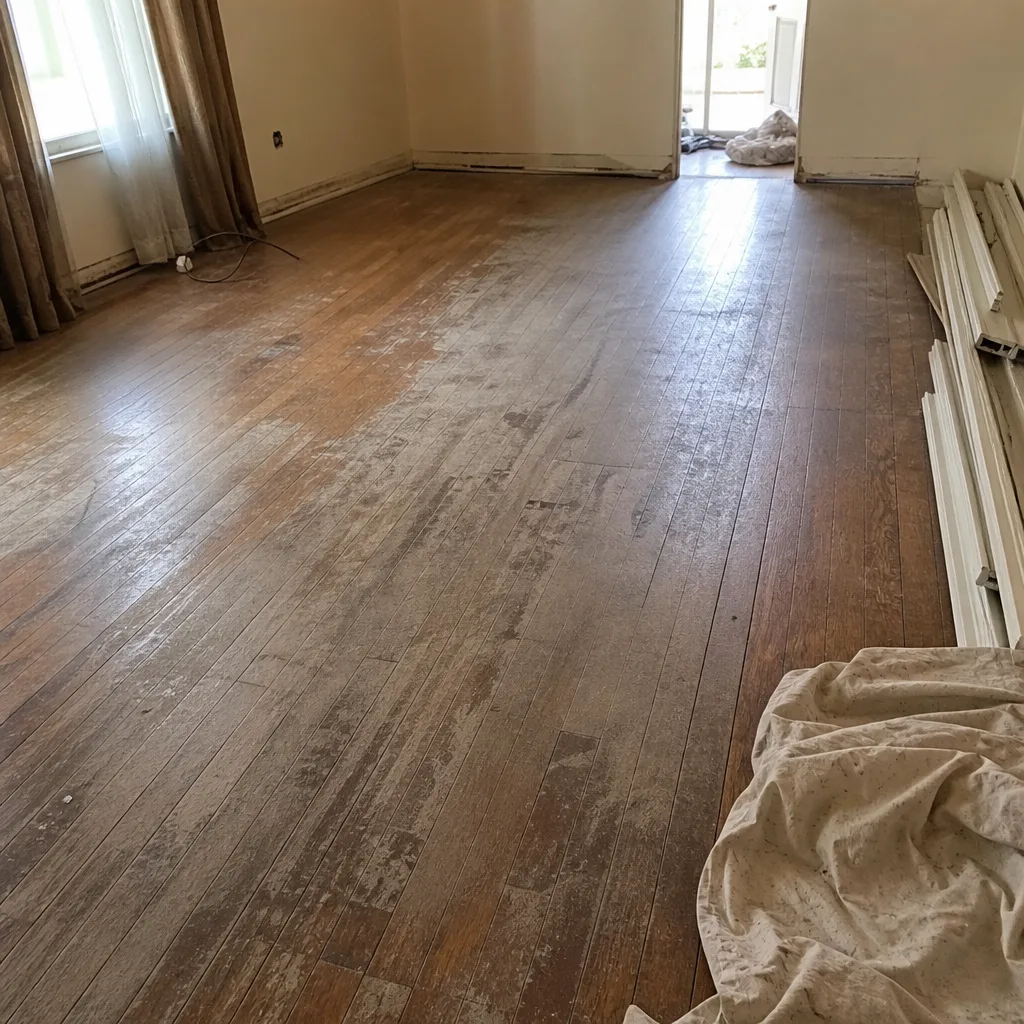 Before
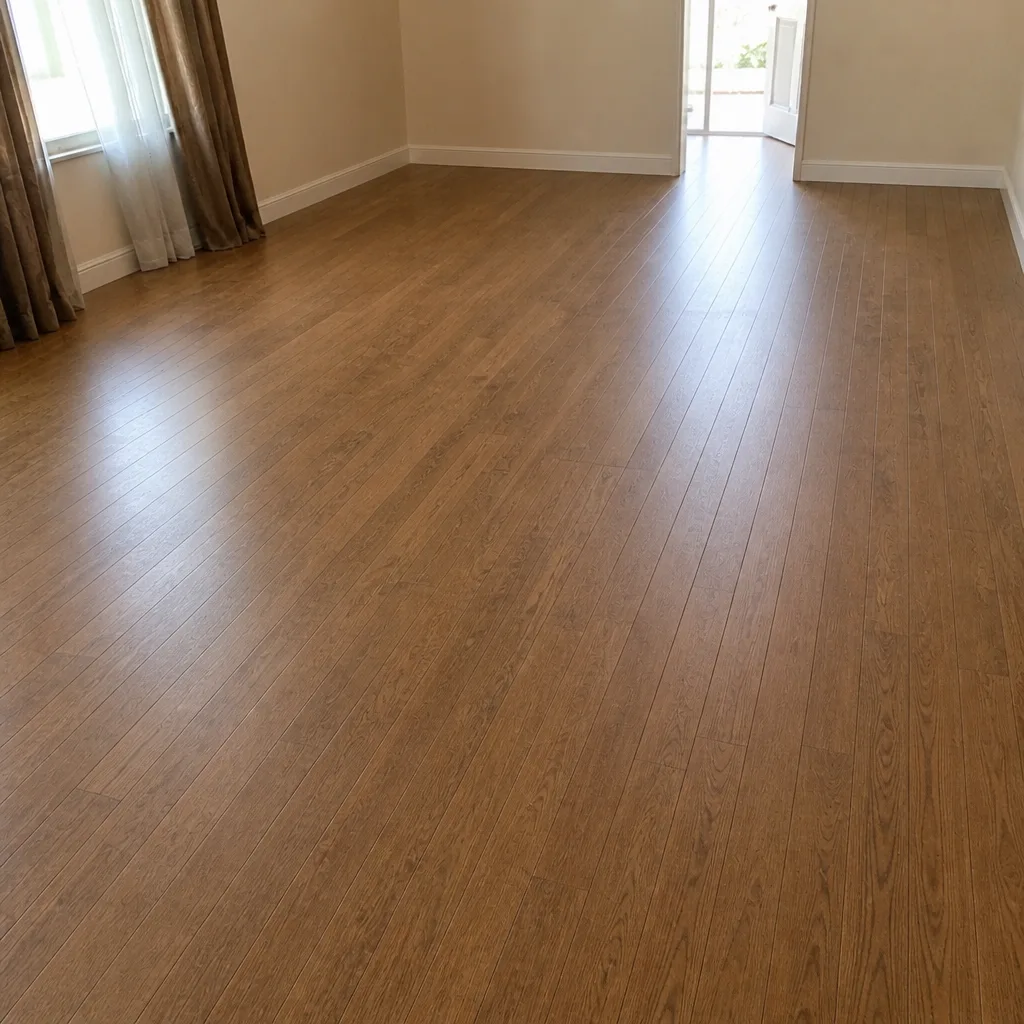 After
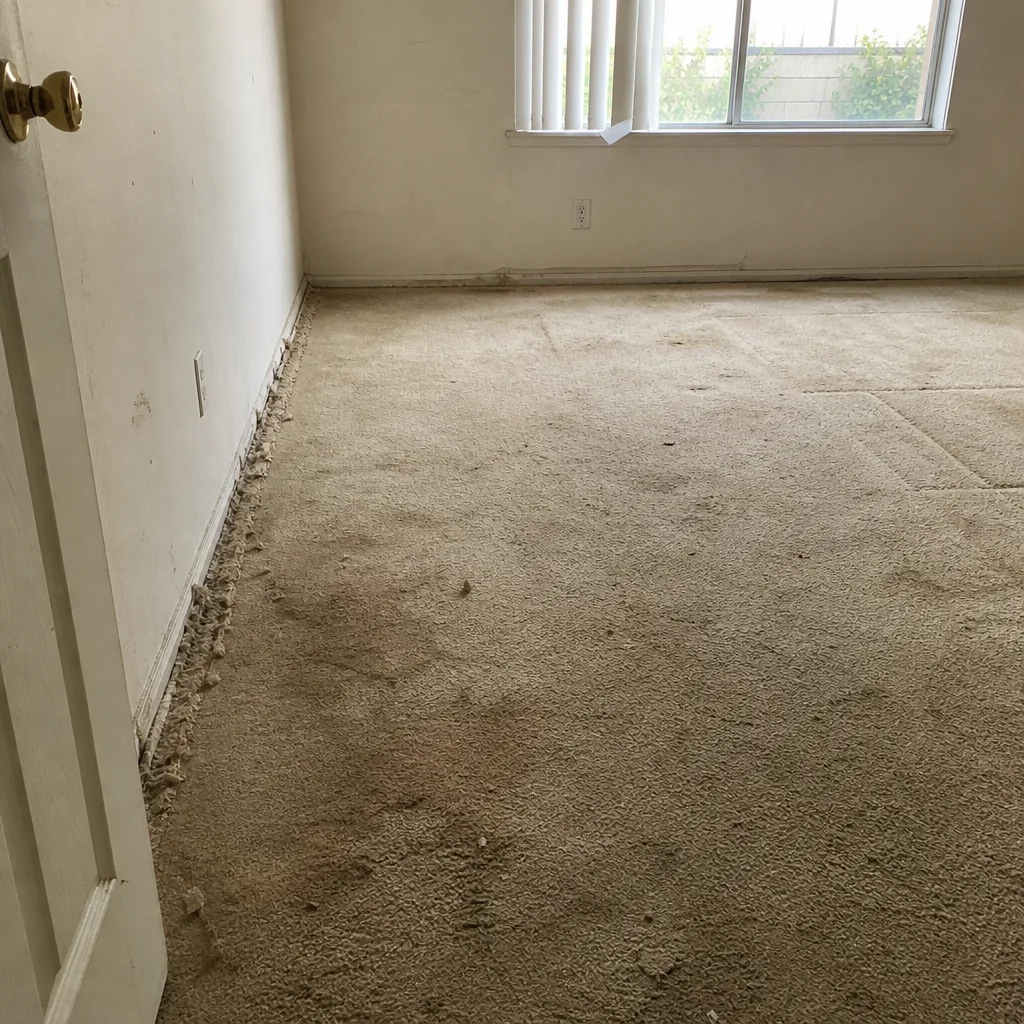 Before
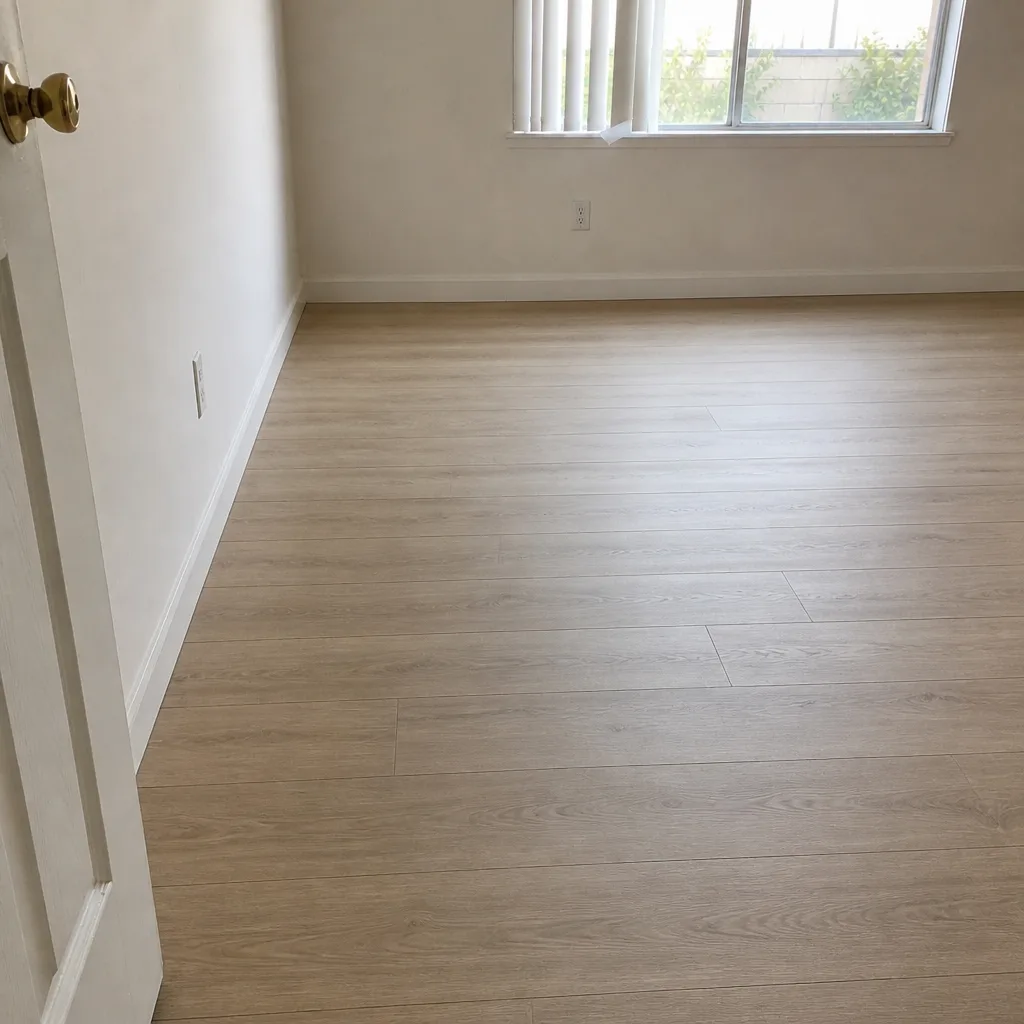 After
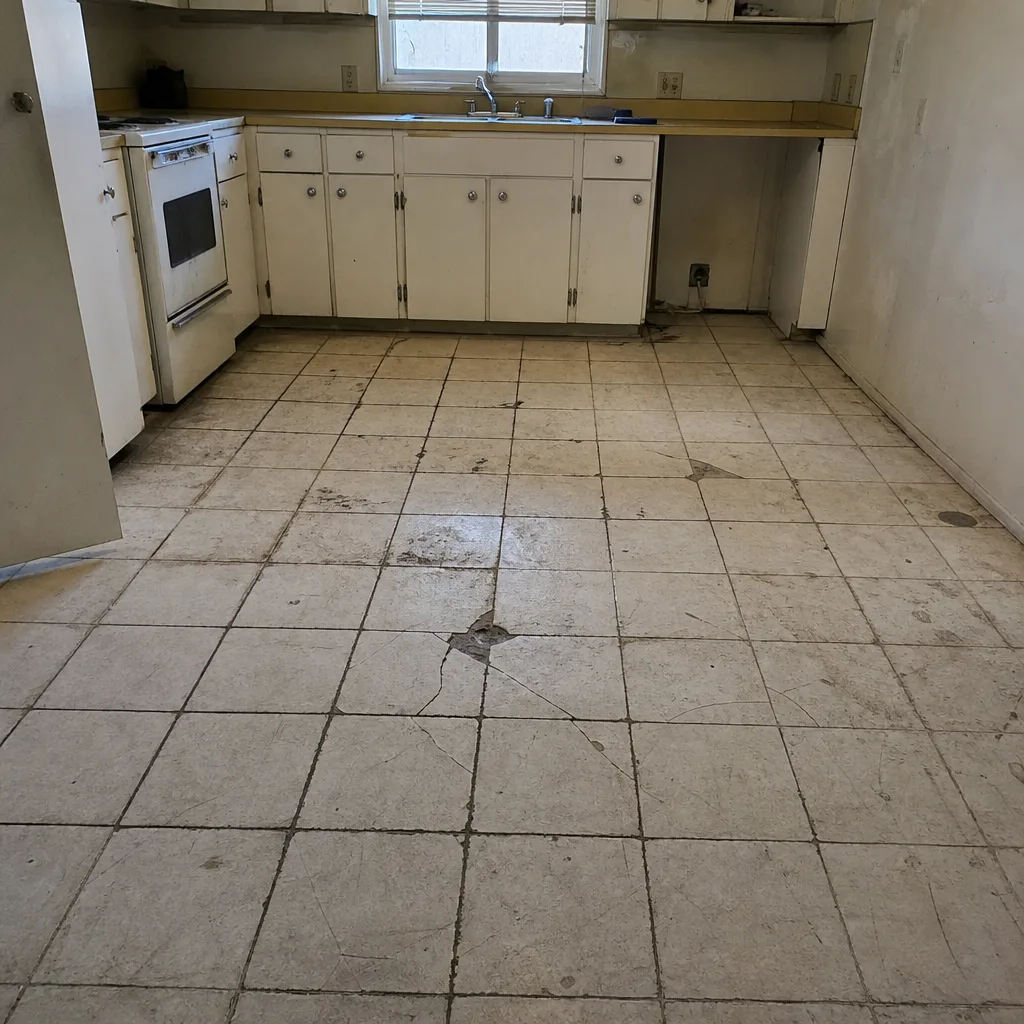 Before
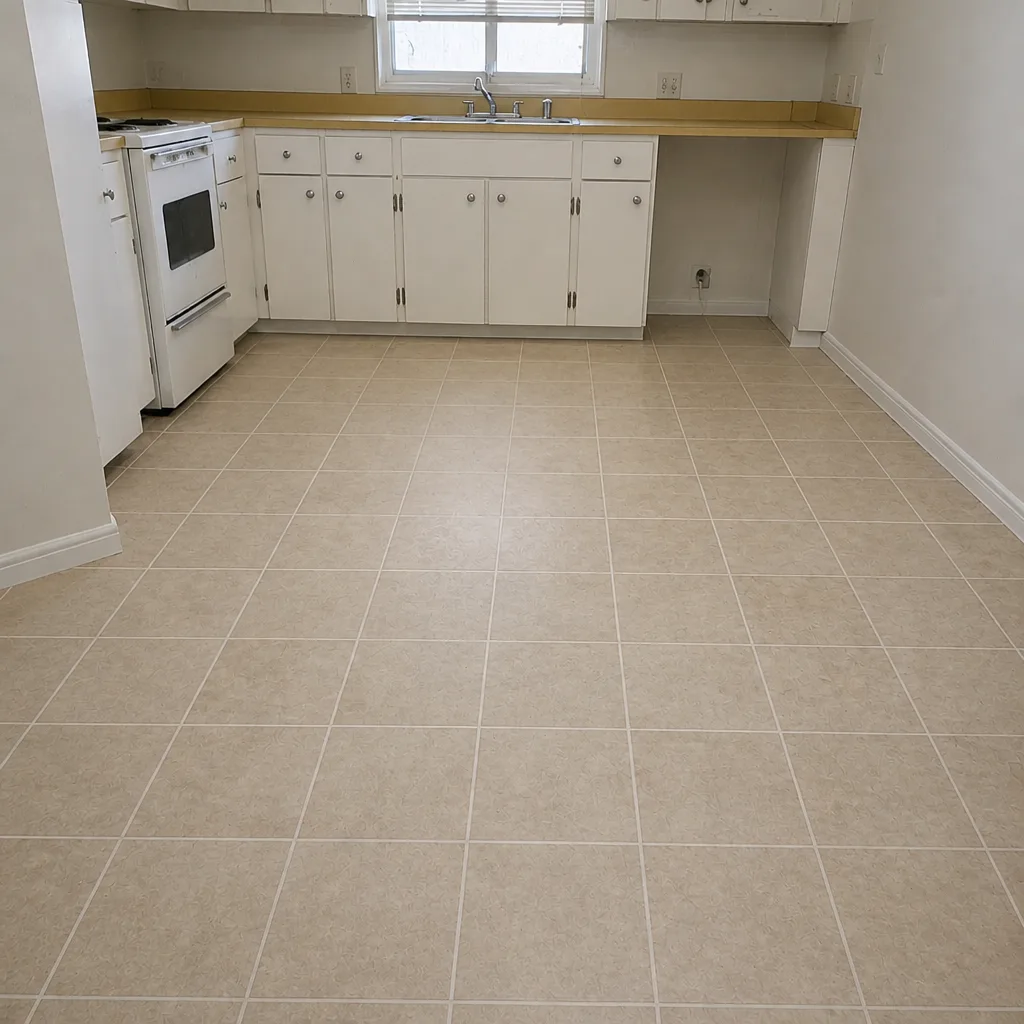 After
When to Call a Professional
Some things you can research and decide yourself. Some things you should not. Call us when the project touches an open-plan transition you want to get right, a bathroom wet area with tile and a drain, a hardwood floor whose finish is worn but whose boards might be refinishable, or a bonus room whose HVAC zone you’re not sure about. Call us also if you’ve had a previous install fail at a seam or a threshold and want someone to tell you honestly whether the material was the problem or the break was. Flooring Installation Las Vegas offers free estimates in Las Vegas. Call (888) 294-5867 to schedule yours. We answer 24/7. Fast dispatch from 7am to 7pm, Sunday through Friday.
Frequently Asked Questions
For most Las Vegas homes, the best combination is one continuous hard surface through the kitchen, great room and hallways, tile or resilient in the bathrooms, and carpet in the bedrooms where softness matters. The kitchen and great room are best served by a material that can run through both zones, which usually means tile, water-resistant luxury vinyl from COREtec or LifeProof, or a durable laminate. Bedrooms are the one place where carpet still makes the most sense for most families. Call (888) 294-5867 for an exact quote on your home – estimates are free.
Low humidity pulls moisture out of grout faster than in wetter climates, and the temperature swing on a slab adds movement that standard grout can’t always handle. The fix starts at install: an epoxy or high-performance grout, wider joints sized to the tile, a resealing schedule per the product instructions, and a moisture-stable slab underneath. We check the slab conditions at the estimate and put the grout recommendation in writing. Call (888) 294-5867 to set one up.
Yes, in most open-plan Las Vegas homes a single tile run through the kitchen and great room works well, and it usually looks better than two materials meeting at a strip. The trick is planning the layout so the only breaks land at exterior doors and structural seams, not in the traffic path. We walk the span with you before quoting and show you where the seam will land if there has to be one. Call (888) 294-5867 for a free estimate.
Carpet isn’t a bad idea, but it does need more frequent cleaning in a desert home because dry air carries fine dust into fibers. If dust sensitivity is a concern for your household, we can show you hard-surface alternatives from Mannington or Karndean that feel softer than tile underfoot. If you do choose carpet, a lower-pile style vacuums out more readily than a plush one. We won’t make allergy claims about any product, because that’s a medical question, not a flooring one. Call (888) 294-5867 to talk through your options.
Because the temperature gap between the garage and the conditioned interior is extreme in summer, and cheap threshold strips can’t handle that swing. A thin strip flexes with the heat, works loose from its fasteners and catches on the door or a shoe. The fix is a threshold sized to the actual height difference and anchored into the slab, not just the finish floor. We check the joint at the estimate and quote the right part the first time. Call (888) 294-5867 to schedule a free estimate.
No. Refinishing depends on the thickness of the wood, its condition and how many times it’s been sanded before, and a floor can reach a point where there’s no wood left to hold a finish. We check that at the estimate and tell you honestly whether your floor is a refinishing job or a replacement. A stain match to a sample is also an estimate conversation, not a promise, because the species and age of the wood change how a stain reads. Call (888) 294-5867 to get an exact quote before committing.
The Bottom Line
The right floor for a Las Vegas home isn’t chosen by style alone. It’s chosen by room function: a continuous hard surface through the open kitchen and great room, tile or resilient in the bathrooms built for dry air, and carpet or a warm resilient product in the bedrooms where softness matters. Bonus rooms and casitas need products that survive HVAC independence, and garage transitions need thresholds sized for the summer heat gap. We cover all three core disciplines, carry nine brands, and we’re glad to walk your floor plan with you before you commit. Call (888) 294-5867 for a free estimate in Las Vegas. We answer 24/7. Fast dispatch from 7am to 7pm, Sunday through Friday.
Written by the team at Flooring Installation Las Vegas.